
Introduction to SMT in Electronics
The electronics industry continues to drive technological innovation. The assembly methods of electronic components on printed circuit boards have undergone a fundamental transformation. Modern electronic products exhibit miniaturization characteristics. They achieve high-performance metrics and integrate complex circuit structures. The realization of these technical features relies entirely on surface mount technology(SMT).
Surface mount technology represents a major advancement in the field of electronic assembly. This technology enables direct surface connection between electronic components and printed circuit boards. It replaces the early widely used through-hole mounting process, allowing components to achieve precise assembly through copper pads. This assembly method enhances the functional complexity of circuit systems while improving operational efficiency in the production process. Ultimately, it leads to a significant increase in the integration density of electronic components.
What Does SMT Mean?

Surface Mount Technology (SMT) forms the fundamental foundation of modern electronics manufacturing. This technique mounts and solders electronic components directly onto printed circuit board surfaces. This process has completely transformed traditional electronic assembly methods. When discussing the definition of SMT, we are essentially examining the key technological framework that supports contemporary electronic device manufacturing.
What Does SMT Mean for Manufacturing?
- SMT allows components to be mounted directly onto the surface of the PCB without the need for drilling holes.
- The smt process consists of applying solder paste, placing components using pick and place machines, and using reflow soldering to create robust electrical connections.
- SMDs (surface-mount devices) are the components that are used in SMT—everything from passive devices (resistors, capacitors) to active parts (integrated circuits, microprocessors).
Why Does SMT Mean Progress for Electronics Design?
- SMT enables higher component density, driving the creation of smarter, faster, and smaller devices.
- The technology supports double-sided PCB assemblies, increasing design potential without growing board size.
- Higher component density and the ability to place components onto both sides contribute to the remarkable miniaturization seen in modern electronics.
SMT and SMD: The Relationship Explained
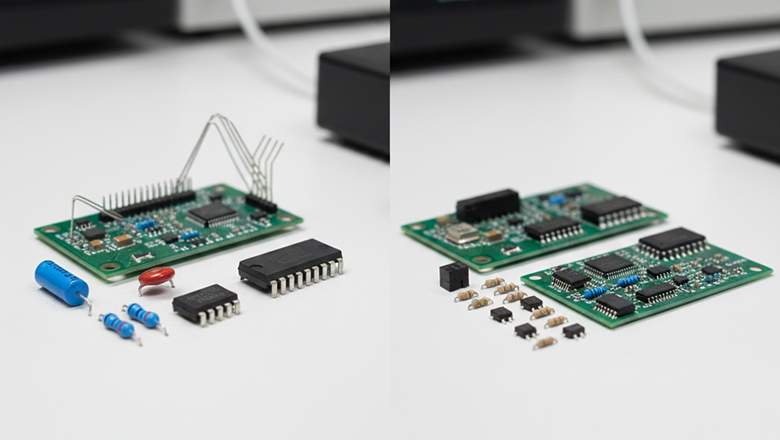
A common point of confusion is the difference and relationship between SMT and SMD.
- SMT (Surface Mount Technology)refers to the process or methodology—how electronic components are placed and attached onto the surface of a PCB.
- SMD (Surface Mount Device)refers to the actual components used. These are specifically designed to be mounted directly onto PCB pads without leads passing through the circuit board.
Key Related Terms and Types of SMD
Mastering the professional terminology of surface mount technology forms the learning foundation, while understanding various types of surface mount devices establishes the knowledge framework. These professional knowledge components collectively form the theoretical basis of modern electronic technology.
| Term | Meaning |
| SMT | Surface Mount Technology (mounting process) |
| SMD | Surface Mount Device (smt components designed for surface-mount) |
| THT | Through-Hole Technology (older method with pin/lead insertion) |
| DIP | Dual In-Line Package (classic THT package, now being replaced by SMDs in most cases) |
| PCB | Printed Circuit Board (platform where mounting occurs) |
| PCBA | Printed Circuit Board Assembly (assembled board) |
| SMC | Surface Mount Components |
| SMA | Surface Mount Assembly |
| BGA | Ball Grid Array (high-density SMD IC package) |
| QFP | Quad Flat Package (SMD IC) |
| SOIC | Small Outline Integrated Circuit |
| SOP | Small Outline Package |
| TSOP | Thin Small Outline Package |
| CSP | Chip Scale Package |
Types of SMD Including:
- SMD resistors (chip resistors)
- SMD capacitors (chip caps, MLCCs)
- SMD inductors, diodes, transistors
- SMD LEDs and optoelectronics
- Integrated circuits (microcontrollers, processors, FPGAs, memory in SOIC, QFP, BGA, TSOP, CSP, etc.)
Surface-mount SMD parts can be passive, active components, or even mechanical such as switches or connectors.
How SMT Works: Mounting Components Onto the Surface

The SMT process is a marvel of engineering, allowing for the direct and precise mounting of electronic components onto the surface of a printed circuit board.
1. PCB Preparation
- The PCB is fabricated with exposed copper pads on both sides, prepared for mounting various SMD components.
2. Solder Paste Application
- Operators apply solder paste precisely to component pad areas using a metal stencil. This process achieves accurate solder dosing and positional control, ensuring consistent paste volume and placement accuracy for each operation, thereby laying the foundation for subsequent mounting procedures. Such standardized operations guarantee repeatable precision and process stability in electronic assembly.
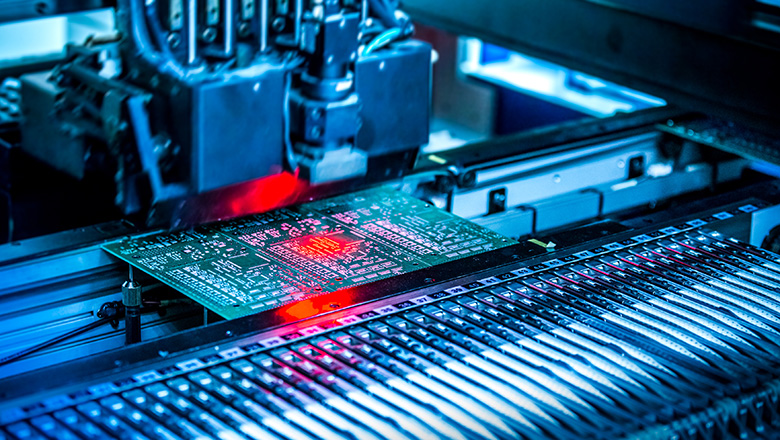
3. Pick and Place Machines
- Advanced robotics or pick and place machines position SMDs onto the pasted pads, operating at very high speeds and with perfect accuracy. Components can be placed at rates of over 100,000 per hour in the fastest lines!
4. Reflow Soldering
- The board goes through a reflow oven, where the solder paste melts to form strong electrical and physical bonds between electronic components and the copper pads onto the surface of the PCB.
-
- Proper reflow soldering ensures the reliability and conductivity essential in modern electronics.
5. Inspection and Testing
- After soldering, most SMT production lines use automated optical inspection(AOI) systems and sometimes x-ray scanning—particularly for hidden joints, as in BGAs—to verify that components are mounted correctly and the assembly is defect-free.
- PCBA (printed circuit board assembly) testing may include in-circuit testing (ICT), flying probe test, or functional testing.
SMT and Traditional Through-Hole Technology Compared
SMT and through-hole mounting methods both have their place in the electronics industry, but smt offers clear advantages for modern pcb manufacturing and assembly.
| Feature | SMT (Surface Mount Technology) | Traditional Through-Hole Technology |
| Mounting Method | Components are mounted directly onto the surface of a printed circuit board | Leads inserted through drilled holes |
| Component Density | Higher component density, smaller size | Lower density, larger boards |
| Board Real Estate | Maximizes use of PCB space | Consumes more space, especially on single side |
| Assembly Speed | Automated assembly; thousands of components per hour | Manual or semi-automated, much slower |
| Types of Components | SMDs (resistors, capacitors, ICs, etc.) | DIP, large connectors, high-power parts |
| Reliability | Fewer chances for solder defects with AOI and controlled environments | Hand soldering may cause variability |
| Cost and Labor | Lower labor costs, fewer manual steps | Higher labor/assembly costs |
| Repairability | More difficult due to small size/density | Easier for large or low-volume assemblies |
| Electrical Performance | Ideal for high-frequency and small signal circuits | Not as well suited for GHz range |
Features and Advantages of SMT

Features of SMT
- Components are mounted directly
- SMT allows components to be mounted directly onto the surface, using specialized equipment and solder paste rather than drilled holes.
- Double-sided Assembly
- Both sides of the PCB can be populated, enabling greater circuit complexity and space savings.
- High Component Density
- SMT enables placing hundreds or thousands of smd parts per square inch, increasing functional power per unit area.
- Automated Production
- SMT enables the use of sophisticated pick and place robots, reflow ovens, and automated inspection for unmatched speed and repeatability.
- Small Size and Lightweight
- Surface-mount components possess smaller physical dimensions and lighter weight characteristics. These advantages collectively drive the miniaturization evolution of electronic products.
- Support for Modern Designs
- SMT supports fine-pitch, advanced packaging necessary for FPGAs, microcontrollers, high-speed memory, and radio frequency electronics.
Advantages of SMT Over Through-Hole Mounting
- Cost Efficiency: SMT reduces both material and labor costs due to automation.
- Higher Yield: Fewer errors per assembly due to process control and AOI.
- High-Frequency Performance: Lower inductance and capacitance leads to better frequency response—crucial for wireless and high-speed circuits.
- Miniaturization: Enables the ultraportable gadgets and smart wearables that define modern electronics today.
- Productivity: SMT allows for the placement of more components per hour and more complex circuits in a single pcb assembly.
SMT Process and SMT Production in PCB Manufacturing
SMT production is the lifeblood of efficient pcb manufacturing and assembly:
- SMDs arrive in reels or trays for robotic feeding.
- Solder paste printer applies highly uniform deposits exactly where components should be mounted.
- Pick and place machines mount SMD resistors, capacitors, integrated circuits, and other electronic components onto the PCB at breathtaking speed.
- Reflow soldering line finishes mounting by creating robust, electrically conductive joints.
- Automated inspection ensures each component is properly seated and connections are reliable.
Applications in Modern Electronics
SMT has redefined what’s possible across every sector that uses electronic assemblies:
Consumer Electronics
From televisions and tablets to Bluetooth headsets and e-ink readers, consumer electronics all now rely on SMT to embed maximum functionality in minimal space.
- Integrated circuits for processing, memory, and connectivity are all SMDs, mounted with SMT.
- Flexible, high-speed circuit boards enable compact, stylish product design.
Automotive Electronics
Safety and control circuits in cars, such as ABS modules and airbag sensors, use SMT for reliable, high-density assembly.
SMT offers:
- Higher vibration resistance, due to low-mass SMDs.
- Use of advanced sensors and microcontroller ICs for safety features, infotainment, and drive-by-wire systems.
- Adaptability for both advanced circuit design and legacy components using hybrid SMT/through-hole production lines.
Medical Electronics & Miniaturization
Wearable heart monitors, insulin pumps, and disposable diagnostic devices all depend on the small size and high reliability of SMT assemblies.
- SMT enables rapid, cost-effective prototyping and quick iterations in medical device development.
- Medical-grade PCBA requirements for traceability, tight process control, and stringent standards are met more easily with SMT-based automation.
Design Tips and Best Practices
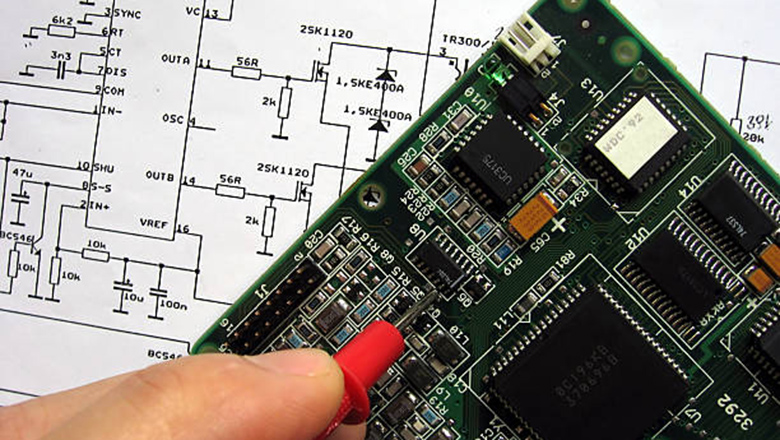
To maximize the advantages of smt and smd:
- Plan for Manufacturability: Always check with your manufacturer during pcb design to ensure pad, trace, and stencil dimensions match production capabilities.
- Optimize for Assembly: Avoid shadowing (where tall components block smaller ones) and cluster similar types of smd parts together for faster pick and place.
- Thermal Relief: For high-current paths, design larger pads, and use vias to dissipate heat.
- Panelization: Use panels of multiple pcbs when producing in bulk for higher throughput.
Drawbacks and How to Overcome Challenges in SMT
Drawbacks:
- Difficult Repairs: SMDs’ small size and high density mean manual replacement or rework is challenging.
- Alignment Sensitivity: Tiny shifts during mounting can lead to defects such as tombstoning or solder bridges.
- Moisture Sensitivity: Some SMD ICs (like BGA and QFP) can crack if moisture present during soldering.
- Thermal Issues: Inadequate thermal management can result in failed joints or heat damage.
Solutions:
- Use automated inspection at every stage.
- Store moisture-sensitive components per MSL guidelines.
- Provide ample test access and clear silkscreen for troubleshooting.
- Train rework technicians with micro-assembly skills and invest in quality rework stations.
Choosing a Manufacturer for SMT and SMD Assembly
- Certifications: ISO 9001, IPC-A-610, and industry-specific certifications (e.g., ISO 13485 for medical electronics).
- Equipment: Up-to-date pick and place robots, reflow ovens, and AOI.
- Process Control: Real-time traceability, SPC data, and regular process audits.
- Experience: Especially with complex, high-density SMT assemblies in your domain (automotive, medical, consumer).
Glossary of SMT, SMD, and Electronics Terms
| Term | Definition |
| SMT | Process by which components are mounted directly onto the surface of a printed circuit board (PCB), enabling high-density assemblies. |
| SMD | Surface-mount device, a component type that is specifically designed for SMT. |
| Through-Hole | Traditional mounting method where component leads pass through holes drilled in the PCB and are soldered on the opposite side. |
| Pick and Place | Automated machine that rapidly places SMDs onto the pads of the PCB during SMT assembly. |
| Surface-Mount | Describes both devices (SMD) and assembly techniques (SMT) where components are mounted onto the surface. |
| Component Density | The number of components per unit area on a PCB; SMT allows higher densities than through-hole technology. |
| Printed Circuit | A flat board (PCB) that physically supports and electrically connects electronic components using conductive tracks and pads. |
| Mounting | The process of attaching components to a PCB, using either SMT or through-hole assembly. |
| Reflow Soldering | A heating process during SMT that melts solder paste, bonding the SMDs to the PCB pads. |
| Automated Inspection | Machine-based techniques to check for placement, alignment, and solder joint defects after SMT. |
| PCB Assembly | The entire process of placing and soldering components—SMD or through-hole—onto a PCB to form a working circuit. |
| Active Components | Components such as ICs or transistors that require power and perform amplification or switching roles in electronic circuits. |
| Passive Components | Components such as resistors and capacitors that do not require power to function in a circuit. |
| Integrated Circuits | Tiny semiconductor devices, often SMD-packaged, used in controlling or processing functions in electronics. |
| PCBA | Printed Circuit Board Assembly, meaning a fully populated, ready-to-use PCB. |
| Solder Paste | A mixture of minute solder spheres and flux, dispensed onto PCB pads prior to SMT component mounting. |
| SMD Packages | Physical shapes and connection layouts for SMDs; examples include QFP, BGA, SOP, CSP, SOIC, TSOP, and TQFP. |
| SMT Production | The series of steps in which SMDs are mounted and soldered onto PCBs during assembly. |
| SMT Components | Any electronic component manufactured in a package suitable for mounting directly onto PCB surfaces. |
| Medical Electronics | Devices or systems for healthcare, diagnostics, or treatment that benefit from SMT’s miniaturization and reliability. |
Conclusion: SMT’s Ongoing Innovation in Modern Electronics
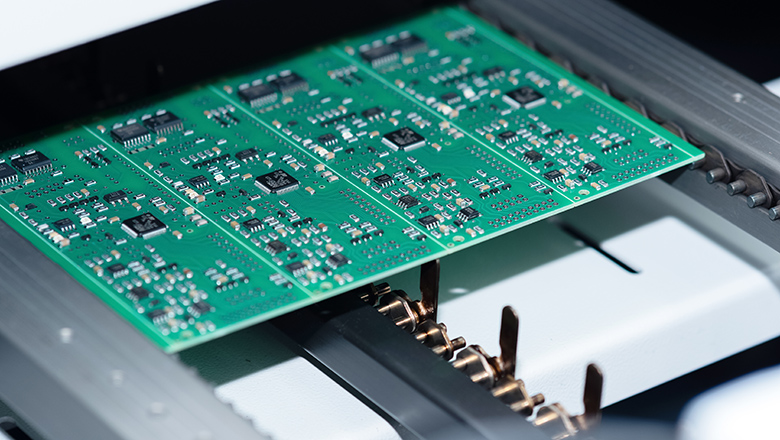
SMT (Surface Mount Technology) has completely superseded conventional manufacturing processes. This technology has redefined the development trajectory of electronic manufacturing. Electronic components achieve direct surface bonding with circuit boards through this method. The process enables high-density component layouts, ensures high-speed signal transmission quality, and promotes miniaturized designs as standard engineering practice. Its technical solutions demonstrate viability for mass production. This manufacturing model simultaneously optimizes production efficiency and cost control.
Whether you are building consumer electronics, designing life-saving medical electronics, integrating complex automotive modules, or simply learning the latest in electronics assembly, understanding and leveraging the advantages of smt will put you at the innovation frontier. SMT enables ever-smaller, smarter, and more reliable products by making use of advanced materials, precise pick and place assembly, and automated inspection—not to mention cost savings and rapid prototyping.
The shift from traditional through-hole components to surface-mount technology is more than a technical change—it is a paradigm shift that defines the very nature of modern electronics. SMT continues to evolve, pushing boundaries, and enabling circuit designers and manufacturers to create PCB assemblies that would have been unimaginable just a couple of decades ago.
Frequently Asked Questions About SMT
Q: Why is SMT better for modern electronics?
A: Surface mount technology enables high-density integration of electronic components, drives the trend towards circuit miniaturization, and simultaneously enhances the operational speed of electronic devices. Consequently, modern circuit structures have become more sophisticated and complex. These advancements are crucial for products such as smartphones, tablets, and wearable devices.
Q: Does SMT mean all components are SMD?
A: For most modern boards, yes—but high-power/connector components may still use through-hole for mechanical strength.
Q: Can SMT parts handle high currents?
A: Many SMDs in power packages (like DPAK, D2PAK) do, but large through-hole parts are still preferred for very high current or ruggedness.
Q: Compare through-hole technology (THT) with surface mount technology (SMT) for circuit board assembly
A:
- SMT mounts components directly onto the board surface, offering higher density, smaller size, and faster automated production.
- THT inserts component leads into drilled holes, providing much stronger mechanical bonds, making it ideal for heavy components, connectors, and high-power applications.