
Introduction to BGA Assembly

When pushing the PCB assembly of high electrical performance and miniaturized, the choice of packaging technology isn’t just a detail—it’s a fundamental determinant of your product’s success. Ball Grid Array (BGA) assemblies has emerged as the non-negotiable standard for achieving robust electrical connections, superior thermal management, and maximum board density.
At LHD TECH, we understand that simply using BGA components isn’t enough. True mastery lies in expertly navigating the entire ecosystem of BGA integration—from initial PCB design and precision placement, through controlled reflow soldering, to advanced bga inspection and bga rework station.
Whether you are evaluating total assembly cost, seeking a partner for a assembly service, or comparing inspection techniques for ultimate reliability, mastering the entire process—including BGA inspection, placement, pcb production, and rework process—is the key to modern electronics success.
This is where LHD TECH excels. We don’t just assemble BGAs; we engineer their success into every step, ensuring your designs achieve their full potential for performance, reliability, and miniaturization.
What is BGA Assembly and Ball Grid Array Packaging?
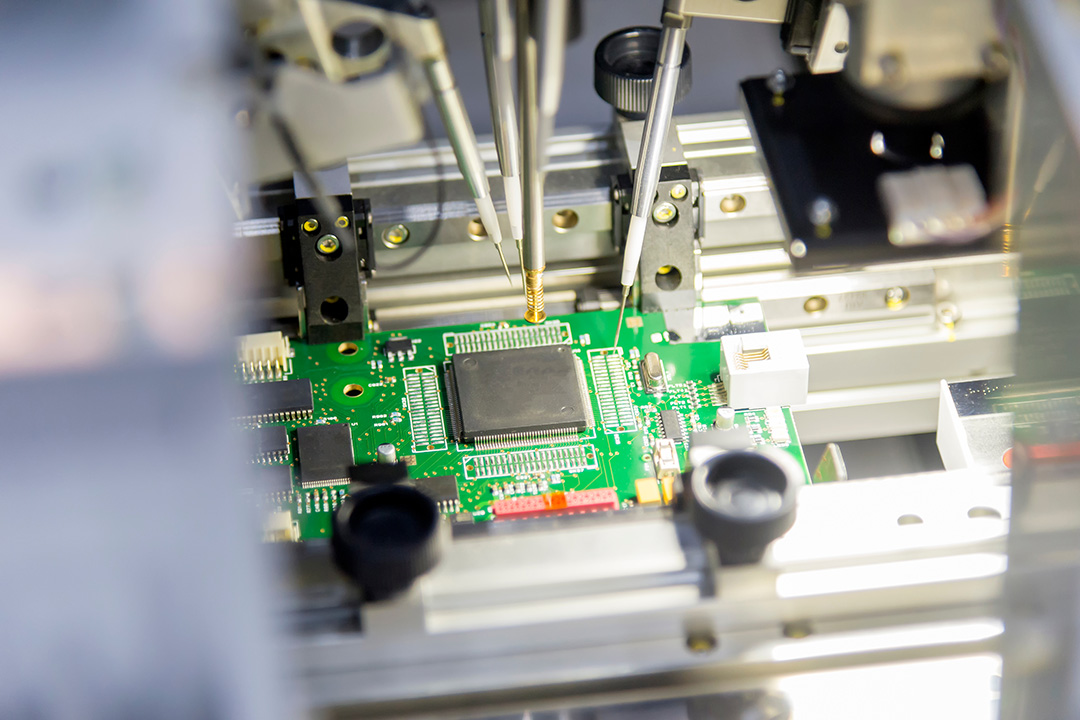
At the heart of modern, high-density electronics lies a critical packaging technology: BGA Assembly. At LHD TECH, we define this as the precision-engineered process of mounting Ball Grid Array (BGA) components onto printed circuit boards by leveraging the most advanced Surface Mount Technology smt assembly practices available.
A BGA surface-mount package represents a significant evolution from legacy components. It eliminates fragile perimeter pins or leads, replacing them with a robust grid of microscopic array of solder balls underneath the component body.
This dense array of connections is the engine behind today’s most powerful processors, high-speed memory, complex microcontrollers, and any application demanding unparalleled interconnection density and reliability.
Why Choose Ball Grid Arrays?
Choosing to integrate BGA technology is a strategic decision for performance; choosing LHD TECH as your assembly partner is the decision that guarantees its success. Here’s why:
- Unmatched Precision Placement:We utilize state-of-the-art, vision-aligned automated pick-and-place machines. This ensures every BGA components are placed with micron-level accuracy and repeatability, forming the perfect foundation for a reliable solder joint.
- Engineered Electrical Excellence: The inherent design of the BGA’s solder ball array provides short, direct, and uniform electrical connections. At LHD TECH, we optimize this further through meticulous process control, ensuring your design achieves the ultimate electrical performance with minimized signal delay and distortion.
- Superior Performance Characteristics:BGAs inherently offer lower inductance, reduced parasitic effects, and enhanced thermal conduction compared to traditional packages. Our specialized expertise ensures these theoretical advantages are fully realized in your final product, making your designs ideal for high-frequency, high-power, and thermally challenging applications.
What Makes LHD TECH’s BGA Assemblies Superior?
BGA pcb assembly at LHD TECH is more than just component placement—it’s an integrated engineering discipline that combines advanced surface mount technology with meticulous process control on PCBs. We specialize in mounting ball grid array (BGA) components using industry-leading equipment and methodologies, creating dense, reliable interconnections that power today’s most demanding applications.
Types of BGAs and Grid Arrays: Ceramic BGA, Array Variations, and More
LHD TECH supports the complete spectrum of BGA technologies, each requiring specialized handling and process adaptation:
Comparison Table: Major BGA Types
| BGA Package Type | Features | Typical Applications |
| Plastic BGA (PBGA) | Versatile, low cost, many pins | Consumer electronics, laptops |
| Ceramic BGA (CBGA) | High temp, robust, excellent electrical | Aerospace, military, high-reliability |
| Tape BGA (TBGA) | Flexible substrate | Automotive, rugged industrial |
| Fine Pitch BGA (FPBGA) | Very compact ball pitch | Smartphones, HDI PCBs, IoT |
| Micro BGA | Ultra-miniature grid arrays | Medical implants, wearables |
| Flip-Chip BGA (FCBGA) | Superior speed, direct chip connection | Networking, high-frequency processors |
Our BGA Package Selection Guidance:
- We provide design consultation to match your electrical, thermal, and mechanical requirements with the optimal BGA package
- For extreme environments, our ceramic BGA process delivers unmatched durability
- Ultra-miniaturized designs benefit from our micro BGAsor FPBGAs.
Key Benefits of BGA Assemblies: Electrical Performance and Reliability

Unrivaled Electrical Performance:
In high-speed and high-frequency designs, signal integrity is paramount. LHD TECH’s precision BGA assembly leverages the inherent advantages of the solder ball grid—extremely short, uniform, and direct electrical pathways. This architecture dramatically reduces parasitic inductance and capacitance, minimizing signal delay, distortion, skew, and crosstalk. When your design demands excellent electrical performance, our controlled assembly process ensures that BGA technology delivers its full theoretical advantage, outperforming traditional leaded packages.
Built-In Reliability Through Process Control
Reliability is engineered, not incidental. The durability of a ball grid array assembly is a direct result of stringent process control at every stage. At LHD TECH, we govern the entire process—from paste deposition and component placement to precise thermal profiling in our reflow ovens—to create solder joints of exceptional strength and consistency. This controlled durability is critical, as it ensures the assembly can withstand the stresses of initial soldering, thermal cycling in the field, and mechanical shock, providing a foundation for long-term product integrity.
Other Major Benefits:
- Superior Heat Dissipation:The BGA’s direct thermal path through the substrate and solder array offers superior heat dissipation compared to QFP or SOP packages. LHD TECH optimizes this further with thermal design analysis and material selection, effectively mitigating the risk of thermal runaway in power-intensive applications.
- Compact Size:By moving connections underneath the surface-mount components, BGAs achieve a significantly higher connection density per unit area. Partnering with LHD TECH allows you to design smaller PCBs and integrate more functionality into a compact footprint, a decisive advantage in modern portable and IoT devices.
- Self-Alignment: The self-alignment characteristic of place the BGA during reflow, driven by molten solder’s surface tension, is a powerful yield enhancer. Our precisely calibrated reflow profiles maximize this effect, ensuring components correctly align to their pads, which increases first-pass success rates and reduces costly defects.
The Process of LHD TECH BGA Assembly: From PCB Design to BGA Placement

Our systematic approach to BGA assembly ensures consistent, high-yield results across all pcb assembly volumes:
- PCB Design Preparation:
- DFM/DFA Analysis: We review your PCB layout for optimal pad geometry, solder mask definition, and thermal relief patterns.
- Material Selection: Guidance on solder paste, substrates, and underfill materials specific to your BGA requirements.
- Stencil Printing/Solder Paste Application:
- Laser-cut, nano-coated stencils with optimized aperture designs.
- Solder paste volume control for consistent array of solder balls formation.
- BGA Placement:
- Vision-aligned placement with fiducial recognition for sub-micron accuracy.
- Real-time component verification before placement.
- Reflow Soldering Process:
- Reflow soldering oven profiles customized for each BGA type and board configuration.
- Nitrogen atmosphere options for reduced oxidation and improved wetting.
- Thermal profiling with multi-point verification for process validation.
BGA Soldering: Reflow Soldering Process & Assembly Equipment
we recognize that the true moment of truth in BGA assembly occurs in the reflow soldering process. This is where precision placement meets controlled thermal energy to forge the permanent, reliable electrical and mechanical bonds that define a successful product. Our reflow soldering process is not just a step in production; it is a meticulously engineered phase that determines the ultimate integrity of every solder joint under the component.
Soldering Process Steps
- Controlled Preheat: Our systems gently and uniformly elevate the temperature of the entire PCB assembly. This critical phase activates the flux, evaporates solvents, and gradually brings all materials to a consistent thermal state, effectively eliminating thermal shock that could damage sensitive components or the substrate itself.
- Precise Reflow Zone: Here, we apply exact thermal management to surpass the solder’s eutectic point. Under our controlled environment, the solder paste and component balls melt, coalesce, and flow. The powerful surface tension of the molten solder causes the BGA to self-align perfectly to its footprint, while the solder balls collapse to form uniform, reliable interconnects. Our proprietary thermal profiling ensures this occurs consistently across every point on the board.
- Managed Cooling & Solidification: Reliability is locked in during cooling. We control the cooldown rate to promote the formation of a strong, fine-grained microstructure within each solder joint. This managed solidification is essential for achieving the mechanical strength and long-term fatigue resistance required for demanding applications.
Critical BGA Inspection Methods and Quality Control for BGA PCB Assembly

High-density bga assemblies require rigorous inspection methods because defects are often invisible after the soldering process. The most reliable inspection systems are tailored for modern ball grid array assembly.
In BGA assembly, what you cannot see can determine your product’s success or failure. The very nature of high-density ball grid array assemblies conceals their most critical connections beneath the component body, making conventional visual checks insufficient. At LHD TECH, we have built a multi-layered, uncompromising inspection systems specifically tailored to the unique challenges of modern ball grid array assembly, ensuring no defect goes undetected.
Common Inspection Techniques
- Automated Optical Inspection (AOI):
This is our first line of defense, deployed both pre- and post-reflow. Our high-resolution AOI systems meticulously verify component presence, correct alignment, polarity, and any visible solder bridging. While limited to exterior views, it provides essential process feedback and catches placement errors instantly.
- X-Ray Inspection – The Critical Core:
To peer beneath the package, we employ the industry’s gold standard: X-Ray bga inspection. This is non-negotiable for true BGA quality assurance. Our 2D and high-resolution 3D X-Ray/AXI (Automated X-Ray Inspection) systems generate clear, volumetric images of the array of solder balls, allowing our engineers to definitively diagnose hidden faults such as:
- Voids: Air pockets within solder joints that compromise thermal and electrical conductivity.
- Bridges: Unwanted shorts between adjacent solder balls.
- Opens/Insufficient Solder: Lack of connection or weak joints that will cause electrical failure.
- Ball Collapse & Alignment: Verification of proper reflow self-alignment and joint formation.
- Functional and In-Circuit Testing:
Inspection culminates in electrical truth. Our Functional and In-Circuit Testing (ICT) rigorously verifies that every electrical connections performs as designed. This final validation step confirms the absence of latent shorts, opens, or other performance-degrading defects that may have passed visual checks, ensuring the board operates to its full specification.
Inspection Methods Table
| Inspection Method | Detects | Recommended For |
| Visual Inspection | Placement error | Pre/post reflow, simple BGAs |
| AOI | Mark/orient/height | Non-hidden joints |
| X-Ray/3D AXI | Voids, bridges, opens | All grid arrays |
| ICT/Functional | Signal, shorts | Final test, high-reliability |
Innovations in BGA Assembly Capabilities and Inspection Technologies
At LHD TECH, we believe that leadership in today’s electronics manufacturing landscape demands constant innovation. Staying ahead of the curve in BGA assembly capabilities is not an option—it’s our commitment to our clients. We actively integrate and develop next-generation technologies that push the boundaries of quality, reliability, and efficiency, transforming sophisticated BGA projects into manufacturable, high-yield realities.
Driving Industry Advancements: Our Core Innovations
We are implementing cutting-edge technologies that solve the most persistent challenges in advanced packaging:
- AI-driven Inspection Techniques:Moving beyond static rule-based checking, our AI-powered inspection systems continuously learn from every board we produce. They identify complex, subtle defect patterns in high-density arrays that human analysts might miss, dramatically reducing escape rates and enabling predictive process adjustments before defects occur.
- Vacuum-Assisted Reflow Soldering:For mission-critical applications demanding perfect joints, we employ Vacuum-Assisted Reflow Soldering. This process actively removes gases during solder solidification, reducing voiding rates to below 3%. The result is exceptional thermal and electrical performance, making it indispensable for ceramic BGAs, RF modules, and high-power arrays where every percentage point of conductivity counts.
- Advanced Underfills & Encapsulation:Mechanical resilience is paramount. We utilize a library of advanced capillary and no-flow underfills, as well as protective encapsulants, tailored for specific thermal expansion coefficients and environmental stresses. This significantly enhances the board’s resistance to vibration, mechanical shock, and thermal cycling—a non-negotiable requirement for automotive, aerospace, and industrial applications of BGA.
- Integration of Inline AXI:Quality assurance must not be a bottleneck. Our production lines feature inline 3D Automated X-ray Inspection (AXI) systems. This allows for 100% volumetric inspection of BGA joints at production speed, providing immediate feedback and enabling true real-time process control for high-volume PCB production.
Engineer Your Success: Partner with LHD TECH for Your BGA Assembly
The path to leadership in today’s electronics market is built on a foundation of uncompromising quality and technological sophistication. BGA assembly has unequivocally become the cornerstone for achieving the high reliability, superior electrical performance, and advanced miniaturization that define cutting-edge products.
This journey, from initial component selection and design through to final validation, is intricate. Every decision—from thermal profiling in reflow soldering to the methodology of bga inspection—directly impacts your product’s performance, yield, and market viability. Success is not merely about assembling components; it’s about engineering every interconnection for perfection.
This is where your choice of partner becomes your most critical strategic decision.LHD TECH stands as your definitive partner for this journey. We offer more than a service; we provide a partnership grounded in deep expertise across the entire ecosystem of modern PCB assembly. From a single, precision-built prototype to full-scale, high-volume production, our commitment to excellence remains constant.
Your Next Step with LHD TECH:
Do not let complexity be a barrier to innovation. Engage with a partner who possesses the proven experience, advanced surface mount technology, and unwavering commitment to quality that your project deserves.
We invite you to:
- Start Your Project with a collaborative design review.
- Request a Detailed BGA Assembly Quote tailored to your specific needs.
- Discuss Your Requirements with our engineering team to validate strategy and process.
Before you decide, ask the critical questions about assembly cost, rework process capabilities, and hands-on experience with the latest inspection systems. At LHD TECH, we welcome these discussions, as they reflect the serious commitment we both share to building exceptional products.