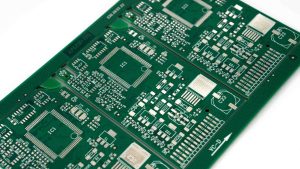
Introduction: The Importance of Surface Finish for Your PCB
The surface finish process is a critical link in electronics manufacturing. The surface finish directly impacts solder joint reliability, long-term storage stability, resistance to environmental corrosion, and signal transmission performance. When products are deployed in aerospace, medical devices, or consumer electronics, the selection of PCB surface finish determines whether the product meets the required performance standards.
The PCB industry offers a variety of surface finish options. Among these, Electroless Nickel Immersion Gold (ENIG) and Electroless Nickel Electroless Palladium Immersion Gold (ENEPIG) stand out for their balance and advanced performance. The ENIG process achieves a balance between cost and performance, which attracts many users to choose this finish. As a reliable surface finish, ENIG extends the service life of PCBs while enhancing their adaptability to harsh environments. This guide analyzes the entire manufacturing process and examines the advantages and disadvantages in practical applications, providing information to help users select the optimal surface finish for their PCBs.
What is ENIG? Understanding This Reliable Finish

ENIG stands for Electroless Nickel Immersion Gold. It’s a two-layer metallic surface finish that forms the gold standard in modern PCB industry practices.
- The first layer, a nickel layer, is deposited onto the copper pads through a chemical (electroless) process.
- A thin layer of gold(the layer of gold is plated by immersion) follows as the top coat.
- Both the nickel and gold layerswork together: the nickel protects the copper and serves as the main soldering surface, while the gold ensures solderability and shields the nickel during storage.
What Makes ENIG a Good Choice?
- The finish is lead-free, supporting modern eco-standards (RoHS compliance).
- ENIG meets the strict requirements for aerospace and medical devicesbecause it forms a reliable barrier to copper and provides long-term solderability.
- It protects copper tracesfrom oxidation, making the PCB last longer and work consistently.
A thin gold layer on top of the nickel not only offers a highly conductive surface but also ensures a smooth surface that helps place parts correctly—vital for automated PCB assembly lines.
How ENIG Works: The Plating Process Explained

ENIG process involves more steps and is more complex than HASL or OSP process.Specific parameters are set before each step of the ENIG process.This complete procedure ensures that the final surface finish meets reliable standards, while avoiding common defects such as poor soldering or nickel layer corrosion.
Step-By-Step: ENIG Plating Process
Pre-Treatment: Removes oil, dirt and oxide from copper pads—essential for good adhesion.
Micro-etching: Lightly roughens the copper to prepare for uniform nickel deposition.
Activation (Palladium Catalyst): Deposits a catalyst that enables the nickel to chemically start plating on the copper.
Electroless Nickel Deposition: The main nickel layer in ENIG—serves as a reliable barrier to copper and provides the principal solderable finish.
Rinsing: Cleans the surface to avoid contamination between layers.
Immersion Gold Deposition: A chemical process: Gold ions replace some nickel atoms, forming a thin layer of gold that protects and preserves solderability.
Final Rinse and Drying: Prevents water spots or tarnish on the gold surface finish.
What Makes ENIG Unique?
- The ENIG process involves no electrical current—both nickel and gold are deposited autocatalytically, producing a smooth, flat surfaceand consistent thickness.
- The thin goldis just enough to shield nickel—too thick would raise costs; too thin could impact storage and performance.
- The nickel layer also absorbs most soldering heat, shielding the copper pads from thermal damage.
In summary: ENIG surface finishing provides PCBs with higher durability and reliability.This surface treatment meets the requirements of automated production lines.ENIG improves the signal transmission performance of PCBs.Meanwhile, this process reduces the difficulty of mounting high-density components.
Advantages and Disadvantages of ENIG Surface Finish
Let’s look at the advantages and disadvantages of ENIG as a surface finish for your PCB:
Advantages of ENIG
- Superior Solderability ENIG is great for soldering due to its highly conductive and oxide-free gold surface finish. This makes the assembly process smooth and produces robust solder joints.
- Flat, Smooth Surface The finish offers a flat surface essential for surface mount technology, high-density interconnects and advanced BGA components. The smooth surface helps place parts accurately in automated assembly.
- Excellent Corrosion Resistance Nickel and gold layers act as a barrier to the copper, preventing corrosion and oxidation. This is why ENIG is so popular for aerospace and medical devices.
- Lasts Longer in Storage PCBs with ENIG finish can be stored for up to two years or more, thanks to the thin gold layer that shields the nickel.
- Lead-Free, Eco-Friendly ENIG is a lead-free finish, supporting global green standards for the PCB industry.
- Wire Bonding Friendly The gold surface finish is vital for PCBs that require gold wire bonding (such as RF or optical modules).
- Uniform Layer Thickness The finish forms consistently across all copper pads, reducing the chances of variability found in HASL.
- Easy to Inspect Visual and AOI inspection is simplified due to the reflective gold surface, though thickness control still requires metrology.
Top ENIG Advantages
| Advantage | Why it Matters | Who Needs It |
| Flat Surface | Planarity for SMT & BGA | High-density/SMT assembly |
| Reliable Solderability | Fewer soldering defects | Consumer, automotive, medical |
| Corrosion Resistance | Lifetime reliability | Aerospace, automotive, industrial |
| Easy Wire Bonding | Gold-aluminum/gold wires | Telecom, optical, RF boards |
| Eco-Friendly & RoHS Compliant | Meets global standards | Exporters, regulated industries |
Disadvantages of ENIG
- Cost ENIG costs more than OSP and HASL due to gold content and its complex plating process.
- Black Pad Syndrome A rare but serious disadvantage of ENIG: If not controlled, the nickel can corrode during gold plating, causing brittle, non-solderable pads. This risk is minimized in trusted manufacturing environments but must be monitored.
- Not Ideal for High-Wear Applications The thin gold layer is unsuitable for repeated mechanical contact (like edge connectors). Hard gold (electrolytic) is better here.
- Sensitive to Handling Oils or dust on the finish can cause solderability problems, so handling must be minimized.
- Limited Thermal Shock Resistance While ENIG is reliable for standard electronics, some very high-temperature cycles (e.g., for power electronics) may reveal weaknesses compared to alternatives.
- Complex Process Increases Risk of Variability Multi-step plating process involves many chemical controls; if one is off, finish and PCB performance may suffer.
ENIG Disadvantage
| Disadvantage | Why It Matters | Mitigation/Alternative |
| Higher ENIG Costs | Adds 5–15% to PCB cost vs. HASL/OSP. | Use for critical pads only, specify selectively. |
| Risk of Black Pad Syndrome | Can cause solder joint failure and unreliable finish. | Work with IPC 4552-compliant fabs, regular QC. |
| Not for High Durability Edge Contacts | The thin gold layer wears out under friction. | Use hard gold or ENEPIG for connectors. |
| Must Avoid Handling/Contamination | Fingerprints impact solderability. | Handle with gloves, vacuum tools only. |
| Limited to Correct Storage | Poor storage hurts solderability, even with gold present. | Use desiccants, air-tight/anti-static bags. |
| Thermal Cycling Performance | Not optimal for extreme, repeated thermal shock. | ENEPIG or hard gold may be better. |
| Complex Manufacturing Process | More chemical steps raise defect risks. | Choose experienced, certified shops. |
ENIG vs ENEPIG: A Closer Look
ENEPIG (Electroless Nickel Electroless Palladium Immersion Gold) is an emerging alternative for even more demanding designs. ENEPIG introduces a platinum group metal layer between the nickel and gold:
- Palladium acts as a buffer, reducing the risk of black pad syndrome—ENEPIG is the “universal finish” for complex, high-value applications such as aerospace and high-frequency medical electronics.
- ENEPIG supports both gold wire bonding and tin lead-free soldering—making it the “universal solder finish.”
- The extra layer can mitigate the disadvantages of ENIG, but ENEPIG costs are even higher.
ENIG vs ENEPIG Quick Comparison
| Feature | ENIG | ENEPIG |
| Process Complexity | Complex (Nickel + Gold) | More complex (Nickel + Palladium + Gold) |
| Black Pad Resistance | Good, but must be controlled | Excellent, palladium prevents issue |
| Solderability | Excellent | Excellent |
| Gold Wire Bonding | Excellent | Excellent |
| Cost | High | Highest |
| Used In | Most high-reliability electronics | Military, aerospace, leading-edge medical |
ENIG vs Other PCB Surface Finishes (ENEPIG, HASL, Hard Gold, OSP)

HASL (Hot Air Solder Leveling)
- How it works:Boards are dipped in molten solder, then blown flat with hot air.
- Advantages:Low cost, robust for through-hole.
- Disadvantage:Uneven finish—pads aren’t flat, making it unsuitable for fine-pitch SMT.
- Not the best surface if you need flatness for BGAs, CSPs or advanced assembly.
Hard Gold (Electrolytic Gold)
- How it works:Thick electrolytic gold plated onto edge contacts and high-wear pads.
- Advantages:The most durable—ideal for plug-in/out edge connectors.
- Disadvantage:Expensive, not used for soldered pads due to poor solderability and cost.
- Used only for pad areas where mechanical wear is a concern.
OSP (Organic Solderability Preservative)
- How it works:Water-based organic compound temporarily protects copper.
- Advantages:Very low-cost, eco-friendly, good for short production runs.
- Disadvantage:Shelf life measured in weeks; not suitable for storage or multiple reflows.
Immersion Silver & Immersion Tin
- Fine surface finish alternatives for specific markets (e.g., RF, green electronics), but both are more vulnerable to handling, tarnish and shelf-life issues than ENIG.
ENIG Applications and Real-World Results
Which PCB Uses Benefit Most from ENIG?
- Aerospace electronics:Flat surface, reliable finish and corrosion resistance are mandatory.
- Medical devices:ENIG protects delicate copper pads and trace connections for years—critical in implanted or diagnostic electronics.
- Automotive ECUs:Resistance to salt, heat, humidity; ENIG finish helps your PCB work for a car’s life.
- Consumer devices:High-density devices like smartphones rely on ENIG for fine-pitch, complex multilayer boards.
Technical Specs: Layers, Thickness and Performance
ENIG consists of exacting nickel and gold layers:
- Nickel (main solderable, protective barrier):3-7 μm (typ. 5 μm for best results)
- Gold (immersion, anti-oxidation/protective):05–0.12 μm (ultra-thin gold, just right to cover nickel but not raise cost)
Why Thickness Matters
- Too thin? Gold layer stops protecting nickel, increasing risk of corrosion.
- Too thick gold? Unnecessary cost, can negatively affect solder joint’s mechanical strength.
ENIG Layer Structure Diagram
Copper Trace → Nickel Barrier (3–7 μm) → Layer of Gold (0.05–0.12 μm) → Solder.
- Nickel and gold layers create a barrier to the copper, keeping solder joints stable for over a decade.
Best Practices for Incorporating ENIG and ENEPIG on Your PCB
- Use ENIG selectively:If budget is tight, apply ENIG only to BGA or fine-pitch pads, with OSP or HASL elsewhere.
- Always handle with gloves:ENIG is a highly conductive surface, but it’s vulnerable to contamination. Recommend vacuum tweezers for assembly.
- Store PCBs properly:Airtight, anti-static, with desiccants; ENIG boards last longer and work beyond a year with proper storage.
- Specify thickness:In your fab files, note “ENIG per IPC 4552, 5 μm nickel, 0.10 μm gold” for reliability.
- Request test coupons:For critical projects, ask for plated test coupons to check thickness and performance.
Industry Insights and Future Trends
- ENIG works well for next-generation, miniaturized electronics (IoT, wearables) due to unmatched flatness and solderability.
- The PCB industryis shifting toward ENEPIG for universal compatibility—nickel electroless palladium immersion gold is more expensive, but future-proof.
- Hard gold, though costlier, will remain best for mechanical wear areas like card edges, while most SMT boards will standardize on ENIG or ENEPIG.
- Innovations in plating processand real-time layer thickness measurement are reducing the risks and disadvantages of ENIG.
ENIG PCB FAQ
Q1: Does ENIG protect copper pads from environmental exposure?
A: Yes—the nickel layer in ENIG acts as a robust barrier to the copper, and the layer of gold further shields it during assembly and storage.
Q2: Why does ENIG cost more than HASL or OSP?
A: Gold and the multi-stage chemical process increase ENIG costs; but the finish lasts longer and works in more demanding environments, balancing cost and performance.
Q3: What are the main advantages and disadvantages of ENIG for your PCB?
A: Main advantages include flat surface, excellent solderability and long shelf life. Disadvantages of ENIG are cost, and possible “black pad” issues if not well controlled.
Q4: How does the thin gold layer make ENIG so reliable for SMT?
A: ENIG deposits a thin layer of gold over the nickel surface. Acting as a protective layer, the gold prevents contaminants and oxides from reaching the circuit board during storage and prior to the soldering process, thus keeping the nickel layer clean at all times.This protection ensures stable flatness, a smooth surface, and consistently high electrical conductivity of the PCB pads. These properties are essential prerequisites for surface mount technology and high-density PCB designs.During soldering, the thin gold layer dissolves rapidly into the solder, allowing the solder to directly contact and react with the underlying nickel layer. This direct bonding forms the technical basis for creating strong and long-term reliable solder joints.
Q5: How does ENIG compare to hard gold and ENEPIG for reliability and performance?
A: ENIG is a reliable finish for most uses, balancing cost and performance. Hard gold excels at withstanding repeated mechanical wear (like edge connectors), while ENEPIG (electroless nickel electroless palladium immersion gold) adds an extra palladium layer that further protects against black pad and expands compatibility (gold wire bonding + all soldering types), though at a higher cost.
Q6: How does ENIG help your PCB work better and last longer?
A: ENIG protects the exposed copper traces and copper pads with dual metallic layers, providing both physical and chemical shielding. Its flat surface and excellent solderability support increasingly dense and demanding electronic assemblies. This reliable finish results in fewer soldering defects, improved high-frequency signal performance, and high reliability even after extended storage.
Conclusion
ENIG (Electroless Nickel Immersion Gold) PCB Surface Finish is a key enabler of today’s electronics industry. Its two-layer metallic surface finish—a nickel barrier topped with a thin gold layer—ensures consistent, flat, solderable and highly durable PCB surfaces. ENIG makes the PCB more reliable, helping your circuit work in the real world, from advanced aerospace controls to tiny medical implants. The surface finish forms a critical barrier to copper, provides a highly conductive and solderable surface, and protects against oxidation during storage and assembly.
While ENIG costs are higher than simpler finishes like HASL or OSP, the advantages and disadvantages favor ENIG for most high-performance, high-reliability and fine-pitch applications. ENIG also supports lead-free assembly, lasts longer and meets demanding market and regulatory needs (RoHS, aerospace, medical).
When designing or specifying a surface finish for your PCB, consider:
- Do you need a flat surface for SMT or BGA?
- Is long-term solderability required?
- Does your application demand high corrosion resistance or gold wire bonding?
If the answer is yes, ENIG—or ENEPIG for even greater universality and reliability—is the best surface finish for your PCB, balancing performance, shelf life and production cost.
For applications where mechanical wear or repeated connector insertion/removal is critical, consider hard gold. If cost is most important, OSP or HASL can be used for less demanding boards.