Introduction
Printed circuit boards (PCBS) are the cornerstone of all electronic products and one of the most crucial components in PCB layout. They enable all electronic products to operate efficiently, compactly and reliably. Usually, PCB capacitors play a crucial role in determining whether a circuit can operte stably and efficiently.
In this comprehensive guide to PCB capacitors, we will introduce different types of capacitors and teach you how to choose the right capacitor for your circuit board. You will also gain an in-depth understanding of its significanc in the entire PCB design, practical layout techniques, and how these multi-functional electronic components affect circuit performance and quality.
Whether you are an experienced PCB engineer or an electronics enthusias, this guide will provide you with the knowledge you need to fully exploit the potential of capacitors in PCB design.
What is a PCB capacitor?

PCB capacitors are essential components for almost all circuit boards. Esentially, a capacitor is a passive component; It stores energy through an electric field formed between two conductiv (metal) plates, which are separated by an insulating material called a dielectric. Its capacitance value defines the characteristic parameters of each capacitor (measured in farads, although micro-farads, nano-farads or picofarads are more commonly used in PCB applications).
In both analog and digital printed circuit board applications, capacitors serve several key functions:
- Stabilizing voltage and power rails.
- Filtering noise and ripple.
- Coupling AC signals while blocking DC.
- Providing energy bursts to support rapid current demands.
From power supplies to high-speed data circuits, capacitors play an indispensable and extremely important role across a wide range of applications. To successfully apply capacitors, one must first understand how they work and how the performance of the entire circuit board and circuit is affected by capacitors of the same type.
How PCB Capacitors Work: The Science Behind Capacitors

Understanding how pcb capacitor work starts at the atomic level.When a voltage is applied across a capacitor, electrons accumulate on one of the metal plates, creating an excess of negative charge, while electrons are drawn away from the other plate, creating a deficiency of negative charge (or a positive charge). The dielectric prevents current from flowing directly, but the electric field established across the plates [the very essenc of capacitance] holds and stores this stored energy.
Detailed explanation of the working principle of capacitors
- Charging: When a voltag is applied across the terminals, the charge accumulates rapidly until the voltage between the plates equals the applied voltage.
- Discharge: It will immediately release the stored energy if the capacitor is connected to the load, thereby maintaining the voltage during a brief power outage.
- Blocking DC through alternating current: The changing signal causes the capacitor to repeatedly charge and discharge, effectively allowing rapid voltage changes to pass through while blocking stable voltages.
Table: The Science of PCB Capacitor Operation
| Step | How Capacitor Responds | Resulting Role in Circuit |
| Apply Voltage | Electrons build up (charge) on one plate | Stores energy in the electric field |
| Remove Voltage | Discharge current flows into circuit | Releases stored energy, supports load |
| Connected in AC | Charges and discharges with each cycle | Allows alternating current to flow |
| Connected in DC | Charges once, then acts as open circuit | Blocks direct current after charging |
Why Capacitance Matters
- A higher capacitance value provides better filtering performance and allows for greater energy storage, but practical applications are influenced by factors such as size, type, and dielectric material.
- The surface area of the two metal plates and the type of dielectric material (for the same footprint, a higher dielectric constant results in a larger capacitanec value) are key parameters.
- For printed circuit boards (PCBs), capacitanec values typically range from a few picofarads (for timing circuits) to several thousand microfarads (for power supply filtering).
Types of PCB Capacitors: Choosing the Right Capacitor for Your PCB board
There are many types of PCB capacitors, and each has its most suitable application. Choosing a suitable capacitor can ensure that your circuit board is in the best condition now and in the future, while also extending its service life.
The Most Common Types of PCB Capacitors
1. Ceramic Capacitor (including MLCCs and ceramic disc capacitors)
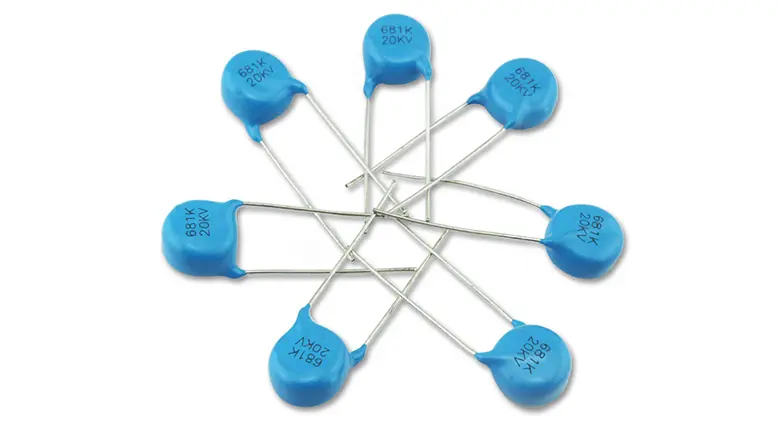
- Features: Non-polarized, extremely low ESR, compact size, ideal for high-frequency decoupling
- Applications: IC decoupling, noise filtering, AC signal coupling
- Appearance: Typically small in size, rectangular (SMD) or disc-shaped (through-hole)
2. Aluminum Electrolytic Capacitors
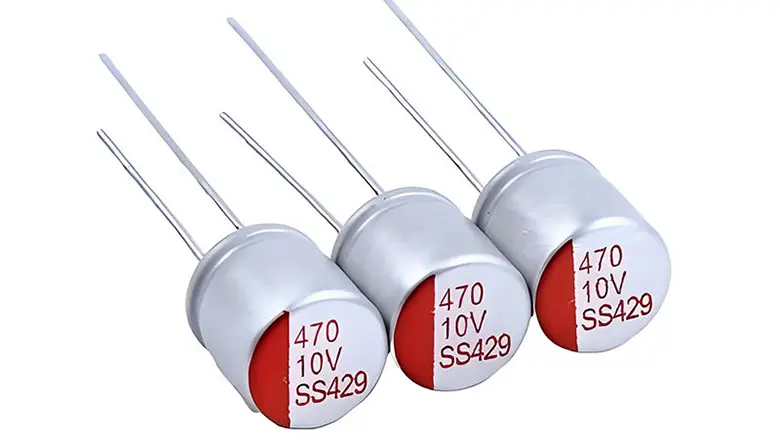
- Features: High capacitance, polarized (positive and negative terminals must be distinguished), best suited for high-capacity energy storage
- Applications: Power supply filtering, maintaining voltageduring peak demand periods
- Physical characteristics: Large cylindrical shape with clearly marked polarity, located near the power input terminal
3. Tantalum Capacitors
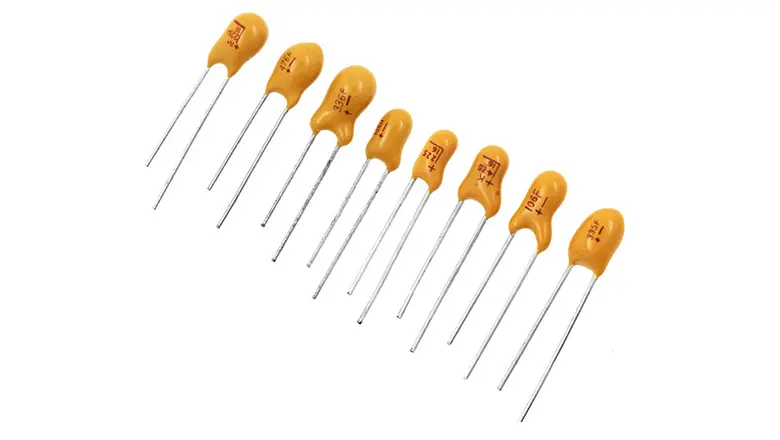
- Features: Compact size, high capacitance, high temperature stability, low ESR, polarized
- Applications: Decoupling in high-density applications with limited space (e.g., mobile phones, medical devices)
- Disadvantages: Sensitive to electrical overloads (always select a voltage rating higher than the actual requirement during selection)
4. Film Capacitors
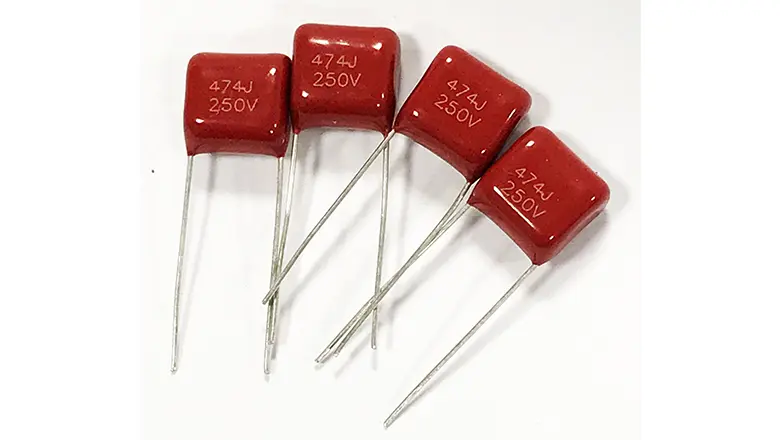
- Features: Great stability, long lifespan, good for AC and timing applications, non-polarized
- When to Use: Audio circuits, signal coupling, timing, AC line filtering
5. Supercapacitors
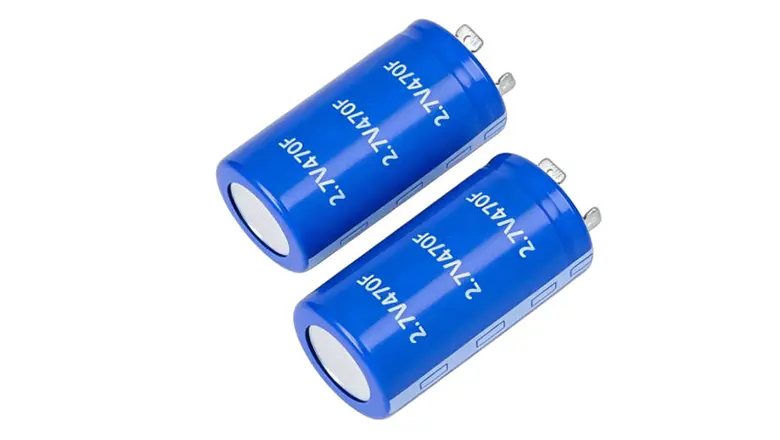
- Features: Extremely high capacitance; suitable for short-term backup power or energy harvesting; polarized
- Applications: Backup power for real-time clocks (RTCs); energy harvesting applications
Functions and Importance of Capacitors in PCB Design

In PCB design, capacitors are an indispensable component that cannot be replaced by any other component. They directly affect circuit performance, which in turn impacts the reliability, efficiency, and quality of every printed circuit board and even electronic devices.
Key Functions of PCB Capacitors
1. Power Smoothing and Filtering
- Capacitors maintain a stabl voltage by absorbing voltage fluctuations and filtering out high- and low-frequency noise. When alternating current (AC) is converted to direct current (DC) through a rectifier circuit, capacitors store energy and releas it during voltage dips, ensuring that sensitive electronic devices continue to operate.
- This process keeps the operating voltage within the safe range for integrated circuits and other components in electronic circuits.
2. Decoupling and Bypassing
- Decoupling capacitors (typically small ceramic chip or MLCC types) are mounted near the power supply pins of integrated circuits. They provide a local charge reservorithat prevents voltage sags caused by sudden surges in current demand during device state transitions. This is critical for maintaining logic threshlod voltages and ensuring data integrity.
- Bypass capacitors provide a parallel, low-impedance path for high-frequency noise, diverting it to ground and away from critical power supply lines.
3. Signal Coupling and Blocking DC
- In analog circuits, capacitors are commonly used for signal coupling; they allow AC signals to pass through while isolating the different DC voltage levels between circuit stages. This is particularly important when connecting modules operating at different reference potentials.
4. Timing and Oscillator Circuits
- The abilityto store and release charge in a controlled manner is harnessed in timing circuits. Here, capacitors are used in conjunction with resistors to set the oscillation frequency or pulse width.
- For example, in crystal oscillator circuits and audio filtering, selecting the appropriate capacitors (typically film capacitors or NP0 ceramic capacitors to ensure precision) ensures highly stable operation over time and across temperature variations.
5. Energy Storage and Burst Power
- High-capacity capacitors are not only used for filtering in power supply circuits, but can also provide large instantaneous currents when needed—for example, during motor startup or microprocessor activation, when current demand spikes briefly.
6. Suppressing Transients and Voltage Spikes
- In motor drivers, relay circuits, and switching power supplies, carefully selected capacitors can absorb voltage spikes (transients); otherwise, these spikes could damaeg expensive semiconductor devices or interfere with the normal operation of the circuit.
Why the Importance of Capacitors in PCB Design Cannot Be Overstated
In the electronics industry, the importance of capacitors in modern printed circuit boards (PCBs) has long been recognzied. They can extend the service life of components (by stabilizing voltage), ensure that equipment complies with electromagnetic compatibility (EMC) regulations, and even enhanec the user experience by delivering noise-free audio and video.
Capacitors in PCB design are:
- The guardians of clean power rails and reference voltages.
- Providers of local energy where and when it’s needed most.
- Filters that uphold signal fidelity and block unwanted noise.
- The last line of defense against environmental electrical disturbances.
How to Select and Place PCB Capacitors for Better Performance
Effective capacitor selection and placement are where pcb designers demonstrate their expertise.
Selecting capacitors of appropriaet specifications is a crucial step, even as important as other aspects of PCB design.
Equivalent series resistance (ESR) and tolerance
- Low ESR can effectively isolat high-frequency noise. So tantalum capacitors and MLCCS are usually the first choice.
- Tolerance determines the degree of match between the actual value and the nominal value, which is crucia for timing, filtering or precise signal paths.
Working temperature
- For applications with high ambience temperatures or large temperature fluctuations (such as automotive, industrial or outdoor environments), it is necessary to ensure that the selected capacitors meet the working temperature requirements (common grades of ceramic capacitors include X7R, X5R and NP0).
Physical Size and Mounting Style
- Surface-mount (SMD) capacitors are the backbone of modern PCB SMT assembly, supporting high-density layouts.
- Through-hole capacitors are still favored in power, industrial, and repairabel devices for their robustness.
Type Selection Table
| Function in PCB | Recommended Type(s) | Key Considerations |
| Decoupling (digital/analog) | MLCC, Tantalum | Low ESR, close to ICs |
| Power supply filtering | Aluminum Electrolytic | High capacitance, bulk storage |
| AC Signal coupling | Film, Ceramic disc | Non-polarized, stable |
| Timing circuits | NP0/C0G Ceramic, Film | Tight tolerance, stable over temp |
| Energy backup, RTC battery | Super capacitor | High energy, low voltage |
Layout for Optimizing Circuit Performance
- Place decoupling capacitors close to the IC’s power pins—short traces minimiez parasitic inductance and ensuer rapid discharge of stored energy.
- Distribute multiple decoupling capacitors along the power rail to achieve overall noise suppression and handle local current spikes near each critical component.
- For high-frequency or sensitiev analog/RF circuits, use capacitors of different values in parallel (e.g., a 10µF ceramic capacitor in parallel with a 0.1µF capacitor) to cover a wider frequenc range.
Capacitor Physical Characteristics and Actual Failure Manifestatio
Physical signs: Swelling, electrolyte leakag, cracked casings, and burn marks on the PCB—these typically appear on failed aluminum electrolytic capacitors in aged circuit boards.
Functional indicators: Increased noise, voltage fluctuations, unstable circuit operatio, and repeted device resets.
Causes of Failure
- Exceeding the rated voltage: This can lead to dielectric breakdown and catastrophic failure.
- Reverse polarity: Capacitors with polarity (such as electrolytic capacitors, tantalum capacitors, and supercapacitors) may explode if installed in revervse.
- Excessive ripple current: This can cause overheating, especially at high switching frequencies.
- Repeated high temperatures: Shorten service life—a key consideration in power supplies and automotive electronics.
- Aging: All capacitors age, with electrolytic capacitors being most susceptile due to electrolyte evaporation.
Operation and installation tips
- Always adher to the electrostatic discharge treatment and storage proceduers. Capacitors are highly sensitive to electrostatic discharge.
- Before soldering, it is essential to check the polarity. Be especially careful with polarized capacitors.
- Pre-bend the leads correctly to avoid mechanical stress during PCB assembly.
Capacitor application skills for professional PCB designers

- Use simulation tools: Predict the noise path, calculate the resonanec between parallel capacitors, and verify the actual voltage at each point in the power supply system.
- Discharge Resistor: For large energy storaegcapacitors or safety capacitors, a discharge resistor should be connected in parallel across the capacitor terminals to safely release the stored energy after power failure, thereby enhancing user safet and extending the lifespan of components.
- Hybrid Capacitor Bank: Combining large-capacity electrolytic capacitors with mlcc to achieve the best overall noise suppression and energy availability.
- Allow for rework and maintenance: When designing the PCB, ensure that capacitors are easy to replace and can be clearly marked for future troubleshooting.
Remember, capacitors are the foundation for enhancing the performance of any PCB boards.
Frequently Asked Questions About PCB Capacitors
Q:Why are capacitors important in PCB design?
A: Capacitors play a crucial role in stabilizing voltage, filtering noise, storing and releasing energy, and coupling signlas – all these details directly affect the performance and lifespan of electronic products.
Q:How do capacitors work in AC and DC circuits?
A: A capacitor blocks direct current after initial charging, but as the signal polarity changes, it allows alternating current to flow through charging and discharging.
Q:What will happen if you use the wrong type of capacitor?
A: The wrong capacitor, ESR or voltage – may lead to excessive noise, timing errors, inefficient filtering, and even difficult-to-recover faults.
Q:Can you mix different types of PCB capacitors for one function?
A: Yes, in fact, it is usually the best practice (for example, parallel MLCC and decoupling the electrolytic power rail) to achieve a lower overall ESR and better frequency response.
Q:How should capacitors be handled during PCB assembly?
A: Stay away from static electricity. Do not bend the leads too close to your body. Repeatedly check the polarity and always use the values and voltages specified in the design.
Conclusion: The Importance of Capacitors in PCB Design
Capacitors are the silent workhors horses of the pcb design world. These components in electronic circuits underpin everything from basic timing and filtering to the most robust power management and high-speed signal integrity solutions. Their reputation as fundamental passive components is well-earned, and the importance of capacitors in pcb assemblies is impossible to overstate.
Understanding how pcb capacitor work—from the science of how a capacitor stores energy in an electric field between two metal plates, to how dielectric materials and plate geometry determine capacitance—is essential to crafting reliable, efficient, and high-performing circuit boards. Whether for storing local energy on a processor’s power pin, blocking direct current but allowing ac signals to pass in coupling applications, or filtering out noise and ripple, the right choice and placement of a pcb capacitor can vastly improve circuit performance.
In this comprehensive guide, we’ve highlighted the many roles that capacitors play:
- They allow for better performancein digital, analog, and mixed-signal designs.
- Different types of capacitors—including ceramic disc, MLCC, aluminum electrolyti, tantalum, film, and super capacitor—each offer unique benefits tailored to power, signal, or timing needs.
- The importance of capacitorsextends from noise suppression and voltage stability to timing, energy backup, and device longevity.
As you choose the right one for any application, always remember to consider:
- The stored energyneeded (capacitance value)
- Required voltage rating
- Expected operating temperature
- Layout, ESR, footprint, and whether polarity matters
- Lifetime expectations and failure modes
Proper handling of pcb capacitors—from careful orientation and ESD-safe assembly to using bleeder resistors on bulk storage units—ensures the safety, repairability, and future service of your electronic designs. Keep in mind that every capacitor is one vital piece of the reliability puzzle, and the way capacitors look and function should be routinely inspected in the field.
Takeaways for Every Engineer & Designer
- Never underestimate the significance of capacitor selection! Study your application and choose the right onefor your unique needs.
- Always validate in the real world: Simulate, prototype, and test across temperature, voltage, and time.
- Continue learning! Innovations in materials and capacitor construction continue to push the limits of what’s possible in circuit boards. Stay updated with industry resources and peer-reviewed guides.
- Respect the “invisible” role that capacitors play. In most situations, the right capacitorwill make the difference between reliable electronics and chronic field failures.
Bookmark this comprehensive guide and share it with your team. For design support or the latest in PCB capacitor technology, consult with industry leaders and never stop optimizing your designs.