


Introduction

At LHD TECH, we’re right at the heart of the electronics revolution. Every day, it’s our job to push the limits of what’s possible. PCB technology is changing fast—and we’re leading that change, thanks to our know-how in Flexible PCBs (flexible printed circuit boards or FPCs).
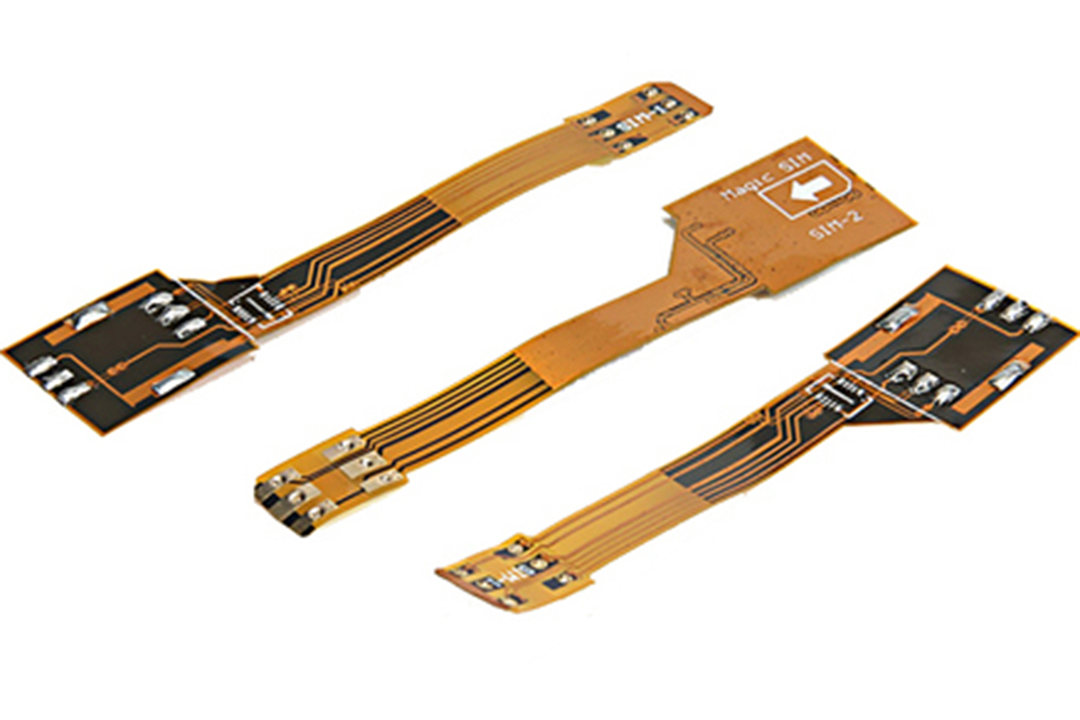
While traditional rigid circuit boards set the initial stage, today’s cutting-edge devices demand more. That\’s where our flexible PCB solutions come in. We utilize advanced flexible dielectric film, such as high-performance polyimide, to create conductive circuits that can bend, fold, and conform to dynamic shapes—enabling designs once thought impossible.
The move to flexible electronics has opened the door to smaller, lighter, and more reliable electronic components for automotive, medical, wearable, and aerospace sectors. A flexible PCB is the foundation of product miniaturization and a key factor in the creation of cutting-edge flexible displays, wearable sensors, advanced medical implants, and high-frequency applications.
What is a Flexible PCB?

A Flexible PCB is far more than just a component; it is more like a meticulously designed, flexible connection system. In simple terms, we use a flexible dielectric as the base – usually high-performance polyimide, as it is particularly heat-resistant and corrosion-resistant. Then, on this base layer, we will precisely lay out the conductive layer (mostly made of copper).This is all integrated with robust insulating and adhesive materials to ensure durability and performance.
Flexible printed circuits are not limited to flat forms. They are engineered to twist, bend, and fold into virtually any configuration, making them an ideal PCB for many applications that demand compact, non-planar electronics. FPCs can be divided into single-sided flex circuits, double-sided flex circuits, and multilayer flex circuits, each supporting increasingly complex circuit board materials and architectures.
The flexible circuit boards we provide are comprehensive:
- Single-sided flexible board: Cost-friendly, suitable for simple interconnection requirements.
- Double-sided flexible board: It can achieve double-sided wiring and handle more complex designs.
- Multilayer flexible board: By stacking multiple layers of flexible circuits, it meets the requirements of high-end applications for high density and complex functions.
From circuit board materials to architecture, these are all our forte. The more challenging your project is, the more we can tailor it to your needs, finding the perfect balance between flexibility, performance and stability and reliability.
Types and Classifications of Flexible Circuit Boards
Our philosophy is to truly incorporate the word \”softness\” into every layer of your design. Therefore, our flexible circuit board product line is very comprehensive, ranging from the simplest connection wire to highly integrated complex systems, and can meet all kinds of demands.
Single-Sided Flex Circuits
- Structural features: To put it simply, it is \”one conductive layer+ one layer of flexible dielectric film\”. This is the most fundamental and economical structure.
- Applicable scenarios: Emphasizing \”large volume, simplicity, and reliability\”. It is suitable for products that do not have high requirements for circuit complexity but need stable mass production.
- Common uses: such as LED light strips, basic connection flat cables, simple sensors, and many circuits in consumer electronics modules.
- Material selection: In terms of materials, the base we use is high-quality polyimide (PI) or PET. The thickness can range from 12 to 125 microns, completely depending on the flexibility and strength you need.
Double-Sided Flex Circuits
- Our Approach: To enable greater circuit density and functionality, we fabricate circuits with two conductive layers. These are separated by a flexible dielectric and interconnected with precision plated through-holes (PTHs), a process we have mastered for flawless reliability.
- Ideal For: Designs requiring cross-connections, shielding, or more complex routing on a flexible platform.
- Typical applications include: barcode scanners used in supermarkets, instrument panels in cars, smart control panels with many buttons, and those particularly compact communication devices, all of which are frequently employed.
Multilayer Flex Circuits
- Our Approach: For the most sophisticated challenges, we layer three or more conductive sheets with flexible insulating layers between them. This advanced architecture allows for complex, high-density interconnections within an ultra-thin, bendable package.
- Ideal For: Mission-critical systems where maximizing functionality in minimal space is non-negotiable.
- Typical Applications: High-resolution medical imaging equipment, aerospace avionics modules, automotive ADAS (Advanced Driver-Assistance Systems), and advanced computing hardware.
Rigid-Flex PCBs
- Our Specialization: We excel in hybrid engineering, seamlessly combining rigid PCB sections with flexible interconnections into one unified, highly reliable assembly—what we call rigid-flex circuits or rigid-flex PCBs.
- At LHD TECH, we summarize the core advantages of flexible circuit boards in one point: to make them not only \”soft\”, but also \”tough\”. Our elaborately designed structure can directly eliminate redundant connectors and cables, ensuring more stable signal transmission, lighter equipment, and overall more robust and durable. From the connection of different materials to the precise assembly in three-dimensional space, we strictly control every link to ensure that it can be used for a long time in all kinds of harsh environments.
- The most typical application scenarios of this solution are mainly concentrated in those \”meticulous\” fields: such as aerospace and defense equipment, compact military communication devices, high-end smart phones and foldable screens, as well as all application scenarios that have extreme requirements for space, weight and reliability.
FPCs Can Be Divided as Follows
| Type | Board Materials | Conductive Layers | Use Case Examples |
| Single Sided Flex | Polyimide, PET | 1 | LED strips, membrane switches |
| Double Sided Flex | Polyimide, PET | 2 | Automotive, keypads, sensors |
| Multilayer Flex Circuits | Polyimide | 3+ | Cameras, satellites, medical probes |
| Rigid-Flex Circuits/Rigid-Flex PCBs | Polyimide + FR4 | Varies | Foldable phones, surgical tools |
Engineering Excellence: The Anatomy of a Flexible PCB

For us, every flex PCB is not merely a component, but a meticulously arranged system. Thoroughly understanding this interlocking structure is the foundation of our design. It is precisely for this reason that the samples and mass production boards we produce are particularly durable and reliable.
Our expertise lies in selecting and coordinating every key part for you based on your specific needs.
1.Flexible Dielectric / Base Material
- Our Standard: We primarily utilize high-performance Flexible Polyimide (PI). It is particularly heat-resistant (capable of withstanding high temperatures during welding or harsh working environments), and has strong resistance to chemical corrosion. Therefore, when we encounter high-demand projects, the first thing that comes to mind is to use it.
- Cost-Optimized Alternative: If the usage environment is not so extreme, we would recommend you to use polyester (PET) material. It is equally reliable and offers better value for money.
- How to determine the thickness: The thickness ranges from 12 microns to 125 microns, and we can precisely adjust it. The goal is simple: to strike the best balance between flexibility, strength and electrical performance, fully meeting your design requirements.
2.Conductive Layer
- The Foundation of Conductivity: Electrodeposited (ED) Copper is our standard for excellent performance. For dynamic flexing applications, we specify Rolled Annealed (RA) Copper. Its grain structure provides superior fatigue resistance, ensuring the circuit survives millions of bend cycles without failure.
3.Adhesive Material
- Standard solution: Generally, we use high-performance acrylic or epoxy resin adhesives to firmly bond the copper foil and the base film together.
- Upgrade plan (Glue-free) : However, if your application environment is extremely demanding, we strongly recommend adopting a more advanced glue-free lamination process. This technology enables copper and polyimide substrates to be directly bonded, bypassing the adhesive layer. As a result, the circuit board becomes thinner, more flexible, and has better heat dissipation. It is inherently designed for high-frequency circuits, high-temperature environments, and assemblies that require ultimate reliability.
4.Coverlay / Protective Film
- The Protective Shield: Instead of traditional solder mask, we use a flexible coverlay—a layer of polyimide or PET laminated with adhesive. This completely encapsulates and shields the copper traces from physical damage, moisture, and contamination, offering far greater mechanical protection in flexible applications.
5.Stiffeners
- Strategic Reinforcement: Where needed, we locally laminate rigid materials like FR4 or aluminum onto the flex circuit. These stiffeners provide crucial mechanical support at connector sites, component areas, and mounting points, preventing stress and ensuring reliable soldered joints by controlling the bend radius.
6.Plated Through Hole Technology
- Creating 3D Circuits: For double-sided and multilayer flex boards, we deploy precision Plated Through-Hole (PTH) technology. This creates reliable vertical conduits, connecting circuitry between layers to form a robust three-dimensional circuit network within the flexible structure.
Our Advantages of Flexible PCBs

we don\’t just manufacture flexible circuits—we unlock possibilities. The inherent advantages of flexible PCBs technology are the driving force behind the miniaturization, reliability, and innovation of modern electronics. Partnering with us means integrating these powerful benefits directly into your product’s DNA.
1.Form Factor Freedom & 3D Packaging
- Our expertise: We design and manufacture circuits that can be bent, twisted, and adapted to various shapes. This enables your design to completely break free from the constraints of two-dimensional planes, allowing you to make the most of space in complex, compact or dynamic structures.
- Your opportunity: It is precisely this design freedom that has laid the foundation for revolutionary products – whether it is foldable smartphones, flexible OLED screens, ergonomic wearable devices, or minimally invasive medical equipment, all of which have thus come into being.
2.Space and Weight Reduction
- How did we do it? With a light and thin flexible circuit board, we can replace the original large bundle of heavy and space-consuming wiring harnesses, flat cables and connectors.
- What are the benefits of this? The weight and volume can be reduced significantly all at once. This is a crucial step for enhancing the performance of wearable devices, drones, aerospace equipment, and the next generation of consumer electronics.
3.Improved Reliability
- The principle lies in: We adopt an integrated structure, integrating all connections together, thus eliminating the welding points and connectors that are prone to failure. Our flexible circuits have been specially optimized and tested to be shock-resistant and vibration-resistant. Even if they are bent millions of times, there will be no problem.
- The result is: You get a more durable and reliable product with a significantly extended service life. This not only means a lower on-site failure rate, but also directly translates into lower warranty costs, bringing you tangible benefits.
4.Streamlined Assembly, Lower Costs
- Our Efficiency: A single LHD TECH flexible PCB can consolidate an entire assembly of multiple rigid boards and wires. This slashes component count, simplifies inventory, and accelerates automated assembly.
- Your Value: While the initial unit cost may be higher, the total applied cost—factoring in labor, assembly time, and improved yield—is often substantially lower, especially in high-density multilayer flex circuit applications.
5.Superior Performance
- Our Precision: We provide excellent control over dielectric thickness and trace geometry, enabling precise controlled impedance and low signal loss. Our materials and constructions are ideal for high-speed digital signals and RF applications.
- The value it brings to your product: This ultimately ensures that your product has a more complete signal and lower electromagnetic interference. This is particularly crucial in demanding fields such as 5G communication modules, automotive ADAS systems, and high-frequency test equipment.
6.High Temperature Operation
- Our Material Science: Our core flexible polyimide film maintains structural and electrical integrity at temperatures far exceeding standard soldering processes and many harsh operating environments.
- Your Application Reach: This makes our flex circuits the reliable choice for under-the-hood automotive electronics, down-hole instrumentation, and high-performance aerospace modules.
7.Moisture and Chemical Resistance
- The key to protection: The key lies in the inherent properties of polyimide (PI) material, combined with our advanced bonding process, which together form a solid barrier that can effectively resist moisture and various chemical corrosions.
- The guarantee for you: This layer of protection means that the core of your circuit is protected for a long time, thereby significantly enhancing the reliability of the product\’s long-term operation. Whether it\’s medical equipment or industrial automation equipment, choosing us means choosing a reliable solution.
Challenges and Best Practices
At LHD TECH, we insist on being straightforward. Flexible circuit boards do have great potential, but the development process is also full of various unique challenges. Our mission is to accompany you in clarifying and resolving these challenges, transforming them from obstacles into a smooth path leading to high-performance and highly reliable products.
Common Challenges in Flexible PCBs:
- Material Complexity & Sourcing: Navigating the vast landscape of flexible dielectrics, copper types (ED vs. RA), adhesive systems, and coverlays requires deep expertise. Without guidance, selecting the optimal stack-up is daunting.
- Prototype Design Demands: When designing a prototype, this step from the computer model to the actual usable sample is of vital importance. Which parts need to be bent repeatedly, which parts remain fixed, where the force is the greatest during bending, and what is the minimum bending radius… These key parameters must be designed from the very beginning; otherwise, a large amount of money may have to be spent on rework later.
- Higher Upfront Material Costs: Because high-grade materials such as high-temperature resistant polyimide and rolled copper are used, the initial material cost is higher than that of ordinary FR4 plates, and this should be taken into account in the early budget.
- Assembly Sensitivity: Especially for those extremely thin flexible boards (with core materials less than 50 microns), they are both soft and thin. During the process of surface mount welding and manual installation, if the operation is not proper, they are very likely to be torn, broken or have indentations. Special procedures must be used to handle them.
- Manufacturing Tolerance: To do it well, the precision of each step must be strictly controlled. Whether it is circuit imaging, etching, or finally cutting out the shape of the board with a precision knife or laser, all must fit tightly. Otherwise, if the layers are not aligned properly, there will be deviations in the shape dimensions.
Best Practices: Our Collaborative Protocol

We don\’t just identify challenges; we provide the solutions and partnership to overcome them. Here is our proven framework for success:
- First, let\’s talk about simulation verification: During the design stage, we strongly recommend and will fully support your use of mechanical simulation tools. It is particularly crucial to simulate the force conditions and deformation of the flexible area during bending in the computer. It can help us predict the service life of the product in advance and effectively avoid problems in actual use in the future.
- Let\’s talk about precise communication: Only when it is clearly written on the drawings can the factory do it accurately and without error. We will work with you to clearly define and mark each key parameter, such as the minimum bending radius, neutral bending shaft, and no-wiring area, on a black-and-white drawing. Only in this way can the final product fully conform to your initial design concept.
- Leverage Our DFM Partnership: This is our core value. Collaboration with LHD TECH means receiving a comprehensive, iterative Design for Manufacturability (DFM) review as a standard service. Our engineers analyze your design to optimize panelization, reinforce stress points, recommend stack-ups, and ensure your board is built for reliability and yield from day one.
- Implement Controlled Handling & Storage: We supply all flexible circuits in moisture-barrier, humidity-controlled packaging with clear labeling. Proper storage prevents moisture absorption in the polyimide, which can cause delamination or \”popcorning\” during high-temperature reflow soldering.
- Mandate Pre-Assembly Baking: For optimal results, always bake flexible circuits prior to assembly if they have been stored beyond their floor-life (typically >1 week from sealed bag opening). Our documentation provides precise baking profiles to safely drive out moisture and ensure perfect soldering.
From Concept to Reality: Prototype-to-Production Pathway

Prototyping with Purpose: Fail Fast, Succeed Sooner
We treat prototyping not as a mere formality, but as the most crucial phase of product validation.
- Start Early, Iterate Rapidly: We champion early and rapid prototyping to compress design cycles. By engaging with our engineering team from the initial concept, you can quickly identify and resolve potential mechanical, electrical, and manufacturability issues long before committing to production tooling.
- Prototype as You Intend to Produce: At LHD TECH, our prototypes are engineered to be fully representative. We insist that prototype designs mirror the final application, incorporating all intended bends, folds, stiffener placements, and connector interfaces. This \”test-as-you-fly\” philosophy ensures that performance and reliability are validated under real-world conditions from the very first sample.
Advanced Manufacturing: Precision at Every Layer
Our manufacturing processes are tailored for the exacting demands of flexible circuitry.
- Precision Copper Deposition: We utilize advanced electroplating and immersion processes to deposit uniform, high-integrity copper layers. This ensures consistent trace geometry and electrical characteristics across the entire panel, which is foundational for signal integrity.
- Adhesiveless Construction: For applications demanding peak performance, we specialize in adhesiveless (cast polyimide) constructions. This modern approach bonds copper directly to the polyimide dielectric, eliminating the adhesive layer to deliver superior high-temperature stability, enhanced flexibility, and maximum bend-cycle endurance—a standard we often set even at the prototype stage.
Reliability by Design: Rigorous Testing Protocols
Quality at our company is not inspected in; it is built in and verified through uncompromising testing.
- Mechanical Testing: We subject circuits to rigorous mechanical testing. This includes dynamic flex cycling tests to simulate repeated motion and static bend/hold tests to evaluate long-term stress performance. We benchmark results against your product life targets to guarantee durability.
- Electrical Testing: Every single flexible circuit board we produce undergoes comprehensive electrical testing. We check for shorts, opens, and verify controlled impedance values where specified. This is non-negotiable for ensuring functionality in high-speed digital and RF applications.
- Environmental Testing: To ensure survival in harsh operating conditions, we offer a suite of environmental tests. This can include thermal shock cycling, humidity and immersion resistance testing, and high-temperature aging at sustained temperatures of 200°C or beyond, validating the resilience of our material selections and constructions.
Cost Factors and Economic Advantages
We help you navigate and optimize the variables that influence project economics:
- Material Used, Purposeful Performance: While high-quality polyimide (PI), advanced adhesives, and rolled annealed copper carry a higher raw material cost than standard FR4, they are engineered investments. They deliver disproportionate returns in reduced weight, enhanced long-term reliability, and simplified system integration, reducing total cost of ownership.
- Complexity Managed by Expertise: The fabrication of multilayer flex circuits and rigid-flex printed circuit boards demands precise process control, particularly in plated through hole (PTH) reliability and layer registration. Our specialized expertise ensures this complexity is managed efficiently, preventing costly yield loss and ensuring you pay for capability, not correction.
- Volume Efficiency: We design for manufacturability from the start. While initial unit costs are higher, higher production volumes allow for amortized setup costs and optimized panel utilization, making flexible PCBs a highly cost-effective solution at scale.
- Replacing Assemblies- Our Core Value Driver: This is where LHD TECH delivers decisive economic impact. A single, integrated flexible circuit board from LHD TECH can replace an entire assembly of multiple rigid boards, connectors, cables, and brackets. This drastic reduction in part count slashes assembly time, labor costs, and potential points of failure, offering a compelling reduction in total applied cost.
- Space and Shipping: Our circuits ship flat-packed or on reels, dramatically reducing packaging bulk, shipping costs, and warehouse storage space compared to rigid assemblies or wire harnesses.
Supplier Selection and Industry Standards
Selecting LHD TECH: Your Partner, Not Just a Supplier
Choosing the right manufacturing partner is the most critical decision for your project\’s success and cost efficiency.
- Dual-Technology Mastery: LHD TECH possesses proven, in-house expertise in both rigid and flexible printed circuit board technologies. This unique position allows us to offer unbiased guidance on whether a pure flex, rigid-flex, or hybrid solution is optimal for your performance and budget.
- Commitment to Standards & Compliance: We design and manufacture to the highest industry standards, including IPC-6013 for flexible circuits, and ensure full compliance with UL, RoHS, and REACH requirements for global market access.
- Engineering Partnership as Standard: Our service model is built on collaboration. We provide comprehensive Design for Manufacturability (DFM) analysis, functional prototype samples, and hands-on assistance to optimize both materials and design for an ideal balance of durability, performance, and cost.
- Proven Experience Across the Spectrum: Evaluate us by our portfolio. LHD TECH has deep, practical experience delivering advanced solutions—from simple single-sided flex circuits to complex multilayer flex circuits and sophisticated rigid-flex PCBs capable of supporting the most demanding modern components.
Conclusion
Flexible PCBs (FPCs) and rigid-flex circuits are the enablers of modern electronic innovation. At LHD TECH, we are at the forefront of this transformation. By leveraging advanced materials like flexible polyimide, high-performance dielectrics, and robust construction techniques, we help our partners across wearables, automotive, aerospace, medical, and consumer electronics redefine what is possible.