Introduction: The Evolution of Circuit Boards and High-Performance Materials

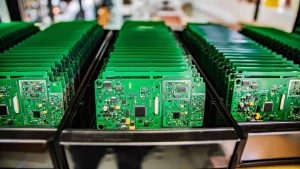
Printed circuit board technology has profoundly shaped the form of modern electronic devices, with its applications spanning multiple fields such as smartphones, radar systems and medical imaging equipment. The core direction of current industry development is driving the evolution of high-performance circuit board technology. Such circuit boards are required to accommodate high-frequency application scenarios, support advanced wireless communication technologies and meet the specific performance requirements of IoT devices.
Standard FR4 substrates have long dominated the traditional PCB manufacturing sector, while high-frequency applications, high power density and stringent reliability requirements are driving the industry to explore more advanced substrate solutions. The high-performance Rogers series circuit boards developed by Rogers Corporation thus emerge as a critical technological pathway to meet such demands.
This ultimate guide to high-performance circuit design explores why Rogers PCB materials represent the pinnacle of modern circuit board technology, and how these advanced materials provide the foundation for tomorrow’s demanding electronics.
The Rise of Rogers PCBs in High-Frequency Applications
Rogers PCB materials are specifically engineered to withstand demanding environments. These materials are typically employed in applications where stringent requirements for signal loss control, temperature stability and electrical integrity are decisive factors. Rogers Corporation offers a series of specialized laminates and bonding materials that deliver superior performance in areas where standard FR4 and even polytetrafluoroethylene (PTFE) substrates fall short. Currently, high-end industries such as telecommunications, automotive radar, aerospace and medical imaging are experiencing a marked upward trend in demand for Rogers PCBs.
Why Rogers PCBs Are Chosen Over Conventional PCB Materials?
- Superior electrical properties support frequencies well beyond the typical realm of FR4 PCB.
- Rogers PCBs offer the performance needed for clear signal transmission, minimal loss and reliable operation in harsh or high-demand conditions.
- Rogers PCB materials stand out because they maintain their characteristics under stress—whereas FR4 and similar board materials may degrade, warp or allow signal distortion.
What Makes Rogers PCB Materials Stand Out?

Rogers PCB specifically denotes the series of high-performance substrate materials developed by Rogers Corporation. These substrates feature advanced formulations including ceramic-filled polytetrafluoroethylene, hydrocarbon-ceramic composites and specialized glass fibers, which distinguish them significantly from traditional FR4 materials.
Key Material Properties
The properties of Rogers materials are specifically engineered for high-frequency applications:
- Low Dielectric Constant (DK):Enables faster, less attenuated signal propagation—a must for RF, microwave and high-speed digital designs.
- Low Loss Tangent (Df):The low dissipation factor of Rogers PCB materials limits power loss and heat generation, which is essential for demanding, high-frequency and high-power circuits.
- High Thermal Conductivity:The advanced Rogers material spreads heat effectively, preventing hotspots in everything from RF amplifiers to data center routers.
- Moisture and Chemical Resistance:Unlike many competing substrates, Rogers PCB materials excel in humid, corrosive or mission-critical environments.
- Dimensional Stability:Rogers materials maintain their size and electrical properties across temperature swings, ensuring consistent impedance and device operation.
Properties of Rogers vs. Standard FR4
| Attribute | Rogers 4350B | Standard FR4 |
| Dielectric Constant | 3.48 | 4.5 |
| Loss Tangent (Df) | 0.0037 | 0.017 |
| Thermal Conductivity | 0.62 W/mK | 0.25 W/mK |
| Moisture Absorption | ~0.06% | 0.10–0.20% |
| Max Use Temp (°C) | 150+ | 120–130 |
Rogers PCB materials provide the foundation for circuits where performance and reliability are vital.
Properties of Rogers Materials: Why Rogers PCB Is Ideal
Let’s explore why Rogers PCB is ideal and makes Rogers PCB the industry standard for so many demanding applications.
- Ultimate Signal Integrity:The unique structure of Rogers PCB materials allows for high-frequency circuit operation with unmatched signal clarity, reducing errors caused by reflection or crosstalk.
- Thermal Robustness:Whether in a multi-layer PCB in an automotive radar module or a satcom transceiver, Rogers PCB materials are designed to transfer heat efficiently and withstand transient spikes in power.
- Uniform Electrical Performance:Rogers pcb materials offer stable DK and Df across a wide temperature/frequency span, ensuring circuit designers don’t have to “design for the worst case.”
- Longevity and Reliability:Rogers PCB excels in environments with vibration, humidity, and fluctuating temperatures—outlasting FR4 and extending end product lifespan.
- Process Compatibility:While advanced, many Rogers materials are suitable for standard PCB manufacturing processes, making the transition from traditional to high-performance straightforward.
Common Types and Series: Rogers 4350B, RO4003C, and More

Rogers Corporation offers various product lines to meet specific circuit board needs:
Rogers 4350B
- The gold standard for RF circuit design up to 10 GHz and beyond.
- Used in high-performance circuit boards for automotive radar, base stations and satellite communication.
RO4000® Series
- RO4003C and RO4350B are popular options for designers who want a blend of performance and manufacturability.
- Utilized in high-frequency applications like 5G, gigabit Wi-Fi, automotive sensors and phased-array antennas.
RT/duroid® and RO3000® Series
- For higher frequencies and more demanding conditions, RT/duroid and RO3000 series offer even lower Df and superior heat tolerance.
- Commonly found in high-density microwave circuits, aerospace and defense electronics.
Applications of Rogers PCB in High-Frequency and Demanding Arenas
Applications of Rogers PCB span nearly every high-tech field:
- Telecommunications:Rogers PCB in high-frequency applications such as 5G towers, mmWave antenna arrays and remote radio heads. Here, signal loss and power handling directly influence network uptime and quality.
- Aerospace and Defense:Used in radar circuitry, satellites, secure military networks and guidance systems, where properties of Rogers PCBs such as dimensional stability are vital for mission success.
- Medical Imaging:MRI and X-ray circuits rely on Rogers PCBs for cleaner signals and reduced electromagnetic interference. High-frequency applications include RF coils, MRI receiver arrays and X-ray digitizers—all of which benefit from the advanced material properties and stable dielectric performance of Rogers PCB materials.
- Automotive Electronics:With advanced driver-assistance systems (ADAS), vehicle-to-vehicle communications, and automotive radar, high-frequency and thermal stability are no longer nice-to-have, but essential. Rogers PCB materials offer consistent impedance and minimal signal loss in radar systems and RF sensor circuits found in modern vehicles.
- Aerospace and Satellite:High-frequency communications, phased array antennas and radar in aerospace depend on multi-layer PCBs with the demanding material properties only Rogers materials provide.
- Industrial and Data Center Applications:High-performance circuit board technology with Rogers material supports demanding applications such as high-speed routers, RF test equipment, industrial sensor hubs and backplane systems. Rogers PCBs, unlike traditional FR4, provide consistent high-frequency performance even as circuits become denser and signal paths are shortened.
Comparing Rogers PCB vs. FR4 Materials
Choosing the right PCB material is critical for the performance of Rogers high-frequency circuit designs. Here’s an expanded look at how Rogers PCB materials compare with FR4 and why many engineers choose Rogers PCB for advanced designs.
Performance Comparison Table
| Feature | Rogers PCB (RO4350B) | Standard FR4 |
| Dielectric Constant (DK) | 3.48 | 4.2–4.7 |
| Loss Tangent (Df) | 0.0037 | 0.017–0.025 |
| Thermal Conductivity (W/mK) | 0.62 | 0.25 |
| Frequency Range | Up to 40+ GHz | Up to 3–4 GHz |
| Moisture Absorption (%) | ~0.06 | 0.1–0.2 |
| Process Compatibility | Standard PCB process | Standard PCB process |
| Cost (per sqft) | Higher | Lower |
Why Choose Rogers PCB Over FR4?
- Material Properties:Rogers PCB materials excel at frequencies where FR4 experiences significant losses and impedance drift.
- Stable High-Frequency Performance:Rogers PCB materials provide the foundation for RF, microwave and mmWave circuit performance.
- Moisture and Chemical Resistance:Rogers PCB materials represent a step-up for demanding environments.
- Thermal Management:High-performance circuit boards made with Rogers material maintain lower thermal resistance and are less susceptible to warpage.
- Reliability:Unlike traditional FR4, Rogers PCBs are less prone to delamination or failure in mission-critical and high-frequency applications.
When is FR4 Still an Option?
Standard FR4 materials excel in digital circuits, low-frequency applications and cost-constrained designs. However, when it comes to high-speed and high-frequency circuits or harsh-environment applications, their performance cannot match that of Rogers materials. Rogers PCB materials deliver solutions for multifunctional and hybrid board designs, enabling an effective balance to be struck between performance requirements and cost constraints.
Designing, Manufacturing and Working with Rogers Materials

Best Practices for PCB Design with Rogers Material
- Controlled Impedance:Use PCB simulators with precise Rogers material DK and Df for trace width and spacing calculation.
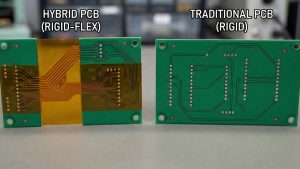
- Stackup Planning:For multi-layer PCB projects, specify which layers need Rogers material and which could use FR4; this hybrid approach improves cost efficiency without sacrificing high-frequency performance.
- Thermal Pathways:Maximize copper planes and thermal vias to exploit the high thermal conductivity of Rogers PCB materials.
- Minimize Crosstalk:Isolate high-frequency traces, use proper grounding techniques, and optimize trace geometry to prevent signal integrity issues.
- Prototype and Validate:Since high-frequency applications are sensitive to board properties, prototype and validate using vector network analyzer (VNA) measurements to confirm performance predictions.
Manufacturing Considerations
- While Rogers PCB materials are designed for compatibility with standard PCB manufacturing processes, high-speed drilling, special bondply and careful thermal management during lamination may be required.
- The performance stability of high-speed and multilayer circuits depends on the selection of copper foil types. Electrodeposited copper foil and reverse-treated copper foil are two typical materials that can meet such design requirements.
- Surface finish selection (e.g., immersion silver, ENIG) should prioritize both signal performance and solderability, avoiding heavy use of HASL for high-speed digital I/O.
Choosing Rogers PCB and Suppliers: Best Practices
Best Practice Checklist
- Define Your Application:Start with end requirements—frequency, environment, board size and layer count.
- Engage with Experienced Suppliers:Not all PCB fabricators are equally skilled with advanced circuit board materials. Choose those with a track record in high-frequency Rogers PCB designs and assembly.
- Request Technical Support:Ask for support in stackup design, DFM for high-frequency layouts and review for potential pitfalls in multi-layer configurations.
- Prototype with Rogers Materials:Before a major production run, prototype with the target Rogers material and validate performance against FR4-based legacy designs.
Recommended Rogers PCB Fabricators
Rogers Corporation offers a global network of certified partners, including:
- TTM Technologies
- Advanced Circuits
- American Standard Circuits
- Smaller prototype houses specializing in Rogers and hybrid stackups
Future Trends: Demand for Rogers PCBs and PCB Materials in High-Performance Circuit Design
Rogers corporation continues to invest in materials innovation to meet rising design and application demands:
- mmWave & THz Circuits:Materials are engineered for the most advanced wireless, automotive and aerospace systems—operating beyond 40 GHz.
- Eco-Friendly Innovations:As regulations tighten, expect new Rogers material offerings with lower environmental footprints and improved recyclability.
- Miniaturization and HDI:Rogers PCB materials enable higher-density interconnects, crucial for emerging IoT, implantable medical and sensor-rich devices.
- Hybrid Designs:More projects use Rogers for critical RF/microwave layers and FR4 for digital/power, blending the versatility of Rogers PCB and cost of conventional materials.
Insight: The application of advanced materials such as Rogers is redrawing the core guidelines for high-performance circuit design. Previously unattainable circuit board technologies now possess practical viability and conditions for scalable implementation.
FAQs About Rogers Circuit Boards, Materials and Design
Q: Why do engineers rely on Rogers materials for high-frequency circuits?
A: Rogers PCB materials exhibit a series of specific performance metrics. Key parameters such as stable dielectric constant and low loss tangent are specifically developed for high-frequency applications. This is precisely the fundamental reason why Rogers PCB materials are widely adopted in RF and microwave system designs.
Q: How do I choose Rogers PCB materials for my layout?
A: When selecting PCB substrates, priority should be given to evaluating the key design parameters. These parameters include the maximum operating frequency of the circuit, the specific requirements for thermal conductivity and the cost control targets of the project. A comprehensive decision should then be made in conjunction with the PCB fabricator’s practical processing experience with specific material series (e.g., RO4350B or RO4003C).
Q: Can I combine standard FR4 materials with Rogers in the same board?
A: Absolutely. Many advanced circuits use Rogers PCB materials for their RF segments and FR4 for control/power to balance cost and performance.
Q: Does working with Rogers require special manufacturing processes?
A: The design of Rogers PCB materials is compatible with standard PCB manufacturing processes. However, when applied to high-precision, multilayer advanced circuit board designs, such products typically impose stricter monitoring and management requirements on production processes.
Q: What are the main benefits of Rogers PCB in high-frequency applications?
A: Rogers PCB materials deliver outstanding performance across multiple critical areas. These materials can effectively preserve the purity of signal transmission and markedly reduce the potential risks of thermal and mechanical failures. Even in GHz-plus high-bandwidth operating environments, they can still provide stable impedance characteristics and reliable performance.
Conclusion: Discover Why Rogers PCB Stands at the Pinnacle of Circuit Board Technology
In summary, Rogers PCB materials represent the apex of circuit board technology, delivering high-frequency performance and reliability that conventional PCB materials, including standard FR4, simply cannot match. From the demanding requirements of high-speed wireless and radar to mission-critical aerospace and medical systems, engineers and designers rely on Rogers for the advanced properties their applications demand.
Key reasons to choose Rogers PCB:
- Unmatched performance for high-frequency, high-reliability designs
- Robustness in the face of thermal, moisture and environmental challenges
- Compatibility with multi-layer stackups and advanced PCB manufacturing and assembly techniques
- Superior lifecycle cost—fewer failures, longer product lifespans, far less field servicing
Rogers PCB stands at the intersection of science, innovation, and engineering. If your project requires a high-performance circuit, advanced circuit board materials, or you are looking to push the boundaries of what’s possible, discover why Rogers PCB is ideal—and build with the best materials available.