What Is a PCB Enclosure?
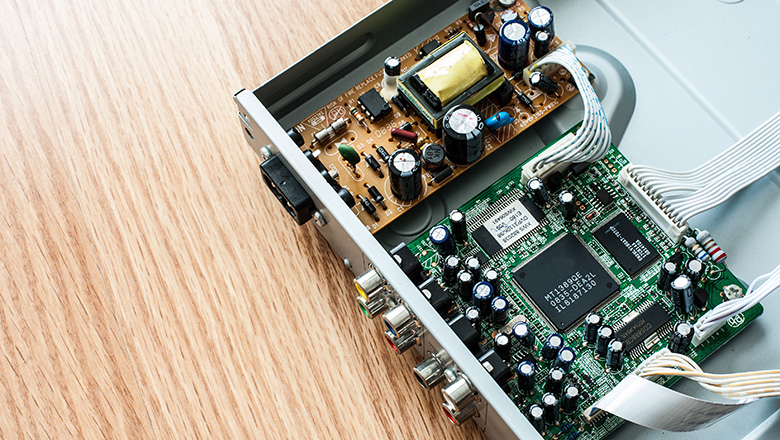
A PCB enclosure (sometimes also called a circuit board housing or PCB box) is a dedicated housing used for installing printed circuit boards in various electronic devices. This type of enclosure can provide crucial protection for precision printed circuit boards and electronic components, safeguarding them from external damage, internal mechanical stress damage, and the influence of environmental factors such as dust, moisture, and high temperatures.
In the design and production process of modern electronic products, the design of PCB casings is of vital importance. Whether the casing is made of plastic, steel or aluminum alloy, its core objective is to meet the demands of practical application scenarios – whether for indoor or outdoor use, or for use in harsh industrial environments or consumer electronics.
Facts show that choosing the right casing can enhance the durability of equipment, protect electronic components from erosion by environmental factors, and ensure the service life of electronic devices by resisting various internal and external risks.
PCB enclosure design plays a crucial role in the design and manufacturing process of modern electronic products. Whether the casing is made of plastic, steel or aluminum alloy, its design purpose is to meet the actual usage requirements, covering various application scenarios such as inside the door, outside the door, harsh industrial conditions and consumer electronics projects.
Fact: The right casing improves device durability, protects electronics from environmental factors, and ensures the long-term used of electronic devices by providing protection from external and internal threats.
Why You Need a PCB Enclosure

A robust PCB enclosure is not just about looks—it’s the foundation of reliable electronics and is crucial for ensuring that sensitive electronic components operate safely and efficiently for years.
Enclosures provide:
- Mechanical Protection: Protect fragile PCBs from impact, drop and vibration, reducing the risk of physical and electrical damages.
- Environmental Protection: Protect the PCBs from external dust, liquids or corrosive substances. It is crucial when the equipment will be used outside the doors or exposed to harsh conditions.
- Thermal Management: By supporting heat dissipation, it helps maintain the optimal operating temperature and ensures that the PCBs and internal electronic parts do not over the
- Electromagnetic Interference (EMI) Shielding: Help control and reduce electromagnetic interference in sensitive electronic systems.
- Cable Management: Provide structured paths for cables and connectors to reduce assembly errors and mechanical wears.
- User Safety: Prevent accidental contact with high-pressure components and hot surfaces.
- Aesthetics and Brand Identity: The design of the casing has a significant impact on the perception of electronic devices in the market.
Common Types of PCB Enclosures
Depending on the application scenario, environmental conditions and PCB size, there are various common types of PCB enclosures available on the market for selection. Understanding these types can help you choose the right shell:
Plastic Enclosure
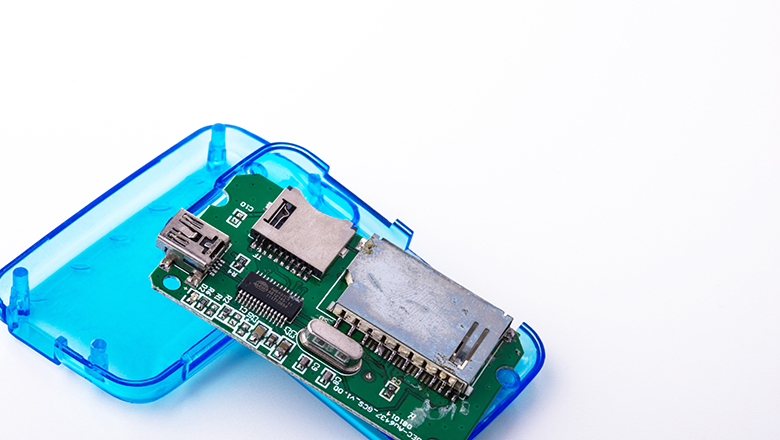
- Made of ABS, polycarbonate or other high-performance PI.
- It is lightweight and cost-effectivecasing.
- It is highly suitable for indoor equipment and consumer electronics.
Metal Enclosure
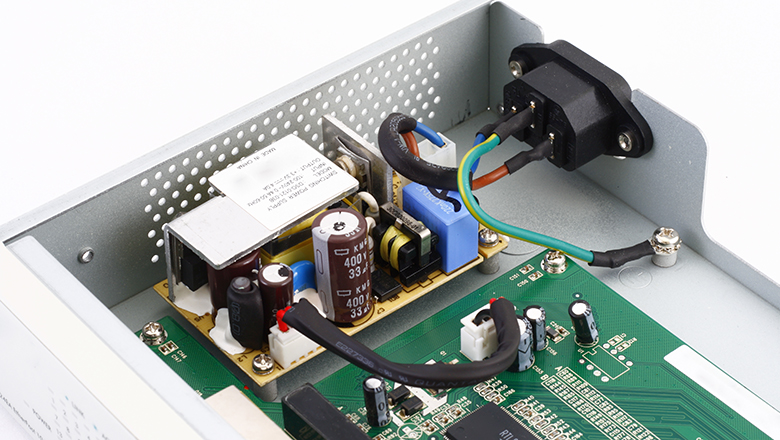
- It is usually processed from metal plates such as steel plates and aluminum plates.
- It is more durable and features excellent electromagnetic shielding performance and heat dissipation performance.
- It is widely used in industrial equipment, high-power devices and outdoor electronic devices.
Hybrid Enclosure
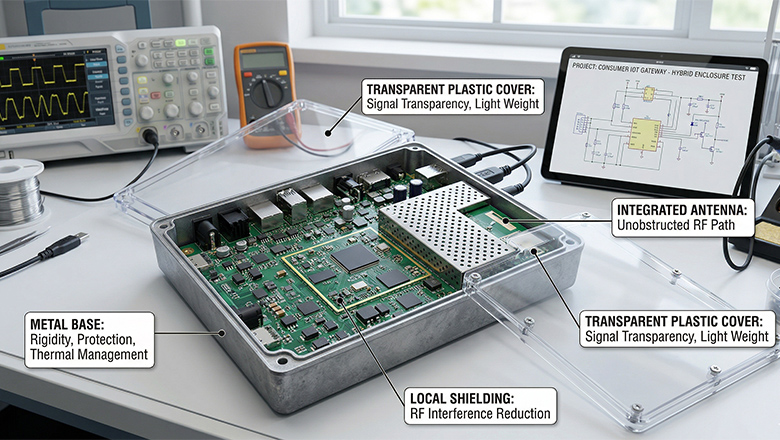
- Combining plastic and metal materials, it strikes a balance among weight, protection and cost.
- It is applicable to some consumer devices that require both signal transparency and local shielding.
Specialized Enclosures
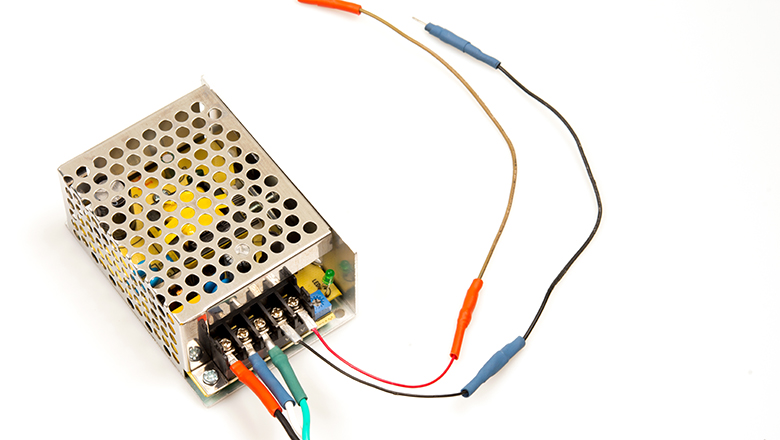
- Waterproof housing (with protection rating up to IP65/IP67), suitable for outdoor scenarios.
- A casing with a ventilation structure for active heat dissipation.
- DIN rail-mounted housing, for industrial automation equipment.
- Compact/pocket-sized housing, suitable for micro or portable devices.
Comparison of Common Types
| Type | Primary Use | Pros | Cons |
| Plastic | Consumer, light duty | Low cost, easy to modify | Lower EMI, less durable |
| Metal | Industrial/heavy duty | High strength, EMI, thermal | Weight, more complex tooling |
| Hybrid | Specialized EE | Best-of-both-worlds | Higher complexity/cost |
PCB Enclosure Materials: Plastic vs. Metal
The Choice of PCB enclosure material not only affects the protective performance, but also relates to the manufacturing cost, assembly difficulty, heat dissipation management and electrical performance.
Plastic Enclosures
- The normally used materials are ABS plastic and polycarbonate, mainly used in high cost-performance consumer projects.
- It has excellent insulation performance, a wide range of colorsand surface treatment options, and supports 3D printing.
- The electromagnetic shielding effect is poor and it may deform at higher working temperatures.
Metal Enclosures
- It mainly includes steel and aluminium materials.
- It features excellent electromagnetic interference (EMI) shielding performance and is more durable overall.
- Aluminum alloy is light in weight and has good thermal conductivity. Steel structures are sturdy and cost-effective.
- It is widely applied in outdoor, industrial, automotive and communication fields.
- Usually, a paint or powder coating is required to enhance the corrosion resistance.
PCB Enclosure Design Guidelines and Considerations
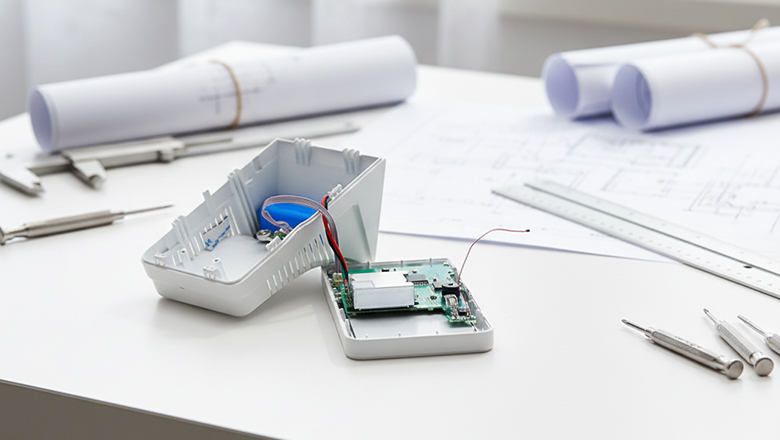
To design a shell that truly meets the project requirements, it is necessary to combine the best practices of engineering design with the inherent needs of the circuit board:
Design Considerations for PCB Enclosures
- PCB Sizes and Layout: The shell size must match the circuit board and various external connectors and display modules.
- Mounting Options: Ensure that the PCB installation structure is aligned with the holes on the board, firmly fixed, and capable of buffering mechanical stress.
- Thermal Management: Reserve ventilation holes, heat sinks or heat conduction channels to maintain the ideal operating temperature; The durable housing can be equipped with heat dissipation fins to achieve passive heat dissipation.
- Mechanical Constraints: Reserve space for cable wiring to ensure easy disassembly and assembly, and leave sufficient clearance for taller components.
- Environmental Protection: For the enclosures of electronic devices used outdoors, products with corresponding IP or NEMA protection levels should be selected.
- Aesthetic and Branding Requirements: A shell design that combines practicality and aesthetics can make electronic products more competitive in the market.
PCB Enclosure Design Process: Step-by-Step
- Define Project Requirements: In the earlier stage of design, wholly consider the working environment, external interfaces, and user usage requirements.
- Select Materials: Choose plastic or metal materials based on protection needed, durability and design requirements.
- Layout and Sizing: With the help of PCBs design software and CAD tools, determine the precise shell size suitable for the circuit board.
- Integrate Mounting: Based on the PCB installation requirements and expected mechanical stress, design support columns, clamps or guide rails.
- Add Features: Plan the ventilation troughs, cable entrances and exits, marking areas, and optional expansion interfaces.
- Design for Manufacturing: Ensure that the shell design is compatible with the selected processing technology (injection molding, sheet metal forming, etc.).
- Prototype and Test: Verify the assembly compatibility between the housing and the PCB, conduct functional and environmental tests, and optimize and modify based on the test results.
- Finalize and Document: Complete the assembly drawings and technical specifications to ensure the smooth progress of mass production.
Mounting Options for PCB Enclosures
Various mounting options enable the pcb enclosure to adapt to various application scenarios:
Screw bosses/standoffs: The most commonly used stable installation method, suitable for plastic and metal casings.
- Snap-fit mounts: It can accelerate the assembly efficiency of consumer electronics and prototype products.
- DIN rail slots: Mostly used in industrial equipment.
- Wall/floor brackets: Suitable for controllers, displays or communication module
- Slide-in rails or drawers: Suitable for rack-mounted and network devices, it can be quickly replaced without tools.
How to Choose the Right PCB Enclosure

When choosing the enclosure for electronic devices, the key lies in ensuring that the casing design matches the PCB requirements and the working environment of the equipment.
Checklist for Choosing Your Enclosure
- Is the housing compatible with your PCB (including all connectors and mounting holes)?
- Considering the heat generated by the PCB, can the casing keep it within the safe operating temperature range?
- What environmental conditions will the casing be exposed to – indoor, outdoor, temperature fluctuations, humidity, vibration?
- Does your electronic system need to pay attention to electromagnetic interference (EMI) issues?
- Is the casing convenient for cable organization and installation?
- Is it feasible to produce this shell using the existing resources (budget, tools, design software)?
Key Considerations for Selecting Your PCB Enclosure
| Consideration | Guiding Question | Implication |
| PCB and enclosure fit | Will the enclosure dimensions fit the PCB and any needed assembly space? | Avoid tight fits or wasted space |
| Mounting options | Are mounting holes and standoffs aligned with PCB mounting requirements? | Secure PCB, easy assembly/service |
| Material selection | Should you choose a plastic or metal enclosure? | Affects EMI shielding, cost, weight |
| Environmental protection | Will your device be used outdoors or in harsh conditions? | Need proper rating (IP65, NEMA 4X) |
| Thermal management | Does your enclosure design help manage the PCB’s heat output? | Prevents overheating, ensures safety |
| EMC/EMI protection | Are there sensitive components or sources of interference on your PCB? | Choose appropriate materials/layout |
| Cable management | Do you need cable entry, vent slots, wire tie points, or strain relief features? | Promotes assembly, durability |
| Branding/aesthetic requirements | Does the enclosure design reflect your product’s image? | Customer-facing success |
Ensuring Protection and Longevity
High-quality pcb enclosure can extend the longevity of electronic devices. Emphasizing the shell design during the design stage can achieve the following goals:
- Reduce field failures: The robust housing can protect the PCB from external stress, dust, moisture and chemical substances, preventing a decline in equipment performance.
- Maintain optimal performance: By ensuring the ideal operating temperature and suppressing electromagnetic interference, it can not only protect the equipment’s functionality but also maintain the product’s reputation.
- Future-proof your product: The well-designed casing offers expansion flexibility, allowing for the addition of interfaces, sensors or modules in the future. Only the casing design needs to be updated, without the need to change the core PCB layout.
Case Study: Choosing and Designing the Optimal PCB Enclosure
Project: Environmental Data Logger for Remote Outdoor Monitoring
- Device challenge: The PCB is equipped with precise analog sensors and wireless transmitters, and needs to operate outdoors all year round, withstanding the tests of rain, dust and temperature differences.
- Design phase: Engineers complete the circuit board design through PCB design software and export the 3D model for the shell design. The core requirements include resistance to electromagnetic interference, the ability to install two circuit boards, UV protection and moisture resistance, as well as a cable layout compatible with solar/battery power supply.
- Material selection: An aluminum casing is adopted to achieve electromagnetic shielding, and it is paired with a custom polycarbonate window for sensor detection and battery level display.
- Mounting considerations: It is fixed with four-point screws, and the PCB holes are precisely matched with the shell studs. It is also equipped with stress-resistant cable fixing heads.
- Thermal management: The casing is equipped with heat dissipation fins to ensure that the device remains at a safe operating temperature even when exposed to direct sunlight and generating heat.
- Outcome: The robust PCB housing provides comprehensive protection. The sensor has excellent performance and is easy to install. The product comes with a five-year warranty. Field tests show that the equipment has no internal corrosion under various working conditions and the signal transmission is stable.
Conclusion: Keys to Excellent PCB Enclosure Design
A well-designed pcb enclosure is crucial for ensuring the safety, durability and reliability of electronic devices. Whether choosing a plastic enclosure for consumer electronics or a metal enclosure for harsh industrial scenarios, it is important to keep in mind:
- Align your enclosure design with your project requirements: Dimensions, PCB installation, heat dissipation, wiring and environmental protection all need to be determined based on the usage mode and scenario of the equipment.
- Use proven design guidelines: Correct reasonable shell dimensions, ensure flexibility in adapting to the PCBs, and reserve diverse installation options during the design and production stages.
- Consider both the internal and external environment: It is necessary to meet the PCB’s own requirements (heat dissipation, installation holes, component space), as well as address external environmental challenges (dust, moisture, impact).
- Invest in proper materials and manufacturing: For convenience and low cost, plastic can be chosen. If strength, durability and resistance to electromagnetic interference are required, steel/aluminum should be selected. The material choice should be based on the project requirements.
- Incorporate modern tools and standards: Utilizing design software and electromechanical simulation technology, adhering to industry norms such as NEMA, IP, IEC, and UL, to ensure the smooth implementation of products.
- Never underestimate the value of thorough prototyping: Samples testing is a of vital importance step in transforming creative designs into robust and mass-producible products.
With these principles, your next project will benefit from resilient enclosures offering the protection and professionalism that set excellent electronic products apart.