
Introduction to Electronic Devices and Circuits

The defining characteristic of our current era is thatelectronic devices and circuits have become fundamental components of daily life. Smartphone alarms accomplish morning wake-ups, and kitchen lights are turned off late at night—such everyday scenarios attest to the pervasive presence of electronic products. Every corner of modern society is permeated by electronic devices. They fulfill key functions in fields such as communications, healthcare, education, transportation and entertainment. These devices continuously provide essential support for the proper functioning of many critical sectors in contemporary society.
Electronics has reshaped the fundamental modes of human interaction with technology. It has revolutionized methods of information management and now governs the forms of electrical energy control within various devices. Mastering knowledge of the core components of electronic devices is essential and familiarity with the principles of their internal circuit design carries practical significance. This enables individuals to establish a cognitive advantage within a rapidly evolving technological landscape.
Definition: What is an Electronic Device?

An electronic device is an apparatus, system, or instrument that utilizes electronic circuit components to control the directional flow of electrons or charged particles. Such devices and circuits convert and utilize electrical energy through methods such as switching control, signal amplification, information processing or energy storage, thereby achieving their preset functions.
The term “electronics” refers not just to the individual device but to a large branch of science and industry—the electronics industry—that designs and manufactures these systems. Every electronic device, whether as simple as a flashlight or as complex as a modern smartphone, uses electronic device components as its basic building blocks.
Key Characteristics of Electronic Devices:
- The fundamental function of electronic components is to control the flow of electric current. Another key function lies in guiding the directional movement of electrons.
- Comprised of at least a basic electronic circuit.
- The implementation of electronic systems relies on the collaborative operation of two core types of devices. Active devices, such as transistors and integrated circuits, are capable of actively controlling signals and energy within a circuit. Passive devices, such as resistors, capacitors, and inductors, provide essential functions such as regulation, energy storage and filtering for the fundamental circuit.
- Can handle analog electronic, digital or mixed signals.
How Do Electronic Devices Operate? (Working Principles)
The core operational mechanism of electronic devices involves achieving controlled regulation and utilization of electric current through the combination of multiple electronic components. This mechanism reveals the fundamental property shared by all electronic devices and also forms the foundational principle for designing and comprehending various types of electronic devices and circuits.
The Flow of Electrons
Electrons are basic particles carrying electric charge and form the core physical foundation for the operation of all electronic systems. Externally applied voltage provides the driving force for the directional movement of electrons, causing them to move along paths defined by components on a printed circuit board. This continuous directional movement forms an electric current.
The Role of Semiconductor Materials
Today’s electronic devices predominantly employ semiconductor materials such as silicon as their foundation. The unique property of these materials lies in their ability to flexibly switch between the states of insulators and conductors. Transistors and integrated circuits leverage this capability to construct intricate circuit systems, which can perform functions such as signal switching, amplification and processing with minimal power loss.
Analog and Digital Circuits
- Analog electronic circuits deal with continuously varying signals (e.g., sound, light). Devices like amplifiers, radios and thermostats rely on analog circuitry.
- Digital integrated circuits handle discrete binary signals (“0” and “1”). They form the basis of computers, smartphones and modern digital gadgets.
- Many devices use mixed-signal circuits combining both analog and digital electronics for everything from sensor reading to data transmission.
Current Flow and Energy Storage
Resistors are tasked with limiting or precisely regulating electric current. Capacitors possess the function of storing electrical energy and their uses include supplying power to subsequent circuits as well as filtering out interference noise from signals. Inductors store energy within the magnetic fields they generate, a characteristic that makes them critical components in RF circuits and power electronics systems. The role of diodes is to ensure that current flows in only one direction. The core function of transistors lies in switching control and amplification processing of electrical signals.
Electronic Device Components: The Building Blocks

Mastering the fundamental principles of electronic devices requires a thorough understanding of their core components. These components form the foundational units of electronic systems and serve as universal structural elements that support both the operation of simple functions and the implementation of complex systems.
Active Electronic Components
- Transistor: Acts as a switch or amplifier. The heart of digital electronics, used in everything from simple amplifiers to CPUs.
- Integrated Circuits (ICs): Miniaturized electronic circuits containing millions (or billions) of transistors, resistors and other elements on a single chip.
- Diode: Allows electric current to flow in one direction only, crucial for power supplies, rectifiers and logic circuits.
Passive Devices
- Resistor: Limits or sets the current flow in electronics devices.
- Capacitor: Stores electrical energy and is used for filtering or smoothing signals.
- Inductor: Stores energy in a magnetic field, used in power electronic and analog circuits.
Other Important Components
- Printed Circuit Boards (PCBs): Serve as the physical foundation for mounting and connecting all components. Modern complex electronic equipment requires multilayer PCB design for performance, size and reliability.
- Sensors and Actuators: Allow devices to interact with the real world by sensing parameters (like temperature, light, motion) and performing physical actions.
- Power Supply: Converts and regulates voltage and current so that devices require only as much electrical power as needed.
| Component | Purpose | Example Usage |
| Resistor | Controls current flow | LEDs, logic circuits |
| Capacitor | Stores, filters electrical energy | Power supplies, radios |
| Diode | Directs electric current | Power rectification, sensors |
| Transistor | Amplifies/switches signals | Signal processing, CPUs |
| Integrated Circuit | Miniaturized complex circuits | Smartphones, laptops |
| PCB | Physical/electrical platform | Every electronic device |
Types of Electronic Devices in Daily Lives
There are many different types of electronic and electrical devices. Each class uses specialized electronic device components and serves distinct functions in daily lives.
Consumer Electronics
- Electronic devices encompass a variety of common categories. Smartphones are portable communication and computing tools. Laptops provide platforms for mobile work and content creation. Tablets combine touch-screen operation with a lightweight design. Smart TVs possess networking and multimedia playback functions. Game consoles focus on delivering interactive entertainment experiences. E-readers utilize paper-like screen technology. Bluetooth speakers enable wireless audio transmission. Smartwatches integrate health monitoring and information notification features.
- These often feature complex circuits on compact PCBs and have both analog and digital circuitry for signal processing and communication.
Home Appliances
- Examples: Electronic washing machines, refrigerators, microwave ovens, smart thermostats and robotic vacuum cleaners.
- Devices use electronic controllers, sensors and sometimes power electronic modules for efficient operation.
Office and Business Equipment
- Printers, photocopiers, scanners, VoIP phones and networking devices.
- These devices are based on robust circuit board design. Their data processing capabilities can be achieved through analog integrated circuits and digital integrated circuits working in conjunction.
Industrial and Power Electronic Devices
- Industrial automation controllers, CNC machines, SCADA terminals, PLCs and EV charging systems.
- These active electronic components are designed to manage large amounts of electrical power, handle high reliability and survive harsh environments.
Medical Electronics
- Devices like ECG monitors, digital thermometers, infusion pumps and portable diagnostic devices use advanced sensor technology and precise circuitry.
- Such devices must comply with stringent safety regulations. They are increasingly utilizing IoT technology to establish connections for achieving various remote monitoring functions.
Communication and IoT Devices
- Mobile devices (phones, tablets), IoT sensors (smart plugs, home security cameras) and satellite transceivers rely on fast, energy-efficient integrated circuits.
- The latest electronics industry trend is for devices to be “smart,” always connected and easily updated.
Electronic Circuits and Their Importance
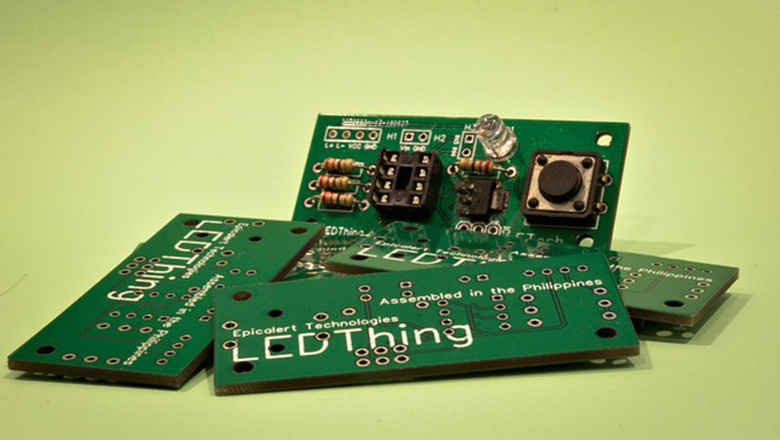
The core of every electronic device lies in the electronic circuit it contains. The electronic circuit is mounted on a circuit board. Components and wires on the board are arranged in an orderly manner to form a complete circuit pathway. This structure directs the flow of electric current. Precise control of the current ultimately enables the device to perform various predefined functions.
Electronic Circuits Explained
- Analog circuits amplify, filter or modulate real-world signals such as audio, temperature and light.
- Digital electronics use logic gates and flip-flops to process information in binary code, forming the basis of computers, digital watches and programmable controllers.
- Mixed-signal circuitry is used for devices that must process both analog inputs (like sound) and digital.
Signals are transmitted through such circuits. These signals may originate from microcontrollers within smartphones. Microcontrollers in smart home hubs also generate such signals. Engineers integrate multiple circuit types onto a single printed circuit board. A more advanced approach involves integrating them into a single integrated circuit. This integrated design creates the core advantages of modern electronic products. This allows the products to possess extremely compact physical structures. They are capable of performing multiple complex functions simultaneously.
The Role of the Printed Circuit Board (PCB)
Devices may employ either simple single-layer circuit boards or highly complex multilayer structures. The printed circuit board (PCB) supports and interconnects all other electronic components. PCB design serves as the central factor determining the performance and reliability of electronic devices:
Layers and traces: Multilayer printed circuit boards offer the design capacity to accommodate more electronic components. Their internal structure allows for the arrangement of denser circuit traces. This high-density integration feature is crucial for smartphones. High-performance devices such as laptops also depend on this key technology.
Solder masks and finishes: These protect connections and ensure a reliable flow of electric current.
Component layout: Good circuit board design isolates noisy digital circuits from sensitive analog electronics, minimizing interference.
Understanding and Troubleshooting Electronic Circuits
Electronics enthusiasts and professional technicians frequently engage in design tasks. They also need to perform equipment fault diagnosis and repair operations. Mastering the core principles of electronic devices during these practical processes is crucial. Deeply understanding circuit theory holds significant value. The following content provides several key operational recommendations:
- Use schematic diagrams to visualize how current flows and which types of electronic components are used for which function.
- Multimeters, logic analyzers and oscilloscopes serve as fundamental testing instruments in the field of electronics. They are used to examine the physical connection status within electronic systems. These tools can accurately locate short circuits and identify open circuits. Engineers rely on them to detect faulty electronic components. Such instruments are indispensable for system diagnostics and repairs.
- Following the current flow, from the power source through each device or component, is crucial in isolation and repair.
Inside Electronic Device Manufacturing
The manufacturing process of modern electronic products relies on precise technological procedures. This process also demands the implementation of strict quality control measures. Each electronic device begins with an initial circuit design phase. It then proceeds to the specialized manufacturing stage of printed circuit boards. Finally, precise component assembly and overall integration are completed. These steps together form the complete chain of electronic device production.
LHD TECH’S Manufacturing Process
Electronic Design and Prototyping
- The electronic design process commences with the application of electronic design software. This software is responsible for planning the logical layout of circuits, selecting appropriate active components and compatible passive components based on design requirements and determining the necessary PCB layer stack configuration.
- Before proceeding with mass production, engineers need to create a test prototype. This prototype refers to a specifically trial-produced printed circuit board. The prototype board is used to validate the actual functionality and performance of the circuit design.
PCB Fabrication and Circuit Board Assembly
- Using specialized machines, layers of copper are etched onto fiberglass to create the circuit board.
- Surface-mount technology (SMT) and through-hole technology (THT) are two primary assembly methods. SMT allows for compact assembly of devices like mobile devices and wearable tech.
Component Sourcing and Integration
- Active electronic components (ICs, transistors), passive devices (resistors, capacitors) and modules (sensors, displays) are sourced and placed onto the board with robotic accuracy.
Soldering and Testing
- Once assembled, devices undergo wave or reflow soldering.
- In the manufacturing process of electronic products, automated optical inspection, in-circuit testing and functional testing must be implemented to verify that current flows according to design specifications and to ensure devices operate with their intended functions.
Enclosure and Final Assembly
- The completed circuit board is placed inside an enclosure—plastic, metal or even flexible substrates for new wearables.
- Product validation ensures durability, safety and compliance with global standards for different types of electronic devices.
Role and Impact of Electronic Devices and Circuits
Electronic devices play a transformative role in nearly every sector:
- Communication: Mobile devices, computers and IoT-enabled appliances keep us connected 24/7.
- Healthcare: Devices like MRI scanners, digital thermometers and mobile heart monitors save lives daily.
- Education: From e-learning tablets to interactive displays, electronics facilitate better, more accessible education worldwide.
- Business and Industry: Automation, robotics and industrial control systems increase productivity, accuracy and workplace safety.
- Sustainability: Efficient electronics manage renewable energy, reduce power waste and support smart infrastructure.
In all these fields, the ability to control the flow of electrons—from the fundamentals of electronic circuits to applied electronic design—is at the core of progress.
Future Trends: The Next Generation of Electronics
As we look ahead, several trends are shaping the field of electronics and the types of electronic devices used every day:
- Miniaturization and Wearables: Devices are becoming smaller, lighter and more integrated. Flexible PCBs and stretchable electronic circuitry are enabling smart clothing and health-monitoring patches.
- Smarter IoT & AI Integration: More electronic devices operate with embedded AI for voice recognition, image analysis or automation, even without cloud connection.
- Green Electronics: The focus is on low-power design, recyclable materials and environmentally friendly manufacturing.
- Bioelectronics and Med Tech: The blending of electronics and biotechnology is giving rise to implantable medical devices that adapt to and monitor our bodies in real time.
- Ubiquitous Connectivity: Devices will leverage 5G and beyond for real-time data transmission, supporting everything from autonomous vehicles to industrial robots.
Practical Tips: Using, Caring for and Choosing Electronic Devices
To get the most from your electronics:
- Buy for Longevity: Choose devices that receive regular software updates and offer repairable designs.
- Care for Devices: Avoid extreme heat/cold, use surge protectors and keep devices clean—especially connectors and screens.
- Recycling and Sustainability: Always recycle old devices. Many components, especially in circuit boards, can be reclaimed for new electronics.
- Upgrade Smartly: Don’t replace; consider upgrading RAM, storage or software if possible.
- Stay Secure: Update device firmware to patch vulnerabilities. Secure Wi-Fi-enabled devices to protect personal data.
Frequently Asked Questions about Electronics and Circuits
Q: What are the fundamentals of electronic devices and circuits?
A: They rely on the flow of electric current controlled by various types of electronic components (like transistors, diodes, resistors, capacitors) through a circuit board. These components use and store electrical energy, amplify or switch signals and enable communication or automation.
Q: What’s the difference between electrical and electronic devices?
A: Electrical devices use electric current for utility (motors, lamps), while electronic devices focus on processing, amplifying or storing signals in more complex circuits.
Q: How do electronic devices get smaller while becoming more powerful?
A: Through advances in semiconductor fabrication, integrated circuit density and multilayer PCB design. This allows more functions in tinier packages.
Q: Why are some electronic devices ‘smart’?
A: Smart devices incorporate sensors, processors and software to adapt, learn and communicate—delivering tailored or automated user experiences.
Conclusion: The Ubiquity and Importance of Electronic Devices
Electronic devices have become the backbone of our daily lives, shaping our society and future. They embody the fascinating evolution of electronics—from early electrical devices to the sophisticated electronic device components, circuit boards and integrated circuits powering today’s world. Understanding the fundamentals of electronic devices and circuits not only enriches your technical knowledge but also helps you appreciate the astounding impact devices have on health, business and culture. As technology advances, so too will the complexity, intelligence and sustainability of the electronics around us.