Introduction to In-Circuit Test (ICT)

In-Circuit Testing (ICT) is a specialized inspection method applied in the manufacturing of printed circuit boards (PCBs). It employs systematic procedures to evaluate and verify the electrical integrity and functional status of individual components and their interconnections on the board. The increasing structural and functional complexity of modern electronic devices is driving the ongoing demand for comprehensive and reliable testing solutions, thereby establishing ICT as a vital core pillar within the quality control system of electronic manufacturing.
The core principle of In-Circuit Testing (ICT) lies in utilizing automated testing equipment to precisely position specialized test probes onto pre-designed key test points on the circuit board. These test points provide the physical interface for the system to conduct accurate electrical measurements. The purpose of these test points is to verify whether each component on the PCB is correctly installed, whether its electrical functions meet the design specifications and to effectively identify various potential defects arising from the assembly or manufacturing processes.
Purpose and Key Benefits of ICT

The Purpose of In-Circuit Test
The primary purpose of ICT testing is to check every component on a printed circuit board at the earliest possible phase of the assembly process. By doing this, ICT:
- Ensures all components and connections are correct before further, more costly assembly steps.
- Detects hidden defects not visible through visual or optical inspection.
- Flags missing components, component misplacement and soldering issues, such as cold joints, shorts or opens.
Key Advantages of ICT
Advantages of ICT include:
- Early Defect Detection:Lowers rework and warranty costs by catching faults before boards proceed further.
- Automates the Testing Process:ICT used for in-circuit testing leverages automation for high throughput and repeatability.
- Comprehensive Test Coverage:All accessible nets and nodes are tested for faults.
- Supports High Volume Production:Suits automated, mass-manufacturing environments.
- Improves Overall Quality and Reliability:Results in fewer returns and higher customer satisfaction.
Benefits of In-Circuit Test
| Benefit | Impact |
| Early defect detection | Cuts rework, catch defects fast |
| Comprehensive test | Checks every accessible net and part |
| Automated test process | Scales easily for large batches |
| Enhanced reliability | Supports certification and logistic compliance |
| Data-driven improvement | Failure logs for process optimization |
How Does In-Circuit Test Work?

Step-by-Step ICT Test Procedure
- PCB Design with Test Pads and Points: Engineers strategically integrate accessible test pads and test points onto the board, ensuring any method of testing can reach every net and node.
- Connecting the PCB to Specialized Testing Equipment: The PCB is inserted into a test fixture (often called a “bed-of-nails”), designed to ensure accurate and reliable contact between the test pins and corresponding test pads.
- Automated Test Execution: ICT testing equipment is a specialized instrument designed to precisely position test probes onto predetermined test points. The fully automated testing procedure executed by this device conducts multiple inspections of the circuit in a preset sequence, including checks for short and open circuits, validation of the correctness of component placement and orientation, as well as measurement of the actual electrical parameters of key components such as resistors and capacitors.
- In-Circuit Test Programming: The system runs specialized in-circuit test programming, deploying scripts and measurement routines developed uniquely for each board design.
- Result Reporting: Comprehensive logs with pass/fail data and defect locations are generated for every PCB, supporting fast troubleshooting.
Proper Contact and Test Accuracy
Proper contact between the test pins and corresponding test pads is crucial. Dirty or worn test pins can reduce the accuracy of the testing process. Routine maintenance requires you to clean or replace test pins to ensure that the PCB is reliably tested for defects every cycle.
ICT Systems, Test Fixtures and Test Equipment
In-Circuit Testers and Their Functions
An in-circuit tester or general ICT system acts as the brain and muscle of the ICT process. It uses a suite of specialized test equipment to automate the testing, gather digital signatures and create actionable reports.
Common Types of ICT Testers
| Type | Description | Best Use |
| Bed-of-Nails ICT Systems | Large fixture, classic method | High-volume, stable designs |
| Flying Probe ICT Testers | Probes move to test points | Prototypes, frequent design changes |
| Modular/Multi-Panel Testers | Flexible, scalable | Large panels, multi-board testing |
The Role of the Test Fixture
A test fixture is a mechanical frame that secures the PCB and aligns all test probes precisely to the corresponding test points on the PCB. Fixtures must be meticulously designed for:
- Physical accuracy:Ensuring probes make contact with test points.
- Electrical isolation:Preventing shorts induced by the fixture itself.
- Fixture flexibility:Accommodating design updates and variant products.
Types of ICT Approaches: Classic, Flying Probe and More
Classic Bed-of-Nails In-Circuit Test

This type of in-circuit testing system is widely used in mature, high-volume PCB assembly. The probes of its test fixture are able to contact all test points simultaneously, thereby enabling a high-speed and comprehensive testing process.
Flying Probe Testing

Flying probe testing employs robots or actuators that position test probes sequentially onto access test points. It offers:
- Greater flexibility and test access for prototype and fast-changing designs, but with lower throughput.
- No dedicated fixture(saves cost on NRE and tooling).
- Ideal for PCBs with limited or inaccessible test points.
Boundary Scan Testing & Hybrid Methods
Some ICT systems integrate boundary scan testing to interface with JTAG-enabled devices, enhancing test coverage for parts without physical test point access. Hybrid ICT/flying probe setups further optimize test strategies by blending speed and flexibility.
Testing Methodologies: From Test Points to Boundary Scan
Testing methodologies in ICT are selected based on design, volume and product needs:
- Individual Component Testing:Ensuring that each part—resistor, capacitor, inductor, IC—meets its specified value, placement and polarity.
- Test Points on the Board:Always design for generous access to critical nets; placing test points wisely is a DFT best practice for ease and accuracy.
- Electrical Testing:Automated test equipment measures ohmic values, signal integrity and more.
- Specialized Test Routines:Scripts for high-value components, such as memories, programmable logic or critical analog blocks.
- Boundary Scan Testing:Ideal for modern PCBs with complex ICs and inaccessible nets, enabling virtual “probes” via JTAG logic.
Common Faults Detected by ICT
A key strength of the in-circuit test is its ability to quickly spot a wide variety of defects and manufacturing problems at the earliest stage.
List: Common Faults Detected by ICT
- Opens:Breaks in the circuit where connections should exist.
- Shorts:Unwanted connections between nets, often caused by solder bridges.
- Incorrect Component Values:Resistors, capacitors or inductors with wrong tolerances or values.
- Reversed or Misoriented Components:Diodes, electrolytic capacitors and ICs placed backward.
- Missing Components:Any placed part that was not soldered or dropped during PCB assembly.
- Defective or Damaged Components:ICs or discrete parts that are damaged thermally, mechanically or electrically.
- Cold Solder Joints:Poor joints creating unreliable contacts, especially under vibration.
- Misplaced Pins:Pins not properly aligned with pads.
ICT can detect these faults by directly powering and probing each node—something visual inspection or AOI simply cannot guarantee for every scenario. This comprehensive test approach ensures that the PCB and check for defects is both reliable and actionable.
Test Coverage and the Role of Automated Test

Test coverage—what the tester is actually verifying—is the most important metric for any testing strategy. In-circuit test systems excel in delivering high coverage on all accessible nodes, nets and components.
Ensuring Maximum Test Coverage
- Access to Test Points:The more nets and nodes with physical access, the higher the coverage. Design test points on the PCB into every critical signal if possible.
- Test Pads for Future Upgrades:Reserved test pads can allow for boundary scan or JTAG access if the design evolves.
- Automated Test:Running the ICT on every board via automated testers ensures every assembly is subjected to the same rigorous standards.
Diagram suggestion:
A pie chart showing percentages of test coverage between visual, AOI, ICT and boundary scan for a typical high-density board.
Accuracy of the Testing Process
- Clean Test Points:Ensure clean contact between the test pins and test pads for accurate, repeatable results.
- Replace Test Pins:Over time, fixture pins wear; scheduled maintenance to clean or replace test pins is essential to avoid false negatives.
Automated Test and Data Logging
Every in-circuit test system and in-circuit tester logs detailed results for every PCB tested. This automated test record is vital for:
- Yield improvement.
- Traceability in regulated sectors.
- Trend analysis for continuous manufacturing process optimization.
ICT vs Other PCBA Testing Strategies
While ICT is highly effective, no single testing method is perfect for every scenario in electronic manufacturing. Here’s how ICT compares to its closest alternatives:
| Testing Method | What It Covers | Speed | Fixture Required | Best Use Scenarios |
| ICT (classic) | Components, opens/shorts, values | Fast | Yes | High-volume, stable PCB assemblies |
| Flying Probe | Most components, value/placement | Medium | No | Prototyping, quick-turn, frequent design updates |
| Functional Test | Entire circuit “live” behavior | Fast | Often | System-level: final product and firmware interaction |
| AOI | Visual: parts, polarity, soldering | Fast | No | Pre/post solder reflow, catching cosmetic faults |
| AXI | Hidden solder joints, BGA/leadless | Medium | No | Complex, miniaturized, multi-layer PCBAs |
Key Takeaways:
- ICT focuses on component-level and electrical testing for maximum yield.
- Functional test validates whole board/system operation but may miss subtle electrical or component faults.
- Flying probe testing trades speed for flexibility and requires little or no fixture investment.
- Best strategy:Use a layered approach—ICT for early component issues, functional test for total board confidence, AOI/AXI for solder and cosmetic/hard-to-reach areas.
LHD TECH’S Practical Tips: Maximizing ICT Performance
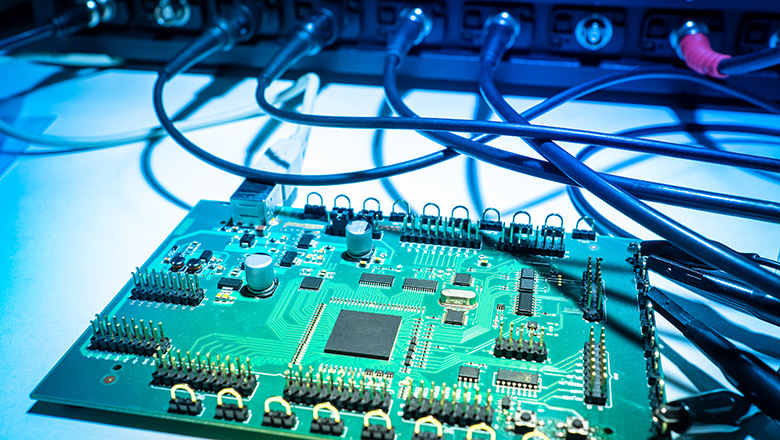
Here are actionable steps to achieve the best results from your in-circuit test system:
Design for Test (DFT)
- Test Points on the Board:Always include accessible test points or pads on all key nets.
- Standard Spacing:Use industry-standard probe spacing for ease of fixture creation.
- Clear Silkscreen Labels:Mark test points on silkscreen for maintenance and troubleshooting.
- Avoid Obstacles:Don’t place tall components or connectors directly above test pads.
- Review Test Coverage During Design Review:Use CAD/DFT tools to simulate access before locking your design.
Fixture and Test Equipment Best Practices
- Automate the Testing:Integrating ICT into a pick-and-place workflow boosts throughput.
- Calibrate Regularly:Check fixture alignment periodically with known-good boards.
- Document Test Procedures:Maintain clear test instructions and scripts for repeatability and auditing.
Maintenance for Long-Term Accuracy
- Regularly Inspect Probes:Clean and replace as needed—a dirty or worn pin can compromise contact.
- Monitor Test Logs:Set thresholds to flag anomalies or rising defect counts.
- Train Operators:Make sure the team knows how to handle the fixture, identify true defects and escalate issues.
Latest Innovations in In-Circuit Test
- Fixtureless In-Circuit Testers:New automated test systems (advanced flying probe/flexible bed-of-nails hybrids) for greater speed and coverage.
- Cloud-Connected ICT Testers:Enable remote test programming, instant defect reporting and analytics across multiple facilities.
- Integrated Hybrid Test Benches:Combining ICT, boundary scan and functional test to capture defects at every stage of PCB manufacturing.
- Machine Learning for Defect Prediction:ICT data is now being leveraged in smart factories to predict and prevent recurring manufacturing defects.
Conclusion: ICT for Greater Quality in Electronics Manufacturing
In-Circuit Testing (ICT) is a reliable and efficient testing solution widely adopted in the global PCB manufacturing industry. By conducting defect screening on printed circuit boards and all their individual components, this system ensures that the final products meet the stringent quality and reliability standards required by the modern electronics sector. Automated in-circuit testing systems and equipment possess the capability to accurately identify defects, achieve comprehensive test coverage and perform automated inspections on each finished circuit board. These characteristics make large-scale production feasible while ensuring the economic viability of the manufacturing process.