
Introduction: The Classic Arcade Game PCB Deep Dive
During the heyday of the 1980s, when you walked into any city’s arcade, you would find a bustling array of iconic machine, each driven by an important hardware component: game PCBS. Today, we will delve into every unforgettable moment of the classic arcade game pcb, from Level 1 to the final boss. Whether you are a retro enthusiast looking to buy, sell or review your favorite arcade games, a collector seeking rare board for your home, or simply fascinated by the strong impact these machines had on our childhood, this guide offers the necessary knowledge and skill .
Arcade PCBS have shaped the world of video games, from urban arcade to home transitions, providing pillars from the classic of Taito to the legendary series of Neo Geo. This article delve deeply into the development of the industry, explores the conversion kit and PCB markets, and provides a comprehensive review of the technology, include the latest updates for 2026.
Game PCB Overview: How the Arcade Game Board Became a Classic
What is a Game PCB?

The game PCB (printed circuit board) is the main logic board in every genuine arcade game console. As the brain of arcade game, PCB coordinates everything – from player input and graphic effects to sound and score.
Why Are Arcade Game PCBs Classic?
- Durability and Design: Arcade PCBs were designed for heavy, continuous use—8 hours a day or more in commercial environment.
- Innovation: Every classic game, from Taito’s Space Invader to the latest Neo Geo release, used custom PCB’s to push graphic, sound, and functionality ahead of the home market.
- Conversion Kits: These kits, essentially swappable PCBs and wiring harnesses, let operator quickly change out one game for another—a crucial tactic for staying relevant and profitable.
The Importance of the Arcade Board
- Game Selection: The variety of PCBs available—single-game, multi-game, conversion—meant arcade operators could update their selection to chase trends in the market.
- Collector Value: Original boards sell for premium prices among collectors, especially rare or early versions (Pac-Man, Taito classics, Neo Geo “gold” boards).
- Price and Market Effect: PCB prices reflect both the nostalgia market and technical scarcity — some rare boards are now worth thousands!
Exploring PCB Architecture: What Makes an Arcade Game Machine Work?
How the PCB Sets the Standard
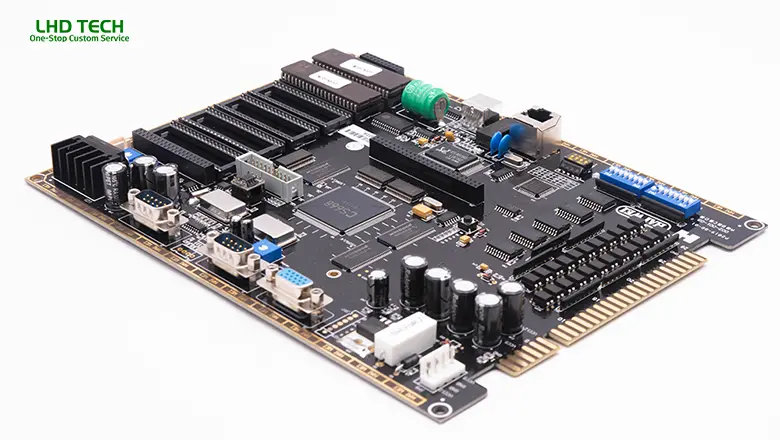
At their core, arcade game pcb are a collection of interconnected components soldered onto layers of fiberglass board. Here’s what you’ll find:
- CPU (Central Processing Unit): Executes the game code.
- Memory (RAM/ROM): Store and process data.
- Graphics Processor Chips (GPC): Render visual effect and manage sprite movement.
- Voltage Regulators & Power Supply Circuits: Ensure all components receive the correct voltage, preventing damage and stabilizing gameplay.
- Connectors: Interface with control, display, coin slot, and even network cable in the latest machine.
Structural Styles
Single Board vs Multi-Board Stack
The earliest classics (like Taito’s Space Invaders) used single-board PCBs. As games became more advanced, stacked multi-board solutions (Street Fighter II, Neo Geo series) allowed for more functionality, easier repairs, and modular upgrades.
Conversion Kits & Board Compatibility
Conversion kits allowed arcade owners to update a machine by swapping PCB’s, updating art, and sometimes modifying controls. JAMMA (Japan Amusement Machinery Manufacturers Association) standards made this even easier, leading to the most flexible game cabinets in the industry.
A Deep Dive into PCB Design, Manufacturing, and Assembly
What Goes Into PCB Design?
PCB design for arcade games is a complex art. Engineers considered not only the gameplay but also repair, longevity, and upgradability. Classic PCBs are often hand-routed masterpieces, with every trace planned for function and service.
The PCB Manufacturing Process
- Schematic Layout: Engineers map out every component, power rail, and signal path.
- Photolithography Process: Circuit patterns are transferred onto copper-clad boards using UV light—state-of-the-art for the time.
- Etching Process: Unwanted copper is removed, leaving only the necessary traces.
- Drilling: Automated machines drill holes for through-hole components.
- Plating Process: Copper is deposited in drill holes for multi-layer connectivity.
- PCB Assembly: All components—CPU, memory, I/O chips—are soldered in place.
- PCB Testing & Inspection: Electrical and functional tests catch defects before boards ship to arcades.
- Packaging: The completed boards are placed in anti-static bags, boxed, and shipped for installation in city arcades or to hobbyists for home cabinets.
Key PCB Components and Functionality
| Component | Functionality | Typical Issue | Example Series |
| CPU | Runs game code | Heat, pin corrosion | Z80, 6502, 68000 |
| Graphics Chip | Draws graphics | Solder cracks, static | Custom, Namco |
| RAM | Stores temp data | Aging, data loss | 2114, 4164 |
| ROM | Game graphics/sound | Data corruption | EPROM, MaskROM |
| Power Regulator | Manages voltage | Overheating | 7805, LM323 |
Classic Games and Arcade Machines: PCB’s Impact on Game History
The classic arcade games that defined an era all relied on evolving game PCB’s for their unique style, gameplay, and popularity.
Notable Arcade Machine Series
- Taito Classics: Space Invaders, Jungle King, and Elevator Action—boards famous for reliability and unique sound (ocean-like effects in Elevator Action!).
- Neo Geo Multi-Game System: SNK’s innovative boards let arcades offer a variety of games in one cabinet. The Neo Geo MVS series became a “must” for arcade operators and collectors, with conversion kits enabling constant new selection.
- Street Fighter II (Capcom CPS): Multi-layered board stacks, swappable game ROMs, and powerful audio effects set a new standard for fighters and made the CPS series a major market force.
The Lasting Effect of Classic PCBs on the Game Industry
The effect of these game PCB’s reaches beyond the confines of the arcade. The conversion kit revolution, enabled by both JAMMA and Neo Geo’s modular boards, led directly to the possibility of arcade machines in the home. Companies like SNK and Capcom built entire series around versatile, updatable boards, making it possible for fans and operators to continuously update their arcade game selection without discarding the old machine.
Conversion Kits: Expanding Your Home or Arcade Game Selection
Conversion kits—a pivotal advance in the arcade industry—enabled arcade operators to maximize profits and game variety, and later allowed hobbyists to build their dream home arcade collection.
What’s Included in a Classic Game Conversion Kit?
- Main PCB: The new game logic board.
- Wiring harness or edge connector adapter: For compatibility with existing cabinets (often JAMMA-standard).
- Artwork: New marquee, bezel, and sometimes control panel overlay.
- Instructions and promotional materials: For easy setup in any city or ocean-side arcade.
- Control panel parts: Buttons, joysticks, and sometimes alternate control styles to fit the new game.
Why Conversion Kits Matter
- Cost Savings: Instead of buying an entirely new machine, operators could simply buy a kit and update an old board.
- Market Flexibility: Conversion kits let markets update rapidly, increasing revenue and player amazement.
- Collector Value: For today’s collectors, original kits (especially Taito and Neo Geo conversions) are valuable, with rare sets fetching strong prices at sale.
Table: Notable Conversion Kits and Their Impact
| Kit Series | Origin Board | Conversion Example | Market Effect |
| Taito Classic Kits | Jungle King | Elevator Action | Ocean of new options for operators |
| Capcom CPS-2 | Street Fighter II | Darkstalkers, Alpha Series | Keep players returning |
| Neo Geo MVS | Any MVS Board | Metal Slug, King of Fighters | “Game of the week” selection |
Review: Legendary Game PCB Boards — Donkey Kong, Street Fighter, and Neo Geo
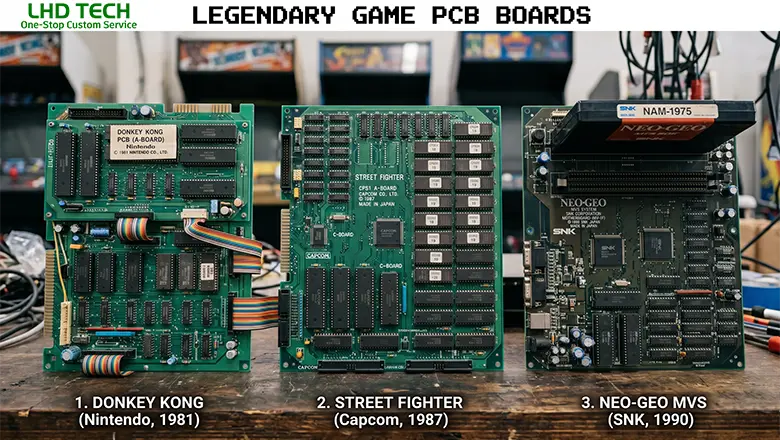
A review of classic arcade game PCBs isn’t complete without highlighting the heavyweights that made the strongest impression, both in commercial arcades and home collections.
Donkey Kong PCB: The City-Building Classic
- Style: Single large board, modular RAM/ROM, rugged and straightforward.
- Functionality: Robust, survived decades in smoke-filled city arcades; notable for its unique ladder and barrel animation effects.
- Collector’s Piece: Clean, original Donkey Kong boards with serial-matched ROMs receive strong prices at auction and are a must for any serious collection.
Street Fighter II PCB: The Fighter That Changed Everything
- Board Architecture: Multi-layer stack system, swappable conversion kits for updated versions (Turbo, Champion Edition, etc.).
- Effect: Created a tidal wave in the market, establishing the 6-button control style for all future fighting games.
- Reliability: Some originals require “Phoenix” updates to bypass Capcom’s battery-backed security, a common issue for those restoring and maintaining these legendary machines.
Neo Geo PCB: The Home Arcade Dream
- Series Edition: MVS (Multi Video System) boards provided up to six games in one cabinet—a true variety set for both home and arcades.
- Game Selection: Iconic for Metal Slug, Samurai Shodown, Puzzle Bobble, and the King of Fighters series.
- Conversion Kits Impact: Their plug-and-play nature meant arcades could review and update their selection monthly. Original Neo Geo boards (especially with complete matching cartridges and art kits) remain highly sought after on the collectors’ market.
Emulator PCBs, Home Use, and the Neo Geo Series
The rise of emulator PCBs and FPGA-based solutions means that fans can now play classic arcade games in their home with a piece of hardware that behaves just like an original game PCB.
Emulator PCB’s: Bringing Arcade Games Home
- Modern Emulator Boards: Boards like Pandora’s Box, 60-in-1 Classics, and custom FPGA boards allow users to play a strong variety of classic arcade games on a single machine or cabinet—perfect for home or small arcade settings.
- Neo Geo at Home: The Neo Geo AES (Advanced Entertainment System) was a direct home version of their arcade hardware, using the same main game PCB and cartridges—a revolutionary move for the industry and collectors.
Style and Functionality
- Home Cabinets: Many enthusiasts build new cabinets in the classic style for their home, using reproduction or emulator PCB’s for reliability and variety.
- Conversion Kits for Home: Modern multi-game kits let users select from dozens of classics, mirroring the market flexibility operators once enjoyed.
Latest Trends: PCB’s in the Modern Arcade Game Market
Sale, Market Trends & Updates 2026
- PCB Sale Price Trends: Rare original boards from classic games (early Taito, SEGA, and Neo Geo) continue to increase in value, especially if they include conversion kits or original documentation.
- New Releases: Indie developers are now selling new games for JAMMA and Neo Geo, setting fresh sale prices and keeping the market strong.
- Review Roundup: The market now features “deluxe” emulator and FPGA boards that allow users to legally buy and play a large collection of games, with update kits sold regularly from reputable dealer—great for both personal and commercial use.
- Amaze Players: Operator and home users now set up multi-game cabinet to amaze families and customers, with curated game selections for every style.
Typical Classic PCB Price Range (2024 Update)
| Classic Game Board | Market Price Range | Notes |
| Donkey Kong PCB | $400–$1000 | Complete sets command more |
| Street Fighter II | $200–$600 | Phoenix versions cost more |
| Neo Geo MVS 1/4/6 | $250–$800 | 6-slot boards fetch premium |
| Taito Space Invaders | $350–$900 | Pristine boards premium |
| Sega OutRun | $300–$700 | Conversion kits rare |
Arcade Game PCB Sale and Price Guide: What to Know When You Buy or Sell
Buying, selling, and collecting arcade game boards and conversion kits is a dynamic market with unique rule.
How to Get the Best Price (Sale or Purchase)
- Condition: Clean, tested, and working PCB’s sell for the highest price. Check for battery damage, missing ROMs, or repaired trace.
- Originality: Board with matching serial numbers, original stickers, and matched conversion art sets are great for resale and receive strong interest on the collector’s market.
- Conversion Kit: Complete kits (with marquee, bezel, harnesses) can significantly increase sale value—especially for rare titles or kits that include variety game selections.
- Buy From Reputable Seller: Check arcade forums, review lists, and community reputation before making a large purchase.
Selling Tips:
- Include photos of both side of the board, connector pins, and any original conversion kit materials.
- List any issue or repairs honestly,most collector appreciate a detailed review and transparent history.
- Check latest market prices—use sites specializing in arcade sales, not just general auction sites, for a realistic guide.
Common Issues and How to Receive Great PCB Repairs
Even robust classic PCB’s face issues after decades of use, but most can be repaired or restored if you know where to look.
Typical Issues:
- Corrosion: Usually from battery leaks—especially in city climates with high humidity or salt air from the ocean.
- Broken Traces: Caused by improper removal or careless storage—can often be repaired with wire “patches” or trace paint.
- Connector Wear: Edge fingers get worn out with repeated conversion kit swaps; gently clean with a fiberglass pen and avoid abrasive tool.
- Dead Chips: RAM or ROM failure is common in Taito, Neo Geo, and Namco boards. Always test and have spares on hand if you restore or review a large collection.
How to Receive Great Repairs:
- Pack boards carefully—anti-static bags, foam/spacer, secure boxing.
- Choose a specialist—strong communities exist for each major arcade series; join and ask for recommendation.
- Describe issues clearly—video clips, photos, and error behavior help technician set the right solution from the start.
- Get a repair estimate or review ahead of time—good repair techs will outline all possible prices and sale term.
Restoring, Collecting, and Maintaining Your Classic Game PCB
Set Up a Secure Display or Storage Environment
- Home Setup: Dedicate a cabinet or display case in your home to keep your arcade game boards safe and dust-free. Anti-static bags and upright filing—like books—help preserve connector and prevent warping.
- Climate: Store in a low-humidity area, away from direct sunlight. City or ocean climates with high salt or moisture can corrode traces or connectors, so sealed case and desiccant packs are a strong solution.
- Labelling: Clearly label each board, conversion kit, and accessory, including date received, price paid, and a short review or repair history. This is essential for a growing collection or future sale.
PCB Maintenance for Lasting Effect
- Regular Cleaning: Use compressed air for dust, and isopropyl alcohol for stubborn grime. Regularly check voltage regulators, capacitors, and battery-backed chips for leakage or aging.
- Functional Testing: Every six months, test each board in a working cabinet or supergun. If you notice new issue, review solder joint and connector; even great PCBs can develop cold solder joint over time.
- Backup and Clone ROMs: For priceless rare classic, backing up game ROMs preserve your rights as an owner and future-proof your investment. Communities like MAME and Neo Geo preservationists can assist.
- Updating Conversion Kits: Market condition shift, and new multi-game or updated emulator kits become available. Review your cabinet’s game selection every year for possible upgrade that keep your setup strong and your players amazed.
Amaze Your Friends: Building a Home Game Cabinet With the Right Selection of Boards
Designing the Perfect Home Arcade Machine
- Style Choices: Classic woodgrain, sleek Neo Geo red, or custom vinyl wraps can complement your home décor while evoking authentic arcade style.
- Game Variety: Use conversion kit and emulator board for a truly impressive collection—combine classics like Donkey Kong, Taito shooter, Capcom fighter, and the entire Neo Geo city collection for maximum effect.
- Controls: For the greatest effect, outfit your cabinet with real arcade joystick and button controls, set up for multiple players. Review control panel layouts for each game board—a 2-player Capcom setup differ from a 4-slot Neo Geo kit or a single joystick Taito shooter.
- Display: Use a high-quality CRT for authentic video effect, or a modern LCD for longevity. Some multi-board conversion kits offer video output adapter for either style.
Hosting and Sharing
Set your home arcade to free-play mode, so friend and family can relive their favorite childhood classic. Host “high score night” and challenge guests to top your game leaderboard. The right selection of PCBs—reviewed and tested—will always bring excitement and nostalgia to any gathering.
Thanks to the Industry: PCB’s Lasting Effect on the World of Video Games
The collective work of game designers, hardware engineers, city arcade operators, and home collectors has kept the PCB industry strong and innovative. Thanks to this legacy, the classic game era will never truly fade away. Companies still manufacture conversion kits, emulation boards, and even new game PCBs for sale, enabling a new generation to experience arcade magic either in commercial settings or at home.
Industry Effects:
- Creation of the Collector Market: Every board, conversion kit, and classic game PCB sold today helps keep the knowledge and hardware alive.
- Ongoing PCB Updates and Support: Thanks to dedicated maintenance personnel and new manufacturing technologies, the latest simulation kit and replica board have made classic machines available, even though the original machines have been in use for over 40 years.
- Amaze and Inspire: The effect of playing childhood classics on the original hardware is unparalleled. It inspires new game developers and connects generations of fans.
FAQs: Classic Games, Conversion Kits, and PCB Market Questions
Q: What’s the most popular arcade game PCB for home cabinets?
A: The diversity of the Neo Geo MVS series, the nostalgia of Donkey Kong and Pac-Man, and simulator board such as Pandora’s Box are pure choices.
Q: Where can I buy or sell vintage arcade PCBs and conversion kits?
A: Follow professional forums (GameBang Note: such as KLOV, Arcade Museum), city/industry auction websites and well-known retro game stores. Frequently review the seller’s reputation and price history.
Q: What’s the right way to select a conversion kit for my cabinet?
A: Ensure it matches your wiring standard (JAMMA is most common), review game list and control requirement, and check for included artwork and documentation.
Q: Are modern emulator boards legally the same as original PCBs?
A: Many use unlicensed ROMs; buying official multi-game kits or those with licensed content is the safest route. Home users should review local copyright law and right.
Q: Can I use my arcade PCBs in a modern cabinet or home setup?
A: Yes—with proper voltage regulation, display adapters, and control panel wiring, most classic boards can be enjoyed in custom or converted home cabinets.
Conclusion: The Strong Popularity and Enduring Value of Game PCBs
In every sense, the classic arcade game pcb is the strong heart that drives our fondest childhood memories, the core of city and ocean arcade industry innovation, and a must-have piece for collectors. As the market continues to update for new generations, with new sale options, conversion kits and multi-game boards, the legacy of these boards only grows more valuable.
Let Us Amaze You: Join retro forums, collect a new piece for your home, or set up that conversion kit you’ve dreamed of since childhood—because every classic game, every board, and every PCB brings a new opportunity to relive, review, and share the video game magic that changed our world.
Thanks for joining us for this deep dive review on arcade game PCBs. With the right guidance, careful selection, and a little technical know-how, you can contribute to a vibrant, strong, and growing community that loves all thing arcade.