
Introduction: Aerospace PCB Assembly in Military and Aerospace
In the challenging world of military and aerospace, the role of the aerospace PCB is absolutely fundamental. From defense satellites to advanced avionics, PCB assemblies are the “nervous system” of aerospace systems and platforms that demand high reliability, durability, and long-term performance. Aerospace PCB manufacturing is unlike any other field: it must overcome the harshest environmental conditions, from intense vibration to radiation exposure in space. Aerospace companies, defense contractors, and organizations face strict pcb requirements that go far beyond ordinary electronics, relying on advanced circuit board designs, unique pcb material, and board fabrication that must adhere to the highest ipc reliability standard—IPC Class 3A.
This article is your ultimate guide to aerospace pcb assembly in aerospace and defense applications: exploring pcb design, manufacture, assembly, and testing—as well as providing tips for finding a high-quality pcb manufacturer who can deliver uncompromising results for military and aerospace industries.
PCB Design and Manufacture for Aerospace and Defense

The Importance of PCB Design in Aerospace
While every printed circuit board require thoughtful design, aerospace pcb design demand far more:
- Long service life: Aerospace systems typically have long service life – satellites last over 15 years, thousands of cycles for jet avionics—so every decision, from copper thickness to laminate selection, can affect the board’s reliability and replacement intervals.
- High Reliability and Robustness: Military and aerospace applications require boards that will not fail in demanding or unpredictable environments.
- PCB Materials for Aerospace:
- Rogers laminates, polyimide, and RT/duroidare chosen for resistance to high temperature and radiation, as well as minimal outgass.
- Heavy copperfor high-current handling.
- Rigid-flex PCB construction allow for compact, mechanically robust connection in tight space.
- Reference Standards & Acceptance:
- All aerospace and defense PCBs must adhere to these standards: IPC Class 3/3A, AS9100, Nadcap, and relevant international aerospace norm.
- Design support:Top-tier vendor offer simulation and pre-layout check, ensure your pcb design is right before manufacture begin.
Key PCB Materials and Their Aerospace Applications
| PCB Material | Typical Use |
| Polyimide | High-temp, vibration, engine modules |
| Rogers RO4000/RT/duroid | Radar, comms, RF/microwave for military/aerospace |
| FR4 | Avionics, control, non-mission-critical circuits |
| Rigid-Flex | Satellites, flight data recorders, folding modules |
Engineering Circuits for Aerospace Applications: Requirements and Capabilities

Aerospace Systems Are Highly Complex
A single military helicopter or satellite can have hundreds of circuits and boards, each responsible for power conversion, data collection, signal control, or communications. PCB solution for aerospace and military project always require:
- Advanced capabilitiesto cope with electromagnetic interference, high temperatures, vibration, and pressure variation.
- Mil-Spec and Defense PCBs: These often utilize MIL-PRF-31032 for fabrication, with fully traceable source, batch control, and certified operator.
- Component Sourcing: Qualified electronic components must meet spec for the most demanding service, and pcb assembly demands higher precision for thing like placement and soldering.
- Custom PCB Requirements: Complex stacking, blind/buried via, impedance control, and redundant routing paths ensure highest mechanical and electrical reliability.
- Pre-layout Services: Simulation of signal integrity and thermal management in the design phase can avoid failure of any pcb in the field.
Assembly Processes and Rigid-Flex PCB Production
PCB Manufacturing and Assembly: Demanding Higher Precision
PCB assembly for aerospace is a multi-stage process involving the most advanced pcb manufacturing and inspection technologies:
- Solder Paste Printinguse automat stencils for repeatable result.
- Surface-mount Technology (SMT): Pick-and-place robot lay down electronic component with micron-level accuracy.
- Reflow Soldering: Controll temperature profile, often in nitrogen, prevent oxidation for top solder joint quality.
- Automate Optical Inspection (AOI) and X-ray: Detect hidden soldering problem, critical for dense and high-reliability military and aerospace PCB .
- Plasma and Deionize Water Clean: Remove contaminant that could influence performance in harsh environmental condition.
- Rigid-flex Assembly: Used extensively in modern aerospace to provide both the mechanical robustness and flexibility dictated by design requirement.
Ensuring Reliability and Meeting Standards in Aerospace PCB Manufacturing
High reliability and robustness are non-negotiable for aerospace pcb assembly. In terms of both manufacturing and inspection, the following standard to ensure assembly quality are observe:
- Highest IPC Reliability Standard (Class 3A): Defines accept/reject criteria for soldering, cleanliness, conductor spacing, underfill, and virtually every aspect of the circuit board.
- AS9100 for Quality Management: Governs documentation, test logs, failure analysis, and training for all staff involved in assembly.
- Traceability: Batch logs down to solder paste lots and reel-level passive components.
- Mil-Spec and Defense PCBs: Must be built by certified operators, with documented chains of custody and batch release processes.
Testing, Quality, and Certification for Aerospace PCB Assemblies

Inspection and Testing Processes
- 3D Solder Paste Inspection (SPI): Prevents solder voids and incomplete joints.
- Functional Testing: Every pcb assembly quote should include system-level testing—ensuring not just connection, but operation under simulated flight/space conditions.
- Thermal, Vibration, Pressure, and Drop Test: Simulate launch, flight, or space deployment conditions of aerospace and defense applications.
- Conformal Coating Inspection: UV and thickness checks run after the coating process for full environmental conformity.
- Failure Analysis: If a failure of any pcb occurs, in-house and third-party labs provide rapid root cause diagnostics and corrective action support.
Key Certifications for Aerospace PCB Assembly
| Certification | Why It Matters |
| AS9100 | Essential for aerospace and defense OEMs |
| IPC Class 3/3A | Required for high-reliability PCBAs |
| Nadcap | Process-specific audit; critical clients |
| RoHS/REACH | Mandatory for civil aerospace exports |
PCBs for Military and Aerospace: Applications and Environmental Challenges
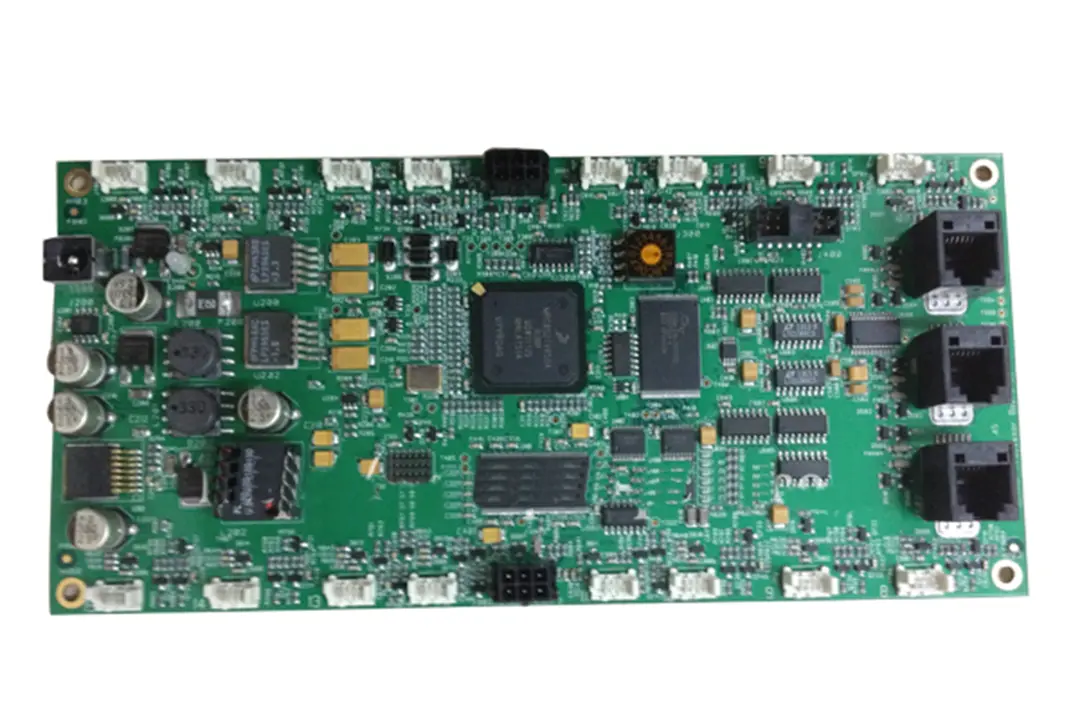
Military and aerospace PCBs support some of the world’s most advanced technology, but it is conceivable that they face some of the harshest environmental condition. Whether it is the vacuum of space, the intense vibration of rocket launch, or the rapid thermal fluctuation of military jet, these circuit board must have extremely high reliability.
Typical Aerospace and Defense Applications
- Avionic flight control and navigation systems: These systems depend on PCB assemblies that can process data in real time with zero allowance for failure, supporting mission-critical operations from takeoff to landing.
- Radar, Communication, and Surveillance: High-frequency PCBs for radar and secure comms require specialized PCB material like Rogers and RT/duroid to handle GHz signals without signal loss or cross-talk.
- Satellite electronic: Satellites must endure decade in orbit, so their PCBs are designed for resistance to radiation, outgass, and severe temperature swings.
- Black box recorder: These must function through extreme impact and thermal condition, often make use of rigid-flex pcb and redundant pathway to ensure data survivability.
- Military unmanned vehicle (UAVs/drone): Demand light weight and resistance to vibration and EMI, these PCB assembly often combine rigid and flexible technology for space and weight saving.
Environmental Challenges for Aerospace PCB Manufacturing
- Radiation and Outgass: Aerospace environments can jeopardize ordinary board with atomic oxygen, intense UV, and x-ray radiation. Advanced coatings and materials are required to protect circuitry and prevent failure of any pcb.
- Temperature Extreme: Aerospace system typically have long life cycle, operate from -55°C to +125°C, requiring pcbs with robust thermal cycling resilience.
- Vibration and Shock: Military and aerospace pcbs must withstand mechanical stresses unseen in commercial application. Vibration-resistant mounting and thick copper traces combat circuit damage.
- Moisture, Humidity, and Corrosion: Conformal coating and non-corrosive solder are common to prevent premature aging of board in variable atmospheric or marine environment.
Reducing PCB Assembly Costs and Supporting Production Capabilities

While pcb assembly demands higher precision and tighter process control in aerospace, there are also strategy to control cost without ever compromising reliability.
How to Lower PCB Assembly Costs
- Component Co-Procurement: Leverage your manufacturer’s global network to source alternate/multi-sourced component, reducing risk tied to single suppliers.
- Design for Manufacturability: Early DFM and DFT review catch costly mistakes, reduce rework, and improve yields, ultimately lowering both direct and indirect assembly costs.
- Batch/Lot Optimization: Group production run for similar boards or consolidate component order to lower unit price.
- Lifecycle Management: Build spare boards during the primary run—this cut per-board costs and ensures part for field repair without additional NPI set-up fee.
Supporting High-Mix, High-Volume Production Capabilities
- Automated Lines: Invest in or select a partner with capacity for both prototype and large-scale production, including automated optical, X-ray, and selective solder capabilities.
- Rapid Prototyping: Demand quick-turn support so design changes can be validated well before entering full aviation or defense-grade production.
- Documentation and Traceability: Ensure your partner’s system provide per-board traceability and manufacturing batch reports.
The Future of Aerospace PCB Assembly and Advanced PCB Solutions
Aerospace and defense technologies are rapidly evolve, and so are the requirement for pcb assemblies and their manufacture.
Key Future Trends
- Increased Rigid-Flex PCB Adoption: As systems grow denser, rigid-flex designs provide more reliable interconnect and reduce weight—ideal for satellites, UAVs, and space-based platforms.
- Integrated Smart Sensors: PCBs now integrate monitoring of vibration, thermal cycling, and even stress/strain, enabling predictive maintenance and extending mission lifespans.
- HDI, Microvia, and Miniaturization: Compact form factors, high-layer counts, and laser-drilled microvias are crucial for next-gen aerospace electronics.
- Eco-friendly Manufacturing: RoHS, REACH, and “green” supply chains will expand, pushing the industry toward more sustainable materials and closed-loop recycling.
- Fully Digital Traceability: Blockchain and AI analysis are being piloted to ensure every board, revision, and batch is verifiably connected from raw material to in-service maintenance.
LHDPCB Aerospace PCB Assembly Services: Your End-to-End Partner
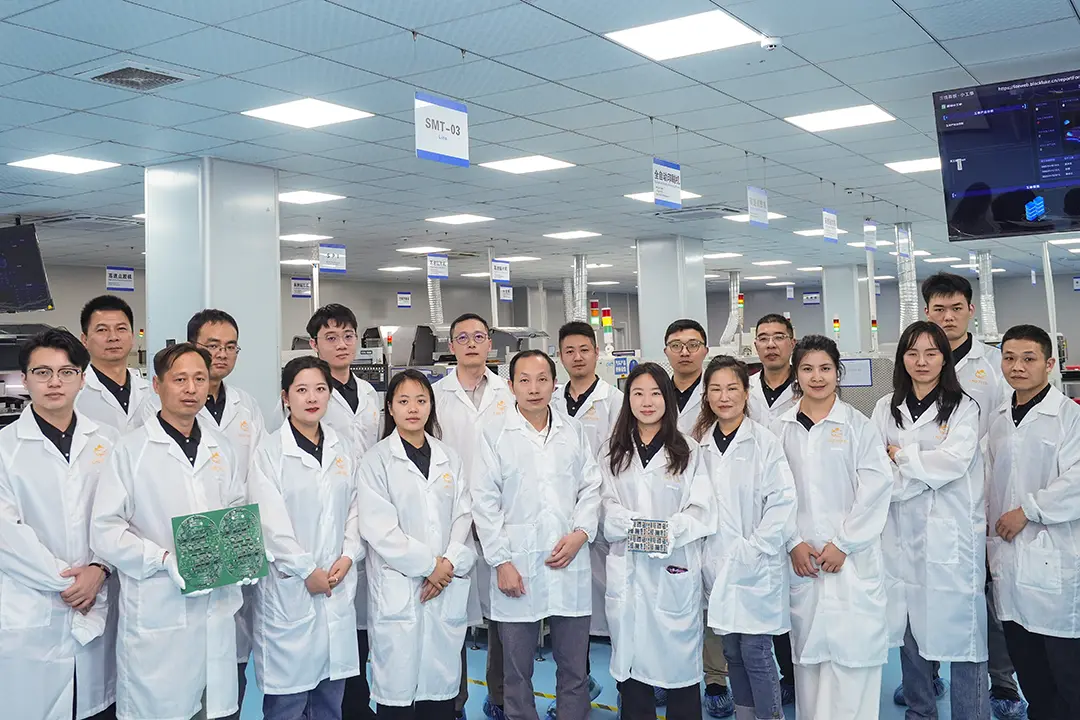
As a leader in aerospace pcb assembly services, LHDPCB goes beyond manufacturing. We deliver pcb solutions built for the most demanding aerospace and military requirements:
- All Major Certifications:AS9100, IPC Class 3A, ISO 9001, Nadcap, UL, RoHS, REACH for global acceptance.
- Expert PCB Designer and Engineer: Decades of experience in pcb design, rigid-flex engineering, and mil-spec production for aerospace and defense PCBs.
- Traceable, Documented Production: Every batch is digitally track from raw copper to finished PCBs for aerospace—including assembly, test, and coat stage.
- Investment in Advanced Technology: AOI, 3D SPI, X-ray, environmental stress chamber, and rapid prototyping line.
- Comprehensive Design and Manufacturing Support: Simulation, prototype, DFM/DFT, alternate part source, and post-delivery analysis.
Conclusion: High-Reliability PCB Solutions for Aerospace and Defense
Military and aerospace pcbs are defined not by convenience or cost shortcut, but by the highest standard of performance, accountability, traceability, and innovation. When you choose a partner for your aerospace pcb manufacturing needs, demand the best—in certification, in material, in test protocol, and in engineer support. With a focus on high reliability, long lifecycle, and robust environmental resistance, the pcb assemblies you specify will drive the success of aerospace and defense mission for years, even decades, to come. Work with a pcb manufacturer like LHDPCB to access leading-edge technology, rigorous standards, and a commitment to mission success that matches your own.