
Introduction to FR-4 Material and Its Importance

FR-4 material, while inconspicuous in the modern electronics sector, is indispensable. As a composite substrate material, it forms the foundational core of the vast majority of printed circuit boards (PCBs). Various electronic products rely on FR-4-based PCBs to achieve circuit interconnection and functional operation. Its applications span consumer electronics such as smartphones and laptops and extend to critical fields including aerospace, medical instruments and industrial control equipment. In the PCB manufacturing process, selecting the appropriate FR-4 material effectively ensures the long-term reliability, mechanical strength and overall cost control of the circuit boards, thereby supporting the stable manufacturing and performance realization of electronic devices.
FR-4 stands for “Flame Retardant Level 4.” This material has passed rigorous fire resistance standards and its flame-retardant properties are vital for preventing circuit and device failures. FR-4 material offers a combination of favorable mechanical properties, including rigidity and strength, along with excellent electrical insulation. Its performance has been fully validated through long-term application. Based on these comprehensive characteristics, FR-4 has become the industry-standard material in the field of printed circuit boards and is widely adopted by designers and manufacturers.
Why is FR-4 Essential in Modern Electronics?
- Acts as a base material for routing and supporting circuit components.
- Provides electrical and mechanical advantagesin the design and fabrication of PCBs.
- Ensures safety as a flame retardant—a non-negotiable feature in high-density electronics.
What is FR-4 Material? Full Explanation
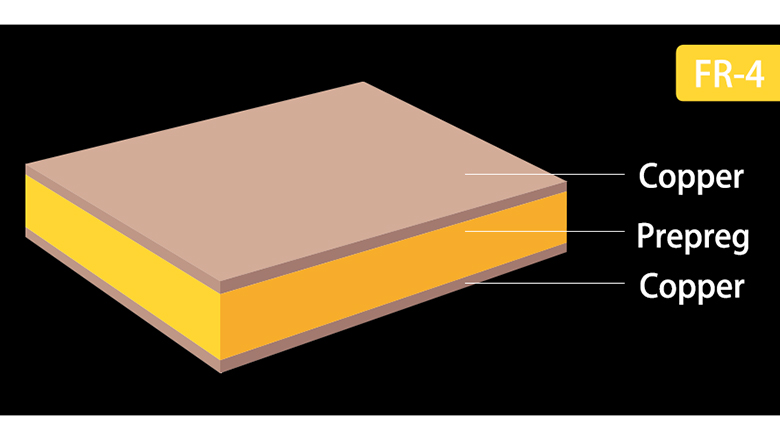
The detailed composition of FR-4 material is as follows. This material is a composite, using woven fiberglass cloth as the reinforcing substrate, which is impregnated with epoxy resin and then cured. The abbreviation “FR” in its name clearly denotes the “flame-retardant” property. This material effectively resists ignition and possesses self-extinguishing capability when exposed to fire. The flame-retardant characteristic is a critical requirement that must be met by printed circuit board substrate materials.
Why is FR-4 Used in Printed Circuit Board Fabrication?
- It provides a cost-effective and mechanically robust substrate for the printed circuit board.
- FR-4 circuit boards form the foundation of multilayer and high-density designs due to their thermal and electrical stability.
- When compared to earlier standards like FR1, FR2, and FR3 PCBs, FR-4 PCB material provides a higher glass transition temperature (Tg) and dielectric strength.
FR-4 Composition & Structure
FR-4 is a composite material—specifically, a fiberglass-reinforced epoxy laminate. Let’s explore this substrate up close:
- Fiberglass cloth:Provides mechanical properties—it’s the “spine” that supports all other layers in the board material
- Epoxy resin:Fills in gaps between fibers, adding electrical insulation, moisture blocking, and flexibility. It makes the fr4 board tough and durable.
- Flame retardant additive:Ensures the final product meets UL94V-0 for PCB base material safety.
Typical Composition Table
| Layer or Component | Description | Main Benefit |
| Fiberglass (E-glass fibers) | Mesh woven glass fibers | Flexural & tensile strength |
| Epoxy Resin (with FR additive) | Thermosetting plastic matrix | Electrical insulation, structure |
| Copper Layers | Laminated on surface | Electrical pathways/traces |
| Solder Mask/Silkscreen | Protective outer layer | Assembly, identification |
Properties & Characteristics of FR-4 Material

The properties of FR-4 are foundational for circuit board material performance in any pcb fabrication process. Let’s look at both electrical and mechanical strengths:
Mechanical Properties (Why FR-4 is a Popular PCB Substrate)
- High tensile strength:Allows the board to withstand assembly and operation in challenging conditions.
- Flexural strength:Supports repeated bending cycles in applications like automotive and industrial controls.
- Dimensional stability:FR-4 sheets are widely popular since they maintain shape over wide temperature and humidity ranges.
Electrical Properties of FR-4 PCB
- Dielectric Constant of FR-4 (Dk):Typically between 4.2 and 4.8, suitable for signal integrity in most consumer and industrial electronics.
- Dissipation Factor (Df):Low (about 0.017 at 1 MHz), though Df of FR-4 increases at higher frequencies—one limitation of FR-4 in RF/microwave applications.
- Voltage isolation:The base dielectric material used in FR-4 can withstand high voltages (40-50 kV/mm).
- Moisture absorption:Lower than paper or CEM-based materials, ensuring reliability in humid environments.
FR-4 Material Properties
| Property | Typical Value | Impact on PCB |
| Dielectric Constant (Dk) | 4.2 – 4.8 | Signal transmission, impedance |
| Dissipation Factor (Df) | <0.02 (at 1 MHz) | Signal loss, high-frequency loss |
| Glass Transition Temp (Tg) | 130–200°C (high-Tg) | Temperature resistance |
| Moisture Absorption | <0.10% | Reliability |
| Mechanical Strength | 350–600 MPa (flexural/tensile) | Structural support |
Why These Properties Make FR-4 an Ideal Base Material
FR-4 comprehensively balances electrical performance, mechanical strength and fire safety requirements. With this balanced set of properties, it has established itself as an essential foundation and core pillar in modern PCB manufacturing.
Grades & Types of FR-4 Substrates
Not all FR-4 PCB material is identical. Exploring the types and grades will help in choosing the right FR-4 material for your next PCB fabrication.
- Standard FR-4:General-purpose boards, economical and widely used.
- High TG FR-4:For higher operating temperatures and lead-free soldering, commonly used in automotive or industrial settings.
- Halogen-Free FR-4:Environmentally safer, used in green electronics or where RoHS/REACH compliance is necessary.
- High CTI FR-4: Enhanced voltage tracking resistance for high-voltage industrial, power or automotive PCB designs—perfect when electrical isolation and long-term safety are priorities.
- No Copper FR-4: Pure insulation, used as spacers or structural supports where conductivity is undesirable.
FR-4 PCB materials are available in various types.It allows designers to select based on specific requirements. These materials offer broad applicability—ranging from simple single-layer consumer electronics to complex multi-layer circuit boards in advanced communication devices.
LHD TECH’S FR-4 Grades and Typical Applications
| FR-4 Grade/Type | Key Feature | Example Application |
| Standard FR-4 | Basic Tg, general use | Consumer electronics, IT devices |
| High TG FR-4 | Elevated Tg (>170°C) | Automotive, power supplies, LED boards |
| Halogen-Free FR-4 | Eco safe, RoHS compliant | Medical, export products |
| High CTI FR-4 | Superior voltage isolation | Industrial, power modules |
| No Copper FR-4 | Pure insulation, no circuit | Spacers, mounting plates |
Choosing between FR4 types is a vital task in pcb design and manufacturing since the board material properties influence yield, reliability and safety. Always request datasheets and sample test results from your substrate vendor to confirm the specifications match your requirements.
How FR-4 Material is Used in PCB Fabrication

FR-4 is used as the preferred substrate in PCB fabrication for its processability and performance.
LHD TECH’S PCB Fabrication Steps Involving FR-4
- Material Preparation:FR-4 sheet laminate is selected as the base material and CNC-cut to size.
- Copper Cladding:Copper layers are laminated to the FR-4 board material, forming the conductive layers.
- Etching and Imaging:Circuit patterns are defined using photolithography and excess copper is etched away, producing the pistes for the printed circuit board.
- Drilling:Vias and through-holes are drilled through the FR-4 circuit board for multilayer connections.
- Plating:Copper is deposited inside the holes, allowing multi-layer connections in complex PCBs.
- Solder Mask and Silkscreen:Protective layers and labels are applied to the FR4 PCB, making assembly and inspection easier.
- Testing:Rigorous electrical and mechanical tests ensure that the material can withstand the environment and perform electrically.
FR-4 sheets are widely popular for their uniformity and compatibility with all these process steps. They resist bowing or delamination, supporting high-yield PCB manufacturing even in large production runs.
FR-4 Thickness and Its Impact on PCB Design
FR4 pcb material comes in standard and custom thicknesses to suit a wide range of applications. The particular set of PCB thicknesses chosen affects:
- Mechanical support:Thicker FR-4 pcbs handle high-vibration, heavy-component assemblies better.
- Electrical performance:Thickness can be tuned for impedance control, vital in high-speed or RF circuits.
- Heat dissipation:Greater thickness can help spread and channel heat away from key parts.
- Assembly method compatibility:Some connectors or press-fit components are only compatible with specific FR-4 thicknesses.
Common FR-4 Thicknesses
| Thickness | Usual Application |
| 0.4 – 0.8 mm | Wearables, mobiles, miniaturized consumer devices |
| 1.0 – 1.6 mm | Standard consumer, industrial, automotive PCBs |
| 2.0 – 3.2 mm | Backplane, heavy-duty, test fixtures |
Choosing the right FR-4 material thickness means evaluating not just the circuit needs, but also how the board will be mounted, handled and connected during product assembly.
Major Advantages of FR-4 Material
Let’s summarize why FR4 is a standard and so widely used:
- Cost-effectiveness:FR-4 provides a price-to-performance ratio unmatched by most alternative materials, making it a go-to board material for high-volume products.
- Flame retardant:Its built-in fire-resistance properties make FR-4 the default for consumer safety and industrial standards compliance.
- Excellent electrical and mechanical properties:High dielectric strength, low leakage and robust physical support enable both normal and demanding pcb applications.
- Versatility:From single-layer to multi-layer HDI, from basic to high-speed digital, FR-4 pcb is suited for a wide range of circuit board uses.
In short, the right FR-4 substrate brings reliability, manufacturability and cost efficiency to PCB design.
Limitations of FR-4 Material
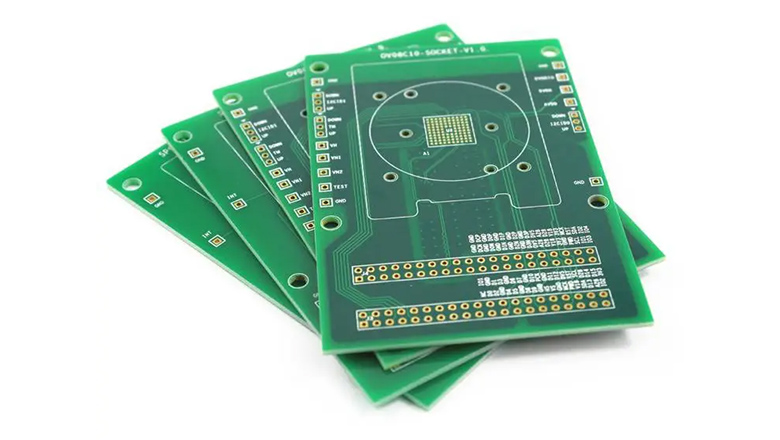
While FR4 is essential in mainstream electronics, every material in pcb manufacturing has trade-offs. Key limitations of FR-4 include:
- Signal loss at high frequencies:The DF of FR4 increases at GHz frequencies, causing more loss and lower signal integrity in advanced RF and microwave applications. For high-frequency PCB applications, specialty laminates or ceramics are recommended.
- Thermal limitations:Standard grades begin to soften above 130°C (unless using high Tg); not ideal for sustained, high-temperature environments.
- Glass weave effects:Can cause the “weave effect” in very high-speed circuit board material, leading to impedance modulation and bit errors in ultra-fast or exacting telecom work.
- Moisture absorption:Although lower than some other choices, still an issue for outdoor or submerged electronics.
FR-4 Compared to Alternative PCB Materials
Common PCB Material Alternatives
| Board Material | Strengths | Common Uses | Weaknesses |
| Standard FR-4 | Cost, versatility, availability | Most consumer, industrial, medical PCBs | Limited RF, high-voltage, or high-temp |
| High-Frequency (Rogers/PTFE) | Ultra-low loss, impedance stability | 5G, RF, radar, satellite, high-speed backplanes | High cost, complex process |
| Metal-Core PCB | Heat dissipation | LED modules, power electronics | Rigid, fewer layers, costly |
| Ceramic Substrate | Extreme voltage, heat resistance | Power conversion, aerospace/defense | Brittle, expensive, not for fine pitch |
| CEM (Composite Epoxy) | Very low-cost, simple circuits | Toys, cheap gadgets | Low strength and thermal limits |
Special Applications of FR-4 in Circuit Boards
Applications of FR4 stretch far beyond mass-market goods. Here’s how different industries use FR4:
- Medical PCBs:High TG, clean-fabricated FR-4 for blood glucose meters or diagnostic sensors.
- Aerospace/Defense PCBs:Mil-Spec FR-4 or hybrid stacks for avionics, control units—where vibration, moisture resistance and reliability are paramount.
- Automotive PCBs:High CTI, high TG and thick copper on FR-4 withstand temperature swings and heavy current in powertrain or battery management circuits.
- Industrial Automation:Large backplanes and control boards use FR-4 for physical stability and long-term electrical insulation.
Temperature & Dielectric Constant in FR-4 PCBs
FR4 material properties play a central role in pcb design when it comes to heat and signal behavior:
- Tg and Td:Always check that the glass transition temperature (Tg) of your FR-4 board exceeds your reflow soldering and use-case temps.
- Dielectric constant and loss tangent (Df):High-frequency circuits demand FR-4 grades with stable Dk and minimal Df across your board’s operation range. Df of FR4 increases at GHz speeds, so specialty laminates or hybrid stackups may be best for those scenarios.
Selecting the Right FR-4 Material for Your PCB
Selecting the right fr4 circuit board material is an engineering decision. Here’s how:
Checklist for Selecting the Right FR-4 Material
- Define board class and critical specs(voltage, temperature, speed).
- Evaluate cost:Is standard FR-4 sufficient? If yes, select based on IPC/UL grade and Tg.
- Consider thickness:Match mechanical and electrical needs with available standard sheet sizes.
- Check supplier quality:Only use base material from reputable, ISO/IPC-certified vendors with traceable lots.
- Simulate stackup in design tools:Confirm impedance and mechanical needs before ordering prototypes.
Sourcing, Storing and Handling FR-4 Substrates
Proper sourcing and handling of your FR-4 PCB material protects circuit board quality, manufacturing yield and long-term field reliability.
Sourcing Tips
- Source FR-4 only from certified, reputable vendors. Request full material datasheets and certifications for every new project.
- Confirm that the supply’s base material is compliant with ISO, UL94V-0 flame retardant standards and any needed RoHS/REACH directives.
Storing and Handling
- Store FR-4 sheets and PCBs in a dry, clean and temperature-controlled setting. Humidity can degrade the material properties and lead to delamination during assembly.
- Use gloves to handle substrates directly; fingerprints and residue can affect copper bonding and solderability.
- Rotate stock to use older material first.They’re more prone to resin outgassing or warping if held too long.
- Always keep track of lot numbers for material traceability, which is essential in automotive PCB, aerospace PCB or medical PCB production and regulatory environments.
Recent Advances and Trends in FR-4 PCB Materials
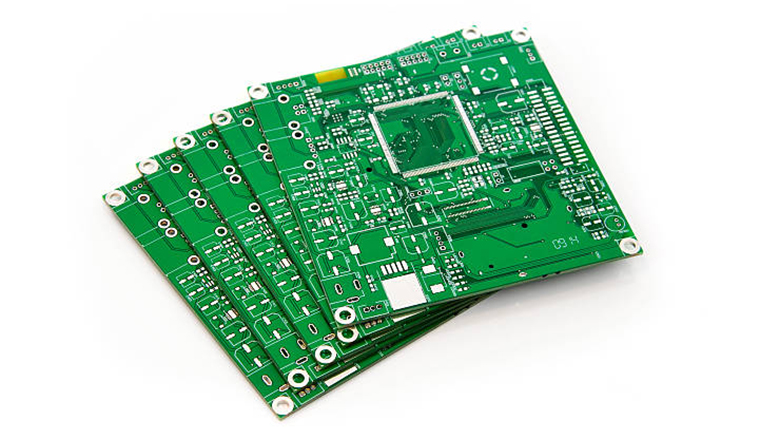
The landscape for FR-4 pcb material is evolving to meet new requirements in both high-frequency signal transmission and regulatory compliance. Let’s explore FR-4 material advances:
- High-speed, low-Df variants:New formulations of FR-4 now offer improved signal integrity for high-speed digital designs, minimizing losses up to 3–4GHz and helping extend FR-4’s utility.
- Eco-friendly, halogen-free FR4:Environmental regulations drive innovation in PCB substrates, making FR-4 a cost-effective, green-certified solution for export and medical applications.
- Nano-enhanced FR-4:Research into nanoparticle filling hints at even better thermal, mechanical and electrical properties in the next generation of FR-4 pcbs.
- HDI and microvia capability:Modern FR-4 can now support high-density, fine-pitch designs in smartphones and wearables, blurring the line between standard and specialty pcb base material.
FR4 remains the substrate of choice even amid these advances, blending affordability, safety and rapidly improving electrical and mechanical attributes.
Frequently Asked Questions about FR-4 Material
What does FR-4 stand for?
FR-4 stands for “flame retardant-4”, a category of NEMA standards for materials suitable for use in printed circuit board fabrication. It’s both a classification and a guarantee of basic fire safety.
Why is FR-4 used in printed circuit boards?
FR4 material is used in printed circuit boards because it is a cost-effective, robust, flame-retardant and reliable base material that supports multi-layer design, high-yield manufacturing and stable long-term operation.
Is FR-4 a composite?
Yes, FR-4 is a composite material made from woven fiberglass and epoxy resin, giving it a unique blend of electrical and mechanical performance.
What are the key properties of FR-4?
Properties of FR-4 include: excellent dielectric strength, high mechanical strength, low water absorption, reliable flame retardancy and stable insulating performance across a broad temperature range.
Can FR-4 PCBs be used in medical, automotive or aerospace applications?
Absolutely. Just specify the appropriate grade—high TG or halogen-free for medical, high CTI for automotive and Mil-Spec qualified FR-4 for aerospace.
Are there alternatives to FR-4 for PCB substrates?
Yes—PTFE, Rogers laminates, CEM, ceramic and metal-core PCB base materials are available when FR-4’s electrical, mechanical or thermal limitations cannot meet design needs.
Conclusion
FR-4 material is the world’s most widely used pcb substrate material for good reason. Blending electrical properties of a pcb (stable dielectric constant and high insulation), mechanical properties (tensile strength, flexural resilience) and cost-conscious pcb manufacturing, FR-4 stands as the gold standard for countless designs.
Whether you’re new to pcb fabrication or a veteran engineer evaluating material for pcb, always weigh the properties of FR4, its applications in PCB design and its limitations against your project’s needs. The right FR-4 material ensures a reliable, robust and cost-effective solution for your next circuit board design.
Explore the application of FR-4 material in your next project. If your application requires it, please consult LHDPCB and we will select the appropriate FR-4, specialty grade or other alternative materials based on technical requirements.