

Black Core PCB: What You Need To Know About Black FR4 PCB
Introduction: Understanding Black Core PCBs
With the rapid evolution of electronic products, the Printed Circuit Board (PCB) acts as an indispensable physical carrier inside every device. Modern printed circuit boards not only realize the electrical connections between electronic components, but also undertake multiple technical tasks including system reliability, heat dissipation efficiency and operational stability. The PCB industry is witnessing a significant shift—the gradual popularization of Black Core PCBs. This paper expounds on the key features of Black Core technology, covering its material composition, key design points and practical application suggestions, so as to provide a reference for the development of high-power electronic products or those with special requirements for visual effects.
So, why are more engineers and designers opting to use black core pcbs? The answer lies in the remarkable blend of technical properties and visual appeal. Black PCBs are also favored for their professional look, but many overlook how the black core layer enhances visual aesthetics while also offering real advantages in electrical and thermal behavior.
What is a Black FR4 (Black Core) PCB?
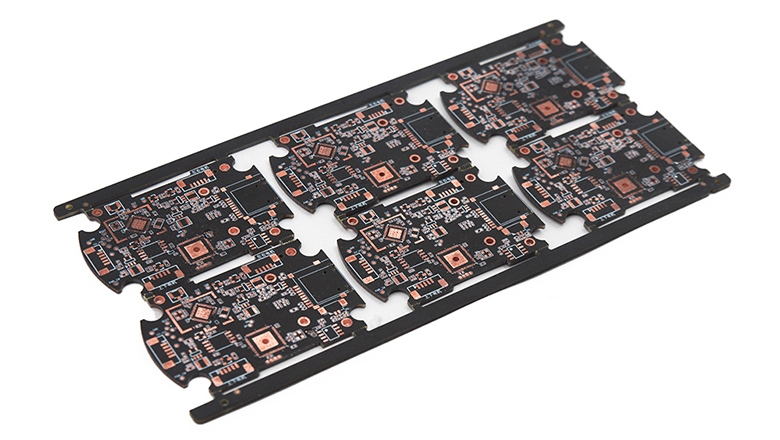
Black FR4 (Black Core) printed circuit boards use dyed thermosetting resin as the core material, with copper foil layers laminated on both its upper and lower surfaces to form a complete board.Traditional PCBs mostly feature the appearance of yellow-green glass fiber-reinforced epoxy resin (FR4) substrates. In contrast, black FR4 boards adopt a black substrate to achieve a deep black appearance. This material choice delivers higher visual recognition, while endowing products with better thermal management and electrical performance.
What Sets Black Core PCBs Apart?
- Black Appearance:The board has a deep black color throughout its core and edges, giving a premium finish when paired with a black solder mask.
- Light Blocking:Black core FR4 blocks ambient light, which is vital in applications with LEDs or optical sensors.
- Layer of Black Thermoset Resin:The black core layer is composed of black thermoset resin forming its base material. This resin layer is positioned between upper and lower copper foils to create a specific structure. This construction method brings an improvement in heat conduction efficiency. The integrity of signal transmission is also enhanced.
- Electric Performance:The dielectric constant and dissipation factor of the black core material are maintained at low levels, with values essentially consistent with standard FR4 boards. This material characteristic plays a critical role in high-frequency circuit applications.
- Compatibility:Components used in the PCB are compatible with the black thermoset resin core, and feature robust bonding for PCB assembly.
Why Use a Black Core PCB?
- Aesthetic Enhancement:The core layer enhances visual aesthetics, essential in transparent or showpiece electronics.
- Professional and Distinctive Look:Black PCBs are also beloved by designers for their black exterior and finish.
The Manufacturing Process of Black Core PCBs
The manufacturing process of black core PCBs mirrors the traditional PCB fabrication process but features key differences to incorporate the black core.
Steps in Black Core PCB Fabrication
| Step | Description |
| Material Preparation | Black thermoset resin core—made of black-dyed FR4 substrate—cut to size. |
| Copper Lamination | Two copper foil layers are laminated on both sides of the black core Fr-4. |
| Circuit Imaging | Black ink is used for imaging copper traces on the black core surface. |
| Etching | Unneeded copper is removed; copper traces remain. |
| Drilling & Plating | Vias are created for connections between layers. |
| Solder Mask Application | The board with a black solder mask is used for enhanced black finish. |
| Silkscreen & Assembly | PCB assembly uses contrasting silkscreen, often in white or yellow. |
| Inspection & Testing | Automated inspection verifies uniformity of the black core layer. |
Key Technical Insights:
- Core Material: The black core is mainly FR4 with proprietary black thermoset resin for enhanced properties.
- Design Compatibility: The black base material must be compatible with copper foil and solder mask materials to ensure reliability.
- Temperature Resistance: The PCB operates within standard and high temperatures; high-power applications benefit most from its heat dissipation.
Advantages of Black Core PCBs
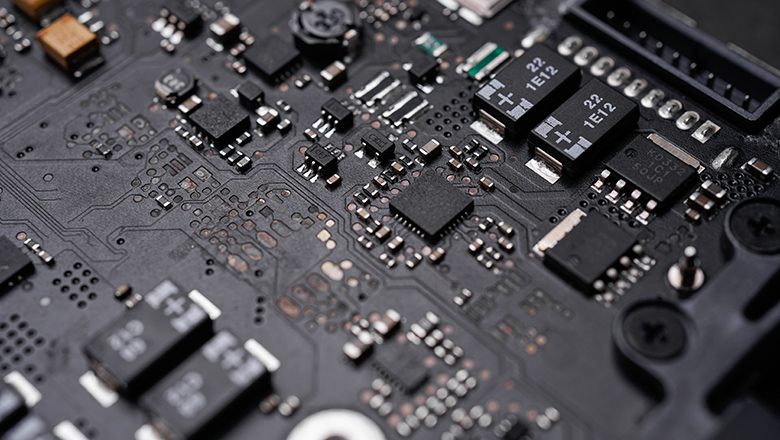
Understanding black core means knowing its advantages. Black FR4 PCBs offer much more than just a black exterior or finish; they provide genuine enhancements for circuit board performance.
What Are the Main Advantages of Black Core PCBs?
Superior Heat Dissipation
- Heat is quickly transferred away from components, vital for high-power and high-frequency uses.
- The black thermoset resin core supports stable temperatures even as the temperature of circuit components fluctuates.
Signal Integrity
- Low dielectric constant and dissipation factor ensure clear, reliable high-speed and RF signal transmission.
- Avoids interference common in compact, multilayer PCBs.
Visual and Branding Appeal
- Black core layer enhances visual aesthetics for visible PCBs in wearables, gaming, and advanced consumer electronics.
- Choice to use a black core pcb is often driven by demands for standout looks and elegant, modern appearance.
Effective Light Blocking
- Black core material blocks unwanted stray light, ideal for products using LED lighting or optical sensors.
Uniform Power Distribution and Mechanical Strength
- More uniform power distribution ensures dependable operation of all electronic components.
- Durable core FR-4 structure resists deformation and cracking over product lifetime.
Comparison of Black Core FR4 PCB vs. Traditional FR4 PCB
| Feature | Black Core FR4 PCB | Traditional PCB |
| Heat Dissipation | Enhanced due to black thermoset resin | Moderate |
| Signal Performance | High (Low dissipation factor) | Good |
| Aesthetics | Premium black core, black finish possible | Standard green/yellow core |
| Light Blocking | Excellent | Poor to Moderate |
| Applications | High-end, optical, gaming, automotive | General electronics |
| Branding Appeal | High | Low |
Designing Black Core PCBs: Tips and Best Practices
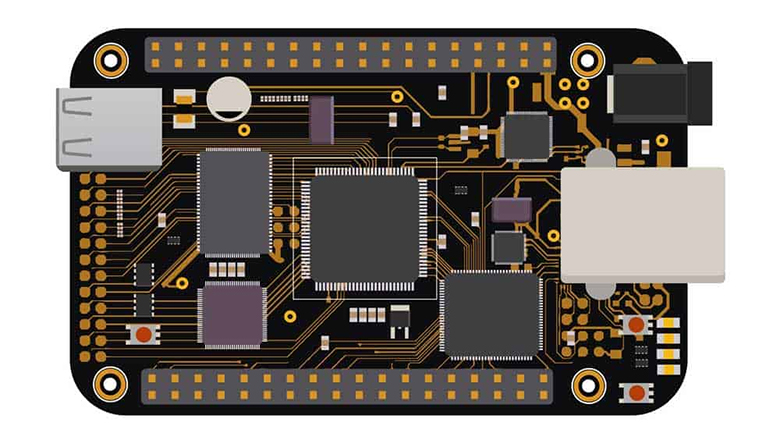
When designing black core PCBs, there’s much to consider beyond selecting a black core layer. Here’s how to make the most of a black FR4 PCB in your next PCB layout.
Important Tips for Designing Black Core PCBs
- Board Stackup:Opt for black core in the central layer, surrounded by two copper foil layers for ideal electrical and mechanical balance.
- Solder Mask Selection:Board with a black solder mask creates a seamless black surface; contrast with white or gold silkscreen for legibility.
- Black Ink and Silkscreen:Using black ink for other areas maintains visual consistency but some designers use yellow or white for improved contrast.
- Component Compatibility:Verify compatibility between the core and all PCB assembly chemicals, fluxes, and solder pastes.
Key Considerations
- Heat Management:Utilize the core’s dissipation properties to manage high-power devices and avoid thermal runaway.
- Signal Routing:Leverage low dielectric constant for clean, high-frequency signals without crosstalk, especially in tight PCB layouts.
- Testing:Always prototype—manufacturing process of black core may introduce subtle mechanical or color variations. Inspect for uniformity.
Applications of Black Core PCBs
Applications of black core PCB options are expanding rapidly. Here are the most common and impactful uses in today’s electronics:
Major Applications of Black Core PCBs
- Automotive Electronics:Black core PCBs are widely adopted in the touchscreens of in-vehicle infotainment systems, the control modules of advanced driver-assistance systems, and the display units of instrument panels. The structural design of this circuit board ensures operational reliability, blocks backlight interference from the instrument panel, and endows the product with distinct visual effects and heat dissipation performance advantages.
- Consumer Electronics:Consumer electronic products such as smartphones, tablets, and wearable devices utilize black core PCBs to achieve a black aesthetic design. This type of board offers a professional-grade black surface finish while also meeting the structural requirements of device miniaturization. The application of the black core layer enhances the product’s visual cohesion, creating a distinct identity among similar products.
- Gaming and Entertainment:High-end gaming keyboards, console PCBs, and audio interfaces require black core PCBs to prevent RGB lighting “bleed” and for enhanced branding. Here, black pcbs are also used for their visually premium appeal with a black solder mask and black silkscreen for ultimate style.
- LED Lighting and Optoelectronics:Black core resin and black core PCBs are widely used in LED strips, smart lighting panels and camera modules. Such materials reduce internal reflection, block unintended stray light, and maintain uniform light output. The choice of black color therefore concerns both visual appearance and engineering performance requirements.
- Industrial Control and High-Power Applications:Robotics, machinery controls, and power distribution boards benefit from the dissipation properties of black core FR4 PCB, which helps manage the temperature of circuit components under load conditions.
- Medical and Instrumentation:Many diagnostic and monitoring devices leverage black fr4 core to block electromagnetic and ambient light interference, ensuring clean signal reads. The right pcb for these sensitive applications may depend on compatibility between the core and the assembly materials.
Industry Applications of Black Core PCBs
| Industry | Applications of Black Core PCB | Advantage of Black Core |
| Automotive | ADAS, Dashboard Controls, EV Modules | Heat dissipation, Light blocking |
| Consumer Electronics | Smartphones, Wearables, Tablets | Visual appeal, Miniaturization |
| Gaming & Entertainment | Keyboards, Consoles, Audio | Aesthetics, Light Management |
| LED Lighting | Panel lights, Camera modules | Stray light blocking, Uniformity |
| Industrial | Robotics, Machinery, Power boards | Uniform power distribution, Durability |
| Medical | Diagnostics, Patient Monitoring | EMI protection, Signal integrity |
Selecting the Right PCB Manufacturer for Black Core FR4
Choosing the best black core pcb manufacturer is vital for leveraging all the advantages of black core. Here are the steps to ensure successful black core PCB fabrication:
- Specialization:Only a select group of PCB manufacturers have experience in black core pcb fabrication. Always ask for references from similar projects or industries.
- Sample Testing:Request prototype boards to inspect the black exterior, check for uniform finish, and test heat dissipation and signal integrity.
- Material Certification:Ensure your black core PCB is made of black, UL-listed fr4 pcbs with proven dissipation factor and mechanical reliability.
- PCB Instant Quote:Use suppliers offering custom black base material options and compare bulk pricing for production runs.
- Support for PCB Assembly:Your chosen partner should handle both fabrication and full PCB assembly, ensuring compatibility with the black thermoset resin and all solder mask and silkscreen options.
FAQs: All About Black Core PCBs
Q: Why use a black core PCB instead of just a black solder mask?
A: While a black solder mask gives standard PCBs a black surface, only a true black core fr4 PCB offers the light-blocking, heat dissipation, and visual edge that black core pcbs provide from the inside out.
Q: Are black core PCBs compatible with all assembly processes?
A: Yes, black pcbs are designed for compatibility with standard PCB assembly lines and materials. However, always confirm solder mask and black ink compatibility, especially for very fine pitch assembly.
Q: What are the main advantages of black core over traditional boards?
A: Enhanced heat dissipation, low dielectric constant for signal stability, a black finish for high-end visual aesthetics, and blocking stray light for sensors or LEDs—making them ideal for many high-power and advanced applications of black core PCB.
Q: Can I use black core for high-frequency or RF PCBs?
A: Yes, as long as the core material datasheet confirms the right dissipation factor and dielectric constant. For ultra-high-frequency designs, a hybrid stackup may be preferable.
Q: Is the black appearance purely aesthetic?
A: No. The black core layer enhances visual aesthetics, but its main roles are technical—managing heat, shielding signals, and supporting advanced PCB design for high power and light-sensitive applications.
Conclusion: When to Choose Black Core PCBs
Manufacturers in the automotive, consumer electronics, high-end gaming, LED, industrial, and medical sectors have strict requirements for circuit board performance. Black core PCBs offer solutions for these application scenarios. These boards integrate multiple features of black core technology, including heat dissipation capability, signal integrity, and aesthetic appearance. In development projects involving power density, miniaturization design, or user interface visual effects, black core PCBs provide greater design flexibility.
Key Takeaways:
- Use black core for any application where stray light, heat management, and visual impact are priorities.
- The black thermoset resin core layer provides robust mechanical support and optimal PCB performance, making it the right pcb for advanced requirements.
- Black core pcb is mainly chosen for high-end, power-demanding, or visually exposed circuit board designs.
If you’re looking to upgrade your next project—or simply want to stand out in the world of electronics—consider using black core pcbs for your next design.