
Introduction: Understanding Wire Harness Assembly

If you’ve ever wondered how the vast array of electrical components within your car, airplane, industrial machine, or electronics communicate so seamlessly, the answer likely lies in a structured harness assembly. This comprehensive guide will help you in understanding wire harness solutions—whether it’s a wire harness, a cable harness, or the broader field of wire harness assemblies and cable assemblies. These components play a crucial parts in assembly the organization, protection and effective transmission of power and signals within any equipment of wires and cables.
Both wire harness assemblies and cable assemblies are collections of cables or wires used in different electrical systems. Their main purpose is to transmit electricity or signals between two or more tracks, assemble the organization of wires and cables, and protect them from external factors and mechanical wear. These wiring harnesses and components are specifically designed for particular external challenges and can effectively organize wires in space-constrained or safety-critical place.
If you have ever wondered why the numerous electronic parts in cars, aircraft, industrial device or electronic products can work so smoothly together, the answer often lies in the well-structured wiring harness assemblies. This detailed guide will help you understand various wires harness ways, whether it’s small wire harnesses, big cable harnesses, or the broader range of wire harness assemblies and cable assemblies. This type of assembly plays a crucial parts in various types of equipment, keeping wires and cables neat, properly protected, and efficiently transmitting electrical energy and signals.
Both wire harness assemblies and cable assemblies are cable assembly applied in different electrical device. Its key function is to transmit electrical current or signals between two or more parts, such as two different device, while ensuring the orderly arrangement of cables and protecting them from external factors and mechanical wear. This type of wiring harness and components is specifically designed for particular conditions and can effectively organize cables in space-constrained or safety critical areas.
Wire Harness vs Cable Assembly: What is the Difference between them?
The terms wire harness and cable assembly can usually be used exchange, but there are obvious technical different that affect system design and reliability. Understanding the differencesbetween wires and cables and how they are combined with each other in components is crucial for both engineers and buyers.
- Wire is a single strand or a group of strands of a conductive wires, often copper or aluminum, that transmits electricity or current signals .
- Cable is a collection of two or more wires bonded or braided together with each other, often within a PE to protect them from various hazards.
Key Differences In Wire Harness and Cable Assembly
| Feature | Wire Harness Assembly | Cable Assembly |
| Definition | A group of wires or cables that are organized and protected but often exposed | Two or more wires encased within a single jacketed sheath |
| Flexibility | High, wires are often separated at endpoints | Less flexible, more rigid |
| Application place | Used in many interior or protected applications | Designed for especially condition exposures (moisture, chemicals) |
| Repair and trouble clearing | Easier to access each wires | Requires replacement of whole assembly |
| Protection | Minimal sheath, relies on individual wire insulation | Full sheath, suitable for harsher conditions |
| Use Cases | Cars dashboards, industrial machinery | Aerospace, outside door telecom, marine |
| Common Standards | IPC/WHMA-A-620 | UL, industry-specific |
Custom cable assemblies provide a higher level of environmental protection, while wire harnesses may be simpler to process and maintain. Knowing when to use a cable harness assembly or a wire harness is a base part of understanding wire harness design.
What is a Wire Harness Assembly?

A wire harness assembly (also known simply as a wire cables or harness cables) is a teams of wires and cables that are carefully get together and effectively transmitting electricity or signals. The assembly process involves bundling wires or cables together using small ties, sleeves, or conduit and securing them for optimal performance within a system.
Wire harness assemblies typically points:
- A group of wires marked with numerical codes in colors and cut into specific lengths.
- Connectors and terminals at the bundling ends.
- Sleeves, plastic tapes or conduits for preventing natural wear and tear, heat and chemical hazards.
A harness assembly is a collection of wires put together to play a similar function, such as powering various electrical components or transmitting sensor signals in modern industrial machinery.
Cable Harnesses and Wire Harnesses: Types and Applications
Harness assemblies come in various forms and are used in different industries. From cars to space flight, and from industrial controls device to consumer electronics, both wire harness assemblies and cable harnesses are ubiquitous.
- Automotive Wire Harness: It can withstand slight vibration, heat and corrosive chemical liquids. It is crucial for organizing thousands of connections in vehicles.
- Aerospace Cable Harness: Light weight, screened against electromagnetic interference, and resistant to temperature extremes; used in aircraft wiring systems.
- Industrial Machinery Harness Assemblies: Integrate transducer, actuators, and motor power offering rugged protection and easy maintenance.
- Medical Device Harnesses: Use biocompatible raw materials and robust insulation to safeguard patient safety and data upstanding.
- Consumer Electronics Cable Assemblies: Provide ultra-thin configuration files and color-coded connectors for devices such as televisions, printers and computers.
Typical Use Table
| Industry | Harness or Assembly | Application Example |
| Automotive | Wire harness | Engine compartment, dashboard |
| Aerospace | Cable harness | Avionics, cabin controls |
| Industrial Machinery | Harness assemblies | Robotic arms, PLC enclosures |
| Medical | Customed wire harnesses | Diagnostic imaging, patient monitors |
| Consumer Electronics | Cable assemblies | Audio/video, home appliances |
Main Components: Wires, Cables, Connectors, and Terminals
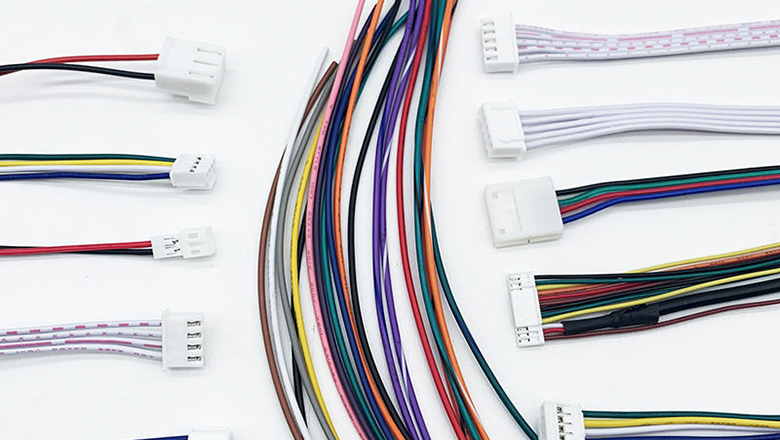
A robust wire harness or cable harness assembly contains many different components, each essential for performance, durability, and safety.
- Wire or Cable: High-quality wire (often copper or aluminum for conductivity and flexibility) forms the backbone. Wire is a single core, or can be part of a group of wires or cables within the assembly.
- Connector: The interface between the harness and external devices or circuit boards. Connectors must fit perfectly and withstand physical stress.
- Terminal: The crimped or soldered end of a wire, designed for insertion into connectors or direct attachment to electrical components.
- Sheath: Plastic tubing, braided sleeving, or heat-shrink used to protect, insulate, and organize wires or cables—making up the basic cable and wiring organization.
- Label or Marker: Add numbers for each wires ,or add color for them, the aim is identifies each wire, cable or circuit for troubleshooting, service, and compliance with regulatory standards.
Wire harnesses and cable harnesses can also include fuses, diodes, or other passive/active electrical components to deliver complete wiring solutions.
The Assembly Process: From Concept to Final Product

The assembly process for a wire harness or cable assembly involves several stages to transform raw wire and cable into precise, efficient harness assemblies.
Steps in the Assembly Process
- Design and Specification:
- Plan the wiring assembly layout, connector types, harness materials, and environmental requirements.
- Wire Cutting and Stripping:
- Cut and strip each wire or cable to the required length and expose the conductive core.
- Termination:
- Crimp or solder terminals onto wires. Attach connectors for easy integration with other equipment.
- Layout and Bundling:
- Arrange and organize wires or cables on a “pin board” per design drawing. Use tape, cable ties, or sleeves to keep harnesses neat and robust.
- Protective Sheathing:
- Protective Caseis add tubing or conduit around the group of wires or cables to form a durable, protective sheath.
- Electrical Testing:
- E-testing is use automated testers to ensure every tracksand cable transmits current or signals properly. Employ Hi-pot voltage and continuity testing.
- Final Inspection and Labeling:
- FIA is confirm the wholeassembly meets design request and regulatory requirements before packaging.
Design and Manufacturer: Materials, Standards, and Environmental Factors to Consider
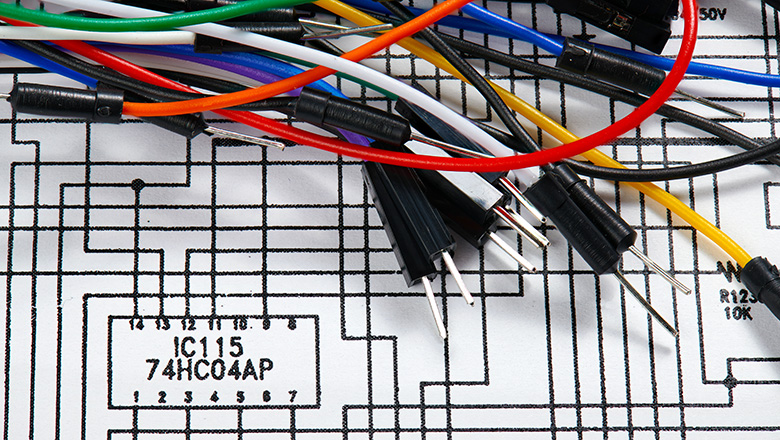
The success of any wire harness or cable assembly greatly depends on the design and manufacturing strategy, materials selection, and compliance to industry standards. LHD Tech can provide professional wire hardness for all kind device.
Materials in Wire and Cables Assembly
- Conductors: The import keys of a wire is usually copper or aluminum, chosen for its electrical conductivity, flex, and cost cheaper. Some advanced cables designed for specific environmental needs employ tinned copper or silver-plated copper. LHD Tech can provide professional wire hardness for all kind device.
- Insulation and Sheath: Wires and cables are coated with materials like PVC, FEP, silicone, or thermoplastic rubber—each selected for their temperature, flame, moisture, or abrasion resistance.
- Connectors and Terminals: Whether dealing with a single wire, a set of wires, or a complete cable assembly, connector choice is critical for reliability. Gold-plated contacts may be used in harsh or high-vibration environments. LHD Tech can provide professional wire hardness for all kind device.
Manufacturing and Compliance Standards
Harness and cable assembly manufacturers must follow rules such as:
- IPCStandard/WHMA-A-620: Covers requirements and acceptance for cable and wire harness assemblies, focusing on quality and consistency.
- USA UL and CUL: US and Canadian safety certifications.
- ISO–9001: Worldly quality management standard.
Environmental and Durability Factors
Harness assemblies are designed for specific environmental exposures—ranging from mild (office equipment) to severe (under-hood automotive, aerospace, or marine). This means harness materials, design, and build quality are specified for:
- Temperature extremes
- Vibration and flexing
- Abrasion and puncture from moving parts
- Exposure to water, oil, or chemicals
Testing and Quality Control for Harness Assemblies
Quality in wire harness manufacturing begins with a robust assembly process and ends with tight testing and inspection. This guarantee that every wire harness or cable assembly operates safely under real-world situation.
Typical Quality Control Procedures
- Continuity Testing: Confirm each tracks within the harness transmits electrical power or signals efficiently and without breaks.
- Hi-pot Testing: Place individual cables or bundled wire harnesses under high-voltage about 500V to do electric shock to ensure the integrity of insulation.
- Mechanical Testing: Use taps to do pull-tests are performed to check strength.
- Visual Inspection: Ensures correct routing, neat bundling, no nicks or abrasions on the sheath, and all labels and markers are clear.
Why Testing Matters
Testing reduces the risk of field failures, safety recalls, and damages due to faulty wiring. For safety-critical applications (medical, industrial, defense), cable assemblies and wire harnesses often require 100% inspection and keep SN in the cables.
Benefits of High-Quality Harness Assemblies
A well-built wire harness or cable harness offers a set of gain that go far beyond just keeping wires in the group:
Key Benefits
- Reduced Risk of Electrical Shorts: By insulating the wires or cables, adding plastic PE film and properly binding and binding, the wire harness assembly can prevent accidental contact, wear and friction.
- Space and Weight Efficiency: The design of wiring harnesses is aimed at enhancing the efficiency of wiring and routing, which is particularly important in environments such as the automotive industry, aircraft and aerospace, or industrial machinery. LHD Tech can help to reduce the space and weight when produce the cable hardness.
- Faster Installation and Repairs: Pre-assembled wire cables harnesses and connectors provided for cable assemblies, with added labels and number groups, allow for insertion installation or quick replacement.
- Improved System Reliability: Professional wire harness manufacturing eliminates wiring errors that may affect the electrical performance of various electrical components.
- Customization: Custom cable assemblies and custom wire harnesses provide solutions tailor-made precisely for OEM needs—down to each wire index, length, and connector type.
Custom Wire Harnesses and Cable Assembly Services
For cutting-edge electronic products or challenging place, custom wire harnesses and custom cable assemblies are necessary. The right cable assembly manufacturer will work with you to:
- Design and engineer to exact requirements, including single wire or complex groups of wires or cables.
- Select harness materials and connectors for your specific application and environment.
- Support manufacturing with kitting, pre-labeling, and custom lengths.
- Offer full assembly services—from design and prototyping to volume production and supply chain logistics.
Working With a Harness Manufacturer: Best Practices
- Provide Clear Specs: Share SCH drawing, connection drawing, and environmental mandate (temperature, vibration, moisture).
- Discuss Compliance Needs: Clarify if your harness assembly must carry UL/CSA marks, RoHS compliance, or special
- Plan for Future Changes: Research harnesses that can be easily modified or expanded for evolving product lines.
Frequently Asked Questions About Harnesses and Assemblies
Are wires harness and cable hardness terms used interchangeably?
They are sometimes used exchange, but technically, cable assemblies provide a more total sheath and environmental protection, while wire harnesses focus on organizing and routing wires or cables.
What are common types of cable and wiring assemblies?
- Cable harness: Teams of cables for power, data, or signal lines.
- Wire harness: Organized wire assembly, often with terminals and connectors for effective dissemination.
- Custom cable assemblies: Tailored solutions for unique OEM needs.
What is the assembly process for a wire harness?
The assembly process involves design step, material choosing, cutting/stripping wires, adding connectors and terminals, bundling, sheathing, labeling, and thorough testing.
Why are harnesses used in different industries?
Cables Harnesses and assembly ensure wiring keep in group, safe, and reliable, critical for electrical power or signals in demanding applications such as automotive, aerospace, industrial controls, and medical devices.
What can I look for in a cable assembly manufacturer?
Seek proven expertise, a whole range of assembly services, compliance with industry standards, robust materials, and receptive engineering support.
Conclusion: Harnesses, Assemblies, and the Future of Electrical Systems
Harnesses and assemblies are not merely background cabling – they are the backbone of every efficient, secure and innovative power system. Whether you are managing industrial machinery, developing new vehicles or designing the next generation of consumer devices, investing in high-quality wiring harness and cable assembly solutions can ensure that your products effectively transmit signals, comply with the latest standards and remain competitive.
Wiring harness assemblies, cable wiring harnesses and custom cabling solutions – designed, manufactured and tested by experienced wiring harness manufacturers – play a crucial role in complicating order. Remember, a wiring cables is not only a set of wires or cables: it is a way of protection, group and efficiency built into every modern device.
If you need professional support for your next wiring assembly or want to learn more about the assembly process and custom wiring harness options, please contact Stone as a trusted cable assembly manufacturer or assembly service provider for consultation. The future of electronic products depends on your choices in wire harness and cable assembly today.