

Introduction: What Is a Power Distribution Network in PCB?
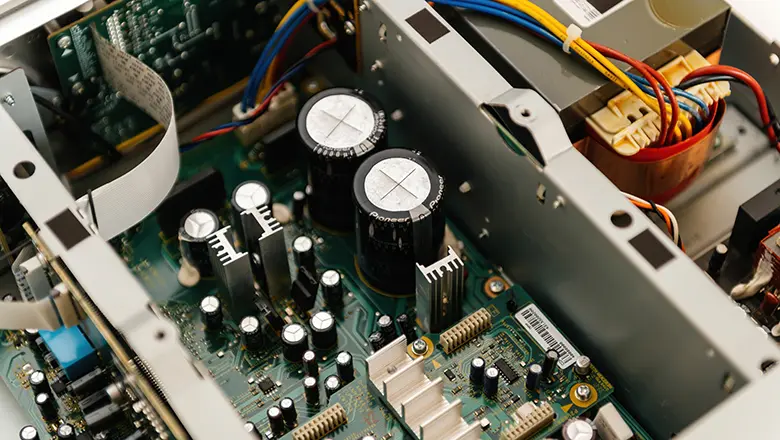
The relentless evolution of electronics has made robust power distribution networks (PDNs) a foundation of modern PCB design. At its essence, a power distribution network in PCB is the combination of copper paths, planes, decoupling capacitors, voltage regulators, and ground connections working together to ensure stable power reaches every single component on the board. These intricate systems are responsible for power delivery across the printed circuit board, keeping the supply rails at precise voltages—even as current soars, chips switch at gigahertz speed, and thermal and EMI challenges emerge.
Designing a well-designed pdn early in the design process has become pivotal in ensuring reliable power delivery, optimal power delivery, and a long-lasting, high-performance product. Failures in the pcb power distribution network design phase often manifest as unpredictable resets, data corruption, unstable power delivery, or even component damage after deployment.
Why Power Delivery and Power Integrity Matter in PCBs

A PCB power distribution network defines the success or failure of the whole board. Every microprocessor, memory module, RF transceiver, and sensor relies on stable power not just in steady-state, but during all modes—startup, sleep, deep compute, and sudden signal spikes. Power delivery pathways and pcb power planes function as the board’s circulatory system, delivering energy from the source to the most remote circuits on the board.
Why Focus on Power Integrity in Your PCB Design?
- Power integrity refers to the quality and stability of the voltage and current distributed through the PDN.
- Impedance mismatch anywhere in the network can introduce voltage drops and noise, affected by trace lengths, plane cuts, holes in a pcb, via quality, and PCB stackup.
Facts:
- Over 80% of “ghost” failures in high-speed boards are traced back to power integrityor poorly designed pdn.
- Power integrity issues such as impedance are easiest to prevent early in the design, but hard to fix after fabrication.
Characteristics of a Reliable Power Distribution Network
| Attribute | Description |
| Low Impedance | Minimizes IR drops and noise into the power supply |
| Even Distribution | Distributes power evenly across the pcb |
| Stable Across All Currents | Handles load transients without voltage droop |
| EMI/EMC Robust | Limits both radiated and conducted emissions |
| Thermally Sound | Keeps temperatures within safe and efficient boundaries |
Core Components of PCB Power Distribution Networks
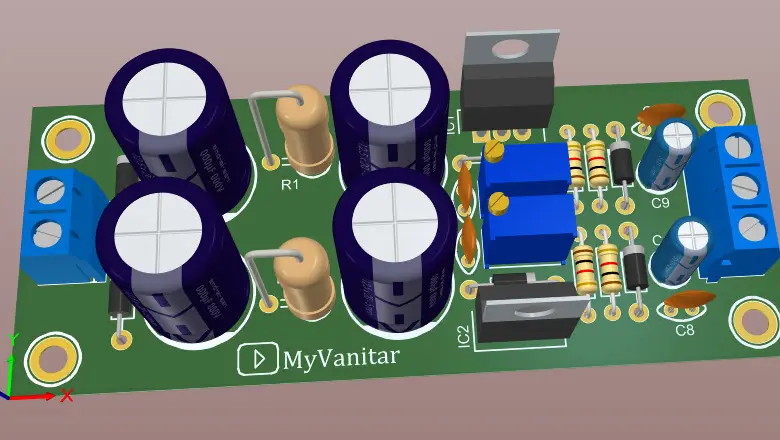
Successful pcb power distribution network design demands understanding the core elements within the PDN and their functions.
Power Sources and Voltage Regulators
- Power from the primary source may include external supplies, batteries, or DC-DC converters.
- Voltage regulators are placed strategically to ensure reliable power delivery and proper voltage levels at every stage.
Power and Ground Planes
- Planes provide low-impedance paths for power distribution and critical ground references.
- Modern layers of the pcb allocate multiple planes for optimal shielding, noise reduction, and thermally efficient design.
Traces and Vias
- Traces distribute power throughout the pdn, with trace width, length, and copper weight determining the impedance of the pdn.
- Vias (holes in a pcb) connect different layers, enabling vertical power and ground connections for multilayer designs. Carefully arranging via arrays below high-power components can vastly improve pcb power and reduce bottlenecks in the power delivery path.
Decoupling Capacitors
- Placed near the power pins of ICs, decoupling capacitors ensure efficient power distribution and noise filtering, responding instantly to local current changes and reducing ripple.
Table: PDN Components and Their Roles
| PDN Component | Primary Function | Where to Use |
| Voltage Regulator | Sets voltage, protects from surges | Near main inputs, load-sensitive areas |
| Power Plane | Low-impedance distribution & shielding | On dedicated PCB layers |
| Trace | Distribute power to each device | Between plane and IC pins |
| Decoupling Cap | Local voltage stabilization | Adjacent each IC power pin |
| Via Array | Vertical current distribution | Beneath large BGAs, dense ICs |
How Distribution Networks Ensure Stable Power Across the PCB
A properly designed distribution network does more than just supply voltage—it ensures stable power and enables better signal integrity across all circuits on the board.
Key Principles
- Distribute power evenly across the board by:
- Using wide, uninterrupted planes and traces for each voltage rail.
- Creating ample connections between planes, traces, and component pads.
- Early in the design phase: Visualize power and ground connections when placing high-current devices or sensitive analog/RF circuits.
- Keep the pdn impedance low over the whole operating frequency, crucial for high-speed applications.
- Support transient load events: For example, a microcontroller shifting from sleep to full speed or a cellular radio transmitting at full power.
Example: Effective Power Delivery Path
A well-designed power distribution network for a high-speed signal processor might include:
- Separate, solid ground and power planes.
- Low-ESR decoupling caps near each IC.
- Designated power traces with minimal via transitions.
- Local switching regulators to avoid long distribution from the main supply.
Common Problems in Poor PDN Design

A poorly designed pdn or inadequate power distribution can lead to severe, costly issues—often not caught until late in the testing cycle.
Key Issues to Watch For
- Voltage Drops: Excessive resistance or insufficient copper leads to IR drop, especially far from main power entry.
- Noise Coupling: High impedance allows fast digital switching or external interference to inject noise into the power supply, contaminating analog and digital signals alike.
- Ground Loops and Unstable Power Delivery: Interruptions or discontinuities in the ground network create unintended return paths (ground loops), which aggravate ground potential shifts, raising the risk of signal glitches and localized ohmic heating.
- Power Integrity Issues: Impedance discontinuities or unterminated stubs in power and ground distribution networks induce resonant modes, voltage ringing, and degradation of signal integrity.
- EMI/EMC Failures: Poorly isolated power distribution networks with abrupt impedance changes act as unintentional radiating elements, converting conducted noise into common‑mode emissions and leading to EMI/EMC non-compliance.
Optimal Power Delivery: Best Practices in PCB Power Distribution Network Design
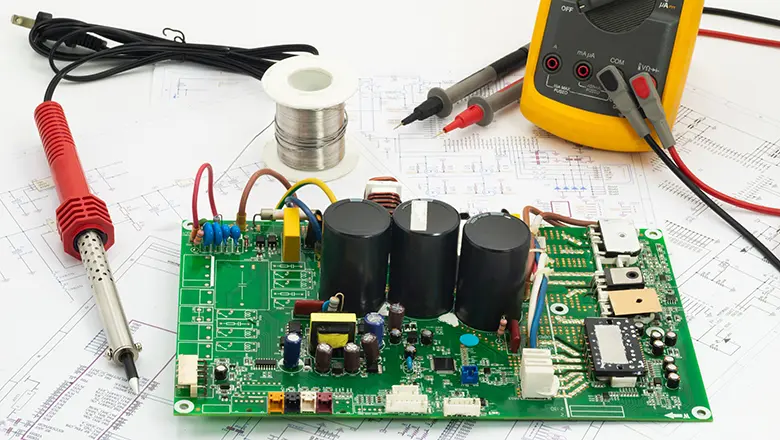
For PCB designs that pursue optimal power delivery and highly robust power integrity, the following best practices can be adopted. By following these principles and design points, it can be ensured that the pcb power distribution networks (PDN) on the circuit board provides efficient, low-noise and reliable power delivery throughout the entire board.
1. Plan the Power Distribution Network Early in the Design Process
- Don’t wait until after routing signals to consider power.
- Map out all voltage rails, their delivery paths, and return currents early in the design phase.
- Keep high-current components close to their regulators and decoupling banks to avoid energy loss along long traces.
2. Use Solid Power and Ground Planes
- Dedicate full layers for power and ground whenever possible.
- Avoid splits or isolated “islands” within the planes, as these can trap return current and cause unstable power delivery or signal integrity problems.
3. Optimize Decoupling Techniques
- Capacitor layout position:Place the decoupling capacitors adjacent to the power pins of each IC and minimize their physical distance to reduce the influence of parasitic inductance on the high-frequency decoupling effect.
- Capacitance value combination:By adopting a multi-capacitance parallel strategy (such as 0.01 μF, 0.1 μF, 1 μF, 10 μF, 22 μF), a low-impedance path over a wide frequency band is formed to achieve broad-spectrum filtering of noise.
- Requirements for capacitor selection:In high-speed digital designs with large transient currents and significant high-frequency noise, ceramic capacitors with low equivalent series resistance (ESR) should be given priority to reduce power supply ripple and improve power supply integrity.
4. Manage Via and Trace Impedance
- Via layout requirements: For power and ground networks, multiple vias should be used for connection, especially under high-current BGA (Ball Gate Array) or FPGA (Field Programmable Gate Array) devices, to reduce the parasitic inductance and current density of the vias, ensuring low-impedance paths and uniform power supply.
- Critical power supply trace constraints: Avoid using overly long or thin traces to transmit critical power – such traces can cause increased local ohmic heating and significant DC voltage drops, thereby affecting power supply integrity and device operating margin.
- Current-carrying capacity verification: Through simulation or by referring to impedance design charts, it should be confirmed that the cross-sectional area, width and thickness of the power supply traces and planes can meet the expected current load and voltage stability requirements, to prevent overheating or voltage drop caused by insufficient current-carrying capacity.
| Power Delivery Path | Common Errors | Solution |
| Long power traces | High IR drop, EMC issues | Shorten, use wider traces, more planes |
| Minimal decoupling | Excess noise, logic faults | More caps close to power & ground pins |
| Split planes | Broken returns, signal EMI | Use full, continuous planes |
5. Run PDN and Impedance Simulations
- PCB design software that supports real-time design rule checking (DRC), IR voltage drop analysis and impedance analysis should be selected to promptly identify and avoid potential issues related to power distribution networks (PDN) during the design stage.
- The power distribution network (PDN) impedance (Z) of the entire board needs to be simulated and evaluated to ensure that it is far below the application-specific threshold throughout the entire concerned frequency band (for example, for high-speed digital boards, the PDN impedance is usually required to be less than 100 mΩ in the 100 MHz and above frequency bands).
- The integrity of the power supply should be verified under the most severe operating load conditions to identify and address design weaknesses in advance and avoid exposing reliability risks after production.
6. Loop in Manufacturing Early
- Close collaboration with PCB manufacturers should be carried out to ensure that key parameters such as copper thickness, via type and stacking structure in the power distribution network (PDN) design match the actual mass production process capacity and process limitations, avoiding performance deviations or yield drops due to manufacturability issues.
- The long-term reliability of the heat dissipation path and vias needs to be specially confirmed, especially for high-power applications or harsh environments such as vehicles and industries. Special attention should be paid to the current-carrying capacity of the vias, thermal cycling tolerance and thermal integrity.
Using PCB Design Software for Early PDN Design and Analysis
Modern pcb design software can make or break the effectiveness of your power distribution network. Early verification, simulation, and documentation save months of troubleshooting later.
Leading Tools That Streamline the PDN Design Process:
- Allegro X PCB Editor– For automated power plane generation, real-time DRC, stackup planning, and included PDN analysis tools.
- Cadence Sigrity– For power and signal integrity simulations, impedance profiling, current density mapping, and EMC verification.
- Ansys SIwave– Highly regarded for advanced simulation of power delivery network behavior in complex/high-speed PCBs.
- Altium Designer– Supports stackup, power/ground plane planning, decoupling strategies, and BOM integration.
Manufacturing and Practical Considerations in PDN Design
A well-designed PDN considers manufacturability and real-world constraints. For reliable power delivery:
- Use symmetrical stackups to prevent board warpage and mechanical stress that can break delicate vias or traces.
- Specify copper weights and layer counts consistent with your current needs and future scalability.
- Integrate a DFM/DFT review before finalizing the pcb layout. This ensures the manufacturability of ground and power planes, and allows for easy inline or end-of-line test points to verify power from the source to all nodes across the finished PCB.
Checklist for PCB Designers:
- Power and ground nets have continuous planes.
- Capacitors, especially for high-speed or sensitive analog/RF circuits, are close to the power pins.
- Sufficient parallel vias are placed for every significant current path.
- PDN impedance and voltage drop are simulated and documented.
- PCB stackup supports both electrical and thermal performance needs.
Advanced Topics: High-Speed Signal Routing and Impedance Control

As edge speeds increase, both power and high-speed signal challenges converge. If the power distribution network isn’t properly designed, impedance mismatch or breaks in reference plane continuity can destroy signal integrity.
Best Practices for High-Speed PCBs:
- All high-speed signals (such as clocks and memory buses) should be routed close to a complete and continuous ground plane. It is strictly prohibited to cross the ground plane’s segmented or slotted areas to avoid disrupting the signal’s return path, introducing common-mode radiation and deteriorating signal integrity.
- Under high-density BGA devices, a grid or array layout of the power/ground plane should be adopted, and the number of vias for each power pin should be maximized to achieve uniform current distribution, reduce local inductance, and ensure uniform power supply and low impedance.
- For all critical high-speed signals, a controlled impedance wiring method must be adopted, and it is necessary to ensure that the characteristic impedance of each signal line or differential pair precisely matches the input impedance requirements of the corresponding receiving end to minimize reflection and signal distortion.
- Utilize ground/power plane sandwiches or closely coupled planes in the layer stackup for natural impedance matching and return current stability.
Trends and Innovations in Modern PCB Power Distribution Networks
The field of pcb power distribution network design evolves rapidly:
- High-density, low-impedance materials have become the standard configuration for HDI boards in 5G, artificial intelligence (AI), and automotive applications.
- The integrated power transfer module (IPDM) and the on-chip power grid significantly reduce the burden on the PCB-level power distribution network (PDN) by localizing the voltage regulation function within the package or chip.
- Ai-driven layout tools can intelligently optimize power/ground networks, component layout, and plane generation, thereby enhancing power integrity and ensuring reliable power transmission, even for less experienced PCB designers.
- Flexible and rigid-flex combined PCB technology is developing rapidly, which brings new challenges to achieving uniform distribution of power and ground connections in complex three-dimensional layouts.
Case Studies: Learning from Real-World PCB Power Distribution Projects
1. Data Center PCB Power:
A major server manufacturer found that memory bus instability in their new high-density board stemmed from broken return paths caused by power plane splits directly under high-speed DDR traces. By using a revised, symmetrical stackup with continuous planes and adding bypass capacitors at every row of memory chips, signal and power integrity were restored—and the board passed all stress tests.
2. Consumer IoT Devices:
An IoT smart lock designer traced random lockups and Wi-Fi failures to excessive IR drop along narrow traces from the power regulator to the MCU and Wi-Fi SoC. They solved the problem by adding a local LDO regulator, redistributing power evenly using a wider plane, and increasing decoupling cap density, ensuring stable power delivery even during peak loads.
FAQs on Power Distribution Networks and PCB Power Delivery
Q: How do I ensure power is distributed evenly across the PCB?
A:Adopt dedicated voltage plane and symmetrical plane zoning, and install decoupling capacitors throughout the entire board (especially near the high-speed/analog area).
Q: What is the ideal PDN impedance for reliable power delivery?
A: Within the range of the maximum power supply ripple frequency (typically ≥100 MHz), the PDN impedance should be below 100 mΩ to meet the reliable power supply requirements of modern high-speed PCBS.
Q: How soon should PDN design be started in the design process?
A: Begin mapping PDN needs early in the design phase, in parallel with major component selection and initial pcb layout. Finalizing the layout without PDN validation is risky and often costly.
Q: Can poor PDN design cause EMC test failures?
A: Poor PDN design can indeed lead to the failure of EMC testing. High impedance, incomplete power/ground planes or improperly positioned decoupling capacitors in power distribution networks are common causes of EMI problems and failure to pass EMC tests.
Conclusion: The Critical Role of Power Distribution Networks in Electronics Design
The power distribution network is the heart of every reliable, high-performance electronic system. From robust copper planes and efficient via design,to optimized decoupling techniques and early use of simulation, mastering power distribution networks is non-negotiable for every successful electronics design. At LHD TECH, we have regarded the PCB power distribution network (PDN) as a core design task from the very beginning of the project rather than a post-patch. Through systematic PDN design, we can ensure stable power transmission, reduce electromagnetic interference, minimize energy loss, and achieve outstanding power integrity – whether for daily consumer electronic devices or mission-critical systems.
Focusing on the early design of PDN means more efficient power distribution, longer service life of PCB components, and robust operation under extreme conditions of voltage, frequency and temperature. As the demand for higher speed and lower power consumption in each generation ofprinted circuit boards continues to rise, a well-designed PDN can deliver the optimal power delivery necessary for successful products – this is precisely the core expertise of LHD TECH.
Final Tips for Every PCB Designer
- Collaborate Early: Include system, layout, and test engineers in the pdn design process. Real-world experience with failures is invaluable for spotting layout weak points.
- Think Systemically: Remember that every via, trace, and plane affects both power and signal Use integrated tools to visualize current flow across the board.
- Document Everything: Label power and ground nets clearly in your PCB design software; provide simulation results and capacitor choices in the design hand-off for manufacturing and validation.
- Test Under Real Loads: Validate every major power rail with edge cases—peak load, deep sleep, rapid transitions—using scope probes and thermal imaging to uncover latent weaknesses in your distribution network.