
Introduction: The Real Cost Behind Every PCB
Every electronic product starts with PCB design—whether you’re creating a simple sensor, a robust industrial controller, or the backbone of a high-frequency router. The journey from idea to shipment involves prototyping, PCB production, and fine-tuning for cost and quality. But how much does a PCB cost? It’s not a fixed price: cost depends on dozens of decisions during design and manufacturing.
When budgeting PCBs for your project, optimizing every variable—like PCB materials, number of layers, stackup, solder finish, stencil costs, and assembly process—can shrink your total cost per unit by up to 80% between your prototyping and mass production runs.
In this complete guide, we break down every major and minor cost driver affecting PCB pricing. You’ll learn to reduce PCB costs without sacrificing reliability, understand market benchmarks, and get actionable tips you can use right now, no matter your skill level.
Understanding the Factors Affecting PCB Board Cost

PCB cost is rarely about just one factor. Instead, it’s a formula involving core design requirements, material selection, process parameters, and finishing options. Let’s look at the biggest determinants:
- Layer Count: The more layers (2, 4, 6, or more), the higher the cost—due to extra fabrication steps, material types, and soldering complexity.
- Board Size and Shape: Larger or irregular PCBs waste panel space, raising cost per square inch and per unit.
- PCB Materials: FR-4 is the lowest cost, but polyimide, Rogers, aluminum, and ceramic can add cost significantly, especially for high-frequency or high-temperature projects.
- Trace Width and Spacing: Tighter rules require higher precision fabrication, which means higher cost, especially below 6/6 mil.
- Surface Finish: HASL is the lowest cost finish; ENIG, immersion gold, or gold fingers add cost but ensure high reliability and planarity.
- Prototype vs. Mass Production: Setup, tooling, and NRE have a big impact on PCB prototype orders; massive cost reduction comes as you scale.
- Lead Time and Expedite Orders: Quick-turn and expedited fabrication can double or triple cost per unit—plan ahead to avoid rush charges.
Key Fact: Even a small change in material type, spacing, or layer count can shift your unit price by 10–100% in a heartbeat.
Cost Breakdown: Key PCB Cost Drivers
Let’s get specific about what really adds cost to a PCB board:
| PCB Cost Driver | Basic Explanation | Impact on PCB Costs |
| PCB Materials | FR-4 for basic, specialty for RF/power/thermal | Specialized materials = higher cost |
| Layer Count | Single, double, or multi-layer stackups | More layers = higher cost |
| Board Size | Standard panels (e.g., 100x100mm) yield lower cost per unit | Odd sizes or larger = higher cost |
| Trace Width/Spacing | High-density, small spacing, or fine pitch | Increases fabrication time/cost |
| Via & Hole Type | Blind, buried, or micro-vias add complexity | Adds tooling, fabrication steps |
| Copper Weight | Standard 1 oz vs. 2 oz or thicker copper | Heavy copper costs more |
| Surface Finish | HASL, ENIG, immersion gold, OSP | Advanced finishes = higher cost |
| Silkscreen/Mask | Standard colors cost less | Special colors add cost |
| Testing/QA | AOI, e-testing, X-ray, ICT | Advanced QA boosts reliability—and cost |
| Prototyping/Tooling | Stencil, setup/NRE, small batch costs | Per-unit higher in low volumes |
| Assembly/PCBA | Soldering parts, SMT, THT, reflow oven costs | PCBA can double or triple total cost |
| Lead Time | Quick-turn or expedited fabrication | Lead time < 5 days adds cost |
PCB Materials: How Material Selection Affects PCB Cost

Your choice of pcb materials is often the biggest single cost driver after layer count and board size. Here’s how popular materials stack up in cost and application:
FR-4 (fiberglass epoxy):
- Default choice for most PCBs—reliable, low cost, compatible with high-volume fabrication.
- Cost example: 2-layer FR-4, 100x100mm, HASL finish, batch of 100 units: $0.80–$1.50 per unit.
- Used for everything from consumer IoT to industrial control.
- Required for temperature-stressed applications (think automotive ECUs or power boards).
- Cost: 15–30% higher than standard FR-4, but ensures reliability in harsh environments.
- Vital for 5G, radar, RF, and high-speed backplanes.
- Cost: Often 2–10x FR-4, but required for <0.005 dielectric loss and <10 GHz operation.
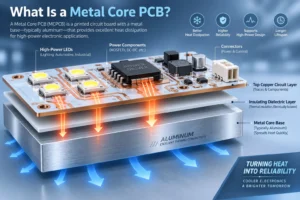
- For thermal management (LEDs, power supplies).
- Cost: 50–100% higher than FR-4, but critical for thermal reliability.
- Used for rigid-flex/flex circuits in medical devices, wearables, or cameras.
- Cost: 3–8x FR-4, but allows reliability in bend/flex scenarios.
- Only use for high-frequency, high-heat environments (satellite, microwave, military).
- Cost: 5–20x FR-4, but unmatched high-precision, heat tolerance, and signal integrity.
Key takeaway: Use specialty materials only when your design and reliability requirements truly demand it. For 80% of designs, FR-4 provides the lowest cost and meets the majority of needs.
Types of PCBs, Use Cases, and Price Examples
PCB type and stackup have huge impacts on the final cost per unit, so here’s a detailed comparison:
| PCB Type | Use Case | Typical Cost Per Unit (Proto/1000pcs) |
| Single-layer FR-4 | Simple power, toys, lamp PCBs | $1.50–$3 / $0.50–$1.00 |
| Double-layer FR-4 | IoT, Arduino, consumer gadgets | $1.80–$5 / $0.70–$1.50 |
| 4-layer FR-4 PCB | Mid-complexity circuits, sensors | $8–$18 / $2.80–$8.00 |
| 6-layer, Multilayer PCB | High-complexity, industrial, servers | $18–$45 / $7–$18 |
| Rogers High-Frequency | RF, 5G, radar, antennas | $35–$110 / $18–$65 |
| Aluminum Core MCPCB | LED, power, high thermal circuits | $6–$22 / $2–$10 |
| Polyimide Flexible PCB | Wearables, medical, cameras | $12–$40 / $7–$18 |
| Rigid-Flex Printed Circuit Board | Tablets, medical, auto | $28–$130 / $16–$48 |
| Ceramic Substrate Circuit Board | Aerospace, defense, SATCOM | $60–$250 / $28–$110 |
Notice that number of layers, material type, and finishing all drive the cost per unit. The higher the cost for complex stackups or advanced pcb materials, but reliability and performance justify these costs in demanding environments.
Prototyping vs. Mass Production: PCB Cost Per Unit Explained
Your first pcb prototype run will have a significantly higher cost per unit than full-scale pcb production. This is due to:
- Setup, NRE, and tooling fees being divided among fewer boards.
- Higher overhead for stencil, engineering, and programming.
- Usually, more careful quality control and testing on prototypes.
Example: Cost per Unit in Practice
| Quantity | 2-layer FR-4 (HASL) | 4-layer FR-4 (ENIG) | 4-layer Rogers (ENIG) |
| 5 pcs | $7.20 | $14.00 | $38.00 |
| 20 pcs | $2.80 | $8.00 | $26.00 |
| 100 pcs | $1.10 | $4.00 | $18.00 |
| 1000 pcs | $0.50 | $2.80 | $12.00 |
How Hidden Costs Add to Your Final Cost
Hidden costs add up fast when manufacturing a pcb, especially for custom pcb production. Examples include:
- Engineering, DFM review, and CAM setup: For high precision, extra review ensures manufacturability but may add cost.
- Stencil: Each new PCB assembly requires a custom stencil; $20–$120 depending on complexity and region.
- Expedite Fees: Quick-turn or expedited orders are often twice as expensive as standard lead times.
- Shipping, duties, and insurance: For overseas PCB manufacturing, counts for 5–20% of the overall cost.
- Assembly and PCBA labor: The cost for solder, pick-and-place, and reflow is added on top of the bare pcb cost.
- Quality control and testing: AOI, X-ray, Flying Probe, and functional testing are critical for reliability but come at a premium, especially on high-complexity or multi-layer boards.
Cost-Effective Design: How to Reduce PCB Manufacturing Cost

How do you reduce PCB cost without risking reliability? Here are proven strategies from leading DFM and PCB design experts:
- Optimize PCB layout for fewer layers: Lower the number of layers where possible; clever layout can conserve stackups and cut costs.
- Keep board size minimal: Smaller PCBs mean more units per panel, lowering cost per board.
- Stick to standard materials: FR-4 and 1 oz copper meet most needs; 2 oz only if the design demands.
- Select cost-effective finishes: Hasl for prototypes and cost-sensitive products, ENIG or immersion gold for high-reliability or fine-pitch.
- Relax trace width and spacing: Avoid ultra-fine spacing unless absolutely required.
- Panelize small PCBs: If possible, combine multiple designs in one standard panel for better value.
- Limit cutouts and complex routing: Simple outlines cost less to fabricate.
- Take advantage of volume pricing: Even a small jump in order quantity (from 10 to 50 pcs) can trigger a lower unit price.
DFM Tips to Reduce Costs without Sacrificing Quality
Design for manufacturability (DFM) should be at the heart of every pcb design. Follow these DFM rules to balance cost, speed, and reliability:
- Use 1 oz copper as standard unless you truly need 2 oz for power.
- Standardize on 1.6mm thickness and green solder mask.
- Avoid microvias and exotic via-in-pad configurations unless necessary.
- Ensure board spacing and trace width are within standard manufacturing capabilities.
- Use standard stencil thickness and avoid ultra-tight PCBA arrangements.
- Limit special silkscreen or solder mask colors if possible.
- Work with your supplier to optimize panel size for best cost per square inch and total quantity.
Impact of DFM Choices on Total PCB Cost
| DFM Parameter | Recommended Value | Cost Impact |
| Trace width/spacing | ≥6/6 mil | Lowest cost |
| Via size | ≥0.3mm (not microvia) | Lower cost |
| Standard stackup | 2-layer, 1 oz FR-4 | Lower cost |
| Minimal board cutouts | Yes | Avoid tool surcharges |
| HASL finish | Yes (prototypes/general) | Lowest cost |
| ENIG/immersion gold | Only if needed | $0.10–$2 extra/unit |
| Simple board outline | Rectangle/square preferred | No special tooling |
| Standard panelization | Yes | Maximize yield |
Useful Tools, Calculators, and Recommended PCB Manufacturers
For fast cost estimate, use an online PCB cost calculator. Most major manufacturers, like LHDTECH, PCBWay, and JLCPCB, offer instant pricing and cost breakdowns. Best Practices:
- Upload Gerbers and BOM for exact quotes.
- Test changing parameters: layer count, material type, finish, lead time, board size.
- Include PCBA and stencil requirements for assembly-inclusive quotes.
- Ask for “all-in” cost (materials, fabrication, setup, shipping, and stencils).
Recommended PCB Manufacturers:
- LHDTECH– Affordable, reliable PCB production worldwide
- JLCPCB– Go-to for $1 prototype and small PCBs, excellent online quote tool
- PCBWay– Flexible for multi-layer and special material PCBs
- PCBark– Best suited for manufacturing in China and rapid prototyping
Key Takeaways: PCB Cost Reduction Checklist
Use this checklist to optimize your next PCB order for lower cost—and higher reliability:
- Optimize layer count: Use fewer layers wherever possible. Every additional layer increases the total cost.
- Minimize board size: The smaller the PCB size, the more cost-effective the panelization and the lower the cost per square inch.
- Select standard PCB materials: For prototypes and most production, FR-4 and 1 oz copper are lowest cost and sufficiently reliable.
- Standardize trace width and spacing: Stick to common PCB capabilities. Avoid fine-pitch, tight spacing, and microvias unless unavoidable.
- Standard finishes for prototypes: HASL is the most cost-effective for basic builds. ENIG only when fine-pitch, high-reliability, or multiple solder cycles required.
- Limit cutouts, slots, and complex outlines: Simple rectangles and squares are cheaper to manufacture and ensure that the PCB fits standard production panels.
- Batch small PCBs and orders: Aggregating orders with others—through group buys or factory batch services—can lower per unit price dramatically.
- Plan ahead to avoid expedite costs: The more lead time you allow, the lower your manufacturing cost for both prototype and mass production.
- Ask for a DFM review: Many premium manufacturers provide this free for custom PCB jobs. It ensures high-yield, low-defect, and cost-effective production.
- Include PCBA, stencil, and shipping in your total project cost: The price of a bare PCB only tells half the story; always look at the full assembly and logistics picture.
Conclusion: Getting the Best Balance of Cost and Quality
Understanding the factors influencing PCB pricing empowers engineers, startups, and procurement teams to design better, avoid budget surprises, and deliver competitive electronic products to market. Every decision—layer count, PCB materials, board size, solder finish, lead time, and stencil design—shapes your overall cost, reliability, and project timeline.
- For most consumer and industrial projects, standard 2- or 4-layer FR-4 PCBs with HASL or ENIG finish, clear DFM rules, and efficient panelization deliver the lowest cost per unit without sacrificing reliability.
- For RF, high-frequency, power electronics, or ruggedized/medical builds, invest in specialized materials, QA, and documentation. The higher cost is justified by the reliability and long-term performance needs.
- Always optimize your PCB design for manufacturability, use all-in online cost calculators, and engage a trusted PCB manufacturer early in the process to catch design and production issues before they add cost.
With careful planning, smart design, and supplier communication, you can create high-quality PCBs at a competitive cost—and scale from prototype to production with confidence.
FAQ: Most Common PCB Board Cost and Pricing Questions
1. How much does 1 PCB cost?
The cost of one PCB depends on its size, layer count, material, board thickness, copper weight, surface finish, and order quantity. Simple boards can cost only a few dollars each, while complex multilayer PCBs can cost significantly more.
2. How expensive is a PCB?
PCB prices vary widely depending on design complexity and production volume. Standard FR-4 boards are relatively inexpensive, while HDI, high-frequency, heavy-copper, flex, and rigid-flex PCBs generally cost more.
3. How much does it cost to buy a custom PCB?
A custom PCB quote is mainly determined by board dimensions, layer count, material, copper thickness, minimum hole size, surface finish, testing requirements, and quantity. Larger production volumes usually reduce the cost per board.
4. How much does a 2 layer PCB cost?
A 2-layer PCB is one of the most economical PCB types. Standard FR-4 designs with common thicknesses, copper weights, and surface finishes generally have much lower manufacturing costs than multilayer or specialty-material boards.
5. How much more expensive is a 4 layer PCB?
A 4-layer PCB normally costs more than a 2-layer PCB because it requires additional copper layers, prepreg, lamination, drilling, and process control. The exact difference depends on board size, specifications, and production quantity.
6. How much does a 6 layer PCB cost?
A 6-layer PCB costs more than standard 2-layer and 4-layer boards because of its additional materials and more complex manufacturing process. Features such as controlled impedance, blind vias, ENIG, and tighter tolerances can further increase the price.
7. Why is my PCB so expensive?
PCB costs increase with factors such as high layer counts, small vias, tight trace spacing, heavy copper, special materials, impedance control, advanced surface finishes, strict tolerances, and low production quantities.
8. What is the cheapest PCB material?
Standard FR-4 is generally one of the most cost-effective and widely used materials for PCB manufacturing. Specialty materials such as Rogers, ceramic, metal-core, and high-Tg laminates usually cost more.
9. Is PCB assembly expensive?
PCB assembly cost depends on component quantity, package types, sourcing costs, SMT or THT processes, testing, and production volume. Bare PCB fabrication and PCB assembly are separate cost components in a PCBA project.
10. How much does it cost to have a PCB board made?
The manufacturing cost depends on the PCB design and specifications. To obtain an accurate quote, manufacturers typically require Gerber files together with details such as material, layer count, board thickness, copper weight, surface finish, and order quantity.