
Introduction: Populate Your Knowledge of Circuits

What does it mean to populate a circuit board?
Populated PCBs are everywhere: from smartphone to satellites and medical scanners to industrial robots. They are far more than just a physical board—they’re the foundation for all modern electronics. If you want to learn what a populated PCB is,why it is important, and how the assembly process turn a bare printed circuit board into the core of an electronic device, this is the ultimate guide for you. Whether you are an amateur, engineer, or source manager, understanding high-quality circuit board assembly services is essential for the success of your projects and product.
Key point: Every electronic device and circuit needs a reliable, populated circuit board(LHDPCB is a professional pcb and pcba supplier)—ensure your populated PCB is robust and functional lay the groundwork for all your electronic device.
Learn What a Populated Circuit Board Is
A populated circuit board—often referred to as a populated PCB or a PCB assembly—starts as a bare board (a bare PCB, with no components), then has all required electronic components populated onto the PCB surface and soldered onto the board. The result: a populated printed circuit board that forms the backbone of every electronic device and circuit application.
Populated PCB Definition: A populated PCB is a circuit board with all necessary resistor, capacitor, IC, connectors, and discrete component fitted and soldered onto the board, and can be used at any time in its application.
When a bare pcb is filled with components, it transforms from a passive object into the living, and functional heart of your technology.
Difference Between a Bare PCB and a Populated PCB
Bare PCB: A bare PCB (or bare printed circuit board) contain just the fiberglass or composite substrate and the copper trace, pad, and via. Without component, these bare pcb can’t perform any electronic function.
Populated PCB: After the assembly process, where every resistor, IC, capacitor, and connector is populated onto the board, the populated PCB can turn a schematic into a working product.
| Feature | Bare PCB (Bare Circuit Board) | Populated PCB (Populated Circuit Board) |
| Components | None | All required electronic components |
| Functionality | Inactive; no circuit function | Fully functional electronic circuit |
| Manufacturing Process | Designed and fabricated | Assembled, soldered, and tested |
| Used in PCB | Prototyping, design validation | End-use, manufacturing, and final products |
| Value | Lower, incomplete | Higher, finished, ready for application |
Knowing the difference between a bare PCB and a populated PCB is critical: PCB manufacturer sometimes ship only the bare board, while others provide full turnkey assembly for a ready-to-go product.
The Process of Populating a Printed Circuit Board
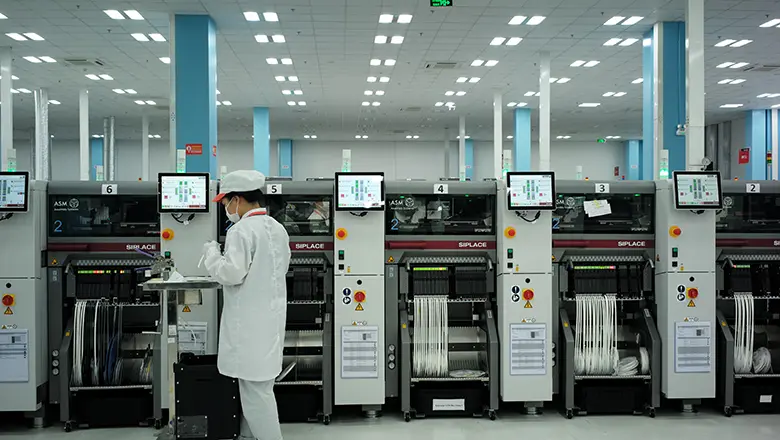
Creating a populated PCB is a meticulous, multi-stage manufacturing process that transforms the bare board into a circuit that powers today’s cutting-edge technology.
1. PCB Fabrication
- Processes like substrate cutting, copper cladding, photolithography, and drilling produce the bare printed circuit board.
- The PCB surface is prepped for assembly.
2. Assembly Preparation
- Component Sourcing: All electronic components are acquired (consigned assembly may use customer-supplied parts).
- Stencil and Solder Paste: A stencil applies solder paste to the pads and traces where components will be populated onto the PCB.
3. Component Placement
- Automated or manual pick-and-place systems position each component accurately onto the board.
4. Soldering
- SMT (Surface Mount Technology): Uses a reflow oven to melt solder paste, securing surface-mount components.
- THT (Through-Hole Technology): Components are placed in drilled holes and soldered (often by wave soldering).
5. Cleaning and Inspection
- Residual flux is cleaned from the board.
- Automated inspection (AOI) and/or manual visual checks ensure quality.
6. Functional Testing
A.Assembled boards undergo PCB testing to verify reliable operation.
7. Shipping or Integration
- Finished, tested populated PCBs are sent either as standalone circuit boards or integrated directly into the end product.
Expert insight: The entire PCB assembly process is defined by precision, repeatability, and adherence to the best PCB industry standards—including IPC-A-610 for assembly acceptability.
PCB Assembly Services: SMT, THT, and Hybrid Population
SMT (Surface Mount Technology)
- Description: Places miniature components directly onto the PCB surface, enabling high component density and compact designs.
- Key uses in PCB: Ideal for most modern electronics, consumer devices, and high-speed circuits.
THT (Through-Hole Technology)
Description: Inserts leads through holes and solders them underneath—ideal for components needing strong mechanical bonds or for prototypes.
Used in PCB: Legacy products, power components, connectors, or when repairability is critical.
Hybrid Population
When used: Many populated printed circuit boards combine SMT for micro-components and THT for large, robust parts—known as hybrid assembly.
| Assembly Method | Populated Printed Circuit Board Typical Use |
| SMT | Smartphones, PCs, advanced embedded |
| THT | Power boards, connectors, industrial |
| Hybrid | Automotive, aerospace, military |
Successful PCB Population Process: Tips and Essentials
A successful PCB population process relies on systematic attention to detail and professional standards at each stage:
- Early Design and Manufacturing Review: Consult your assembly supplier regarding your PCB design and application to ensure manufacturability and reduce the risk of costly later change.
- Accurate File: Always provide assembly personnel with complete bill of materials (BOM), Gerber files and clear silk-screen data.
- Component Sourcing Best Practice: Work with reputable distributor or use turnkey assembly to prevent counterfeit or substandard component from enter your dense circuit board.
- Stringent Assembly & Inspection: Use high-resolution cameras to scan for placement and welding errors. Automatic optical inspection (AOI) and circuit testing (ICT) should be used on every circuit board.
- Functional Testing: Built-in self-test features and final board testing help ensure each PCB that leaves the production is fully functional.
Key Electronic Components on a Populated Printed Circuit Board
Every populated PCB features a blend of electronic components, each with a distinct role:
- Integrated Circuits (ICs): Brain of the board (CPU, memory chip).
- Passive component: Resistors, capacitor, inductor, all populate the PCB surface.
- Diodes and LED: For rectification and signal.
- Transistors: For switch and amplification.
- Connector and Switch: Enable external interface and user input.
- Relay, Fuse, and Sensor: Provide power switch, over current protection, and environmental feedback.
- Specialty Component: Bluetooth module, Wi-Fi chip, and unique item tailored for custom application.
Quality Control and High-Resolution Inspection in PCB Assembly
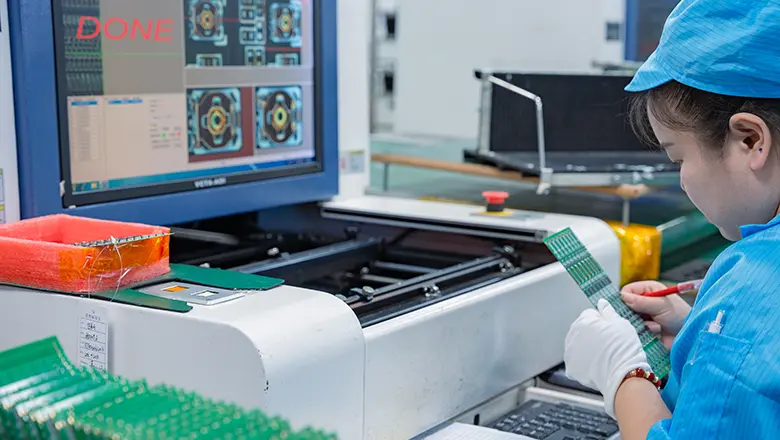
The hallmark of a reliable populated PCB is rigorous quality control throughout the PCB production and assembly process. High-resolution cameras scan every populated printed circuit board to identify and eliminate assembly defects before they reach customers.
Quality Control Essentials
- Visual and Automated Inspection: After population, AOI (Automated Optical Inspection) system use high-resolution camera to scan for misplaced part, poor solder joint, and bridging.
- X-Ray Inspection: Essential for BGAs and other hidden-joint devices—ensuring solder connections under the component are reliably made.
- In-Circuit Testing (ICT): Each connection and component is probed for correct installation and value—critical in turnkey and high-volume assembly.
- Functional Testing: Final end-to-end system tests simulate actual operation to catch issues not found by visual or electrical checks alone.
- Burn-In and Statistical Process Control (SPC): Burn-in exposes the populated circuit board to stresses to catch early failures, while SPC tracks key yield and process variables over time.
HS Code for Populated PCB and International Trade
HS Code for Populated PCB: When exporting or importing populated printed circuit boards, using the correct customs classification is critical for compliance and logistics efficiency. The most recognized international HS code for populated PCB is 85340000.
For business: Accurate customs codes smooth your supply chain and ensure faster customs processing.
For engineers & purchasers: Verify your supplier uses the right code—different board population levels (bare boards vs. populated PCB) can have very different tariff rates and handling requirements.
Table: Common PCB-Related HS Codes
| Product | HS Code | Description |
| Bare Circuit Board (bare PCB) | 8534.00.10 | Printed circuits, unassembled |
| Populated Circuit Board (PCBA) | 8534.00.00 | Assembled PCBs |
| Solder Paste, Electronics Chem | 3810.90.00 | Soldering/assembling prep |
Applications: Using Populated Circuit Boards in Electronic Devices
Populated PCBs are essential in almost every aspect of life and technology.
Where Populated and Populating PCBs Are Used:
Consumer Electronic: Phones, tablet, TVs, smart home gadget—boards are packed with components, populated use high-speed SMT line for reliability, scale, and miniaturization.
Automotive: Modern car have dozens of populated circuit boards in engine control, safety (airbags, ABS), entertainment, and navigation system.
Aerospace and Military: High-frequency, multi-layer boards produced with hybrid SMT and THT techniques and subjected to burn-in test power everything from satellite to radar.
Medical Devices: CAT scanner, defibrillator, infusion pump—all rely on reliable populated PCBs with discipline in assembly and rigorous testing, ensure error-free function in mission-critical circuit.
Industrial Controls: Robotic, PLC, sensing nodes—board designed for rugged reliability, often combining THT for connector and relay with SMT for control logic.
Common Assembly Issues and How to Prevent Them
Despite rigorous methods, even the best PCB assemblies face common pitfalls:
- Solder Bridging: Too much paste or an imprecise stencil causes shorts.
- Tombstoning: Small SMD resistors or capacitors stand upright instead of lying flat, often due to incorrect reflow profile.
- Component Misplacement: Pick-and-place errors or incorrect part orientation—best caught by AOI/high-res camera inspection.
- Cold Solder Joints: Poorly controlled reflow oven or wave soldering setting can cause weak joints, leading to intermittent failures.
- ESD Damage: Improper handling or storage damages sensitive ICs before they’re ever soldered onto the board.
Prevention Tips for a Successful PCB Population Process
- Partner only with assembly shops that employ AOI, in-circuit testing, and burn-in.
- Use DFM/DFT (Design for Manufacturability/Test) reviews prior to production.
- Ensure your PCB manufacturing partner stores and handle components using ESD-safe practices and climate control.
- Always review report and defect rates post-assembly—continuous improvement is the keystone of reliable populated PCB production.
Choosing Professional PCB Manufacturers and Turnkey Assembly Services
A smooth experience in the PCB industry comes from selecting the right professionals:
What to Look For:
Turnkey Assembly Expertise: Your provider should cover everything from sourcing components to final board testing.
Experience in the PCB Industry: Seek out manufacturer with a proven track record in your sector—medical, automotive, industrial, etc.
Customization & Support: The best PCB houses offer engineering review, feedback, and help with design and manufacturing from start to finish.
Stringent Testing: Insist on documentation for all inspection and testing step, not just a sample batch.
Supply Chain Support: Leading partners help with consigned assembly, alternate sourcing, and logistic for both high-volume and prototype run.
Frequently Asked Questions About Populated PCBs
Q: Is there a difference between a bare board and a populated PCB?
A: Yes! A bare board has no component; a populated PCB has every resistor, IC, and device fitted and soldered, ready to use.
Q: What does PCB assembly mean?
A: PCB assembly (PCBA) is the entire process of populating a board with all specified electronic components and soldering them, making the printed circuit board function as a circuit.
Q: What’s turnkey assembly?
A: Turnkey assembly means your PCB partner handles every part of the assembly process: sourcing all components, actually soldering onto the board, inspect, and shipping you fully finished assemblies.
Q: What is consigned assembly?
A: Consigned assembly is when you, as the designer or customer, provide some or all of the component for assembly, often to meet unique sourcing needs.
Q: Why are high-resolution camera used in inspection?
A: They ensure every populated circuit board is visually checked for placement, orientation, and soldering issue—a key part of high-quality assembly.
Q: Does every board need both SMT and THT?
A: Not always—most modern device are built with SMT only, but high-power or rugged application may still require THT or hybrid approach.
Conclusion: Reliable Populated Circuit Boards for Every PCB Need
A populated PCB is not just a part—it’s the very heart of innovation in every electronic system. The assembly process—from bare PCB to a complex network of components soldered onto the board—defines device performance, reliability, and user satisfaction.
Whether you’re assembling board for the first time or producing million, always insist on process control, thorough inspection, and communication with your provider. Your populated circuit board is only as good as the total care and rigor invested at every step—from design, through manufacturing and assembly, to the real-world environment where every board become the backbone of your brand’s reputation.
Populating your next printed circuit board project with the best practices, partners, and component means your device—no matter where or how it’s used—will meet the highest expectation for reliability, performance, and innovation.
Ready to move from a bare PCB to a world-class, reliable populated PCB? Partner with professional PCB manufacturer, use rigorous population and inspection process, and treat every board as if it control the most important circuit in the world—because it just might.