

China is a major destination for PCB manufacturing for two reasons. It offers competitive pricing and access to extensive electronics supply chains. However, a low quotation does not always lead to a successful production run. Poor quality control or unexpected delivery delays can offset the initial savings.
Businesses outsourcing PCB production to China must also consider intellectual property protection and supplier accountability. These concerns become more important when a product relies on proprietary designs or needs consistent quality across repeated production batches.
This article examines the main PCB outsourcing risks in China and explains how manufacturers can reduce them before placing an order.
1. Inconsistent PCB Quality and Manufacturing Defects
Quality differences between PCB manufacturers can affect product reliability. It becomes more concerning when boards require tight tolerances or complex assembly processes.
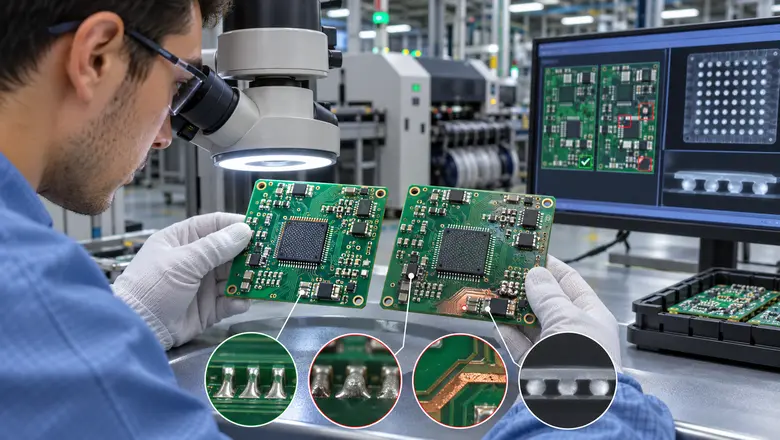
Some suppliers may accept a design without performing a thorough manufacturability review. Others may provide limited inspection coverage, which allows defects such as inadequate copper plating or soldering problems to reach the customer.
Fine-pitch components add another challenge for assembled boards. Hidden solder joints beneath BGA packages cannot be fully examined through conventional visual inspection.
How to reduce this risk
- Check the manufacturer’s quality management certifications and manufacturing capabilities before ordering. The supplier should also explain how its inspection procedures meet the product’s requirements.
- For bare boards, define the applicable IPC-6012 performance class and relevant PCB acceptance criteria.
- For assembled boards, specify the appropriate assembly acceptance requirements and testing scope.
- Automated optical inspection (AOI) helps identify visible assembly defects, while PCB X-ray inspection can reveal hidden soldering problems.
- A prototype or first-article production run can also help verify manufacturing quality before committing to larger quantities.
2. Counterfeit Components and Unapproved Substitutions
Component sourcing introduces additional risks when outsourcing PCB assembly to China. Manufacturers often purchase electronic parts through local distributors or international supply networks, where sourcing transparency can vary.
Components obtained from unauthorized channels may be counterfeit. Some are even previously used or incorrectly labeled. Such parts can pass initial inspection but fail during operation.
Another problem arises when a supplier replaces an unavailable component without customer approval. Even a part with similar electrical ratings may introduce compatibility or reliability concerns.
How to reduce this risk
- Require the manufacturer to source critical components through authorized distributors or other approved channels. Purchasing records should identify the component manufacturer and supplier, with traceability maintained for relevant production lots.
- Review the bill of materials (BOM) carefully and identify components that cannot be substituted.
- If a part becomes unavailable, the supplier should request approval before purchasing an alternative.
3. Intellectual Property Theft and Design File Exposure
PCB manufacturing requires customers to share technical information with suppliers. Gerber files reveal the board layout. Similarly, assembly documentation may disclose additional details about a product’s design. Unauthorized access to this information can create intellectual property (IP) risks.
These concerns deserve particular attention when working with overseas manufacturers because contractual enforcement and legal procedures differ between countries.

How to reduce this risk
- Establish a suitable confidentiality agreement before sharing sensitive manufacturing files. The agreement should identify the legal entity receiving the information and define how it can be used.
- Limit access to employees directly involved in the project. Secure file-sharing methods and controlled document permissions help reduce unnecessary exposure.
- Customers should also confirm whether the supplier shares production data with subcontractors. Legal advice from someone familiar with Chinese intellectual property law can help determine appropriate contractual protections for sensitive designs.
4. Undisclosed Subcontracting and Limited Factory Transparency
Some PCB suppliers operate their own manufacturing facilities, and others coordinate production through external factories. Both arrangements can work, provided the customer understands who performs the work.
PCB outsourcing risk arises here when a supplier does not disclose that production has been transferred elsewhere. For example, a company may advertise advanced multilayer PCB capabilities while relying on another factory for those operations. This makes it harder to verify manufacturing processes and determine who is responsible when defects occur.
How to reduce this risk
- Confirm the location of the factory handling the order and whether the supplier owns or directly manages the facility.
- Customers can request a virtual factory tour or arrange an on-site audit for important production programs. They should also verify which manufacturing processes are performed internally.
- If subcontracting is necessary, the agreement should identify the permitted activities and establish responsibility for quality control.
5. Communication Errors and Unapproved Design Changes
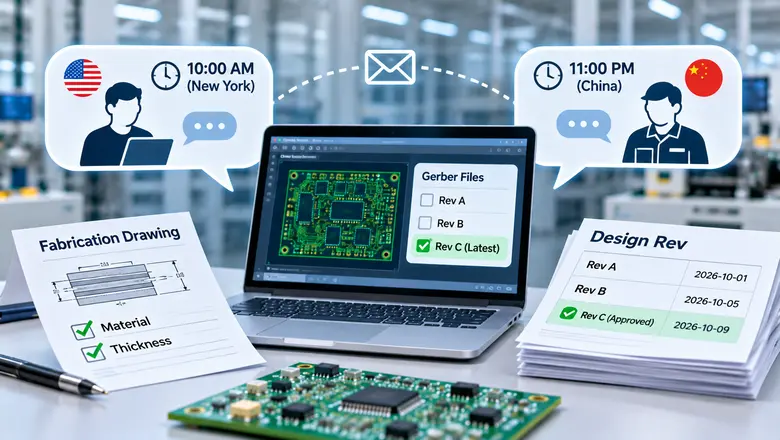
Communication can become difficult when customers and Chinese PCB manufacturers work across different time zones. For example, 10 AM in New York is already 11 PM in China during U.S. standard time, which can delay responses to urgent manufacturing questions.
A fabrication drawing might specify a particular material or board thickness, but the supplier may interpret an unclear note differently. If the issue remains unresolved, the finished boards may fail to meet the customer’s requirements.
Revision control creates another risk. Production may begin using an outdated Gerber package if the manufacturer has not confirmed the latest approved files.
How to reduce this risk
- Assign a primary technical contact on both sides and agree on response times for important engineering questions.
- Every production package should carry a clear revision identifier. When the supplier identifies a manufacturing issue, it should issue a written engineering query (EQ) explaining the proposed change.
- Customers must approve modifications affecting the released design before production continues. A formal design for manufacturability review during the PCB fabrication process can resolve many of these concerns early.
6. Production Delays and International Shipping Risks
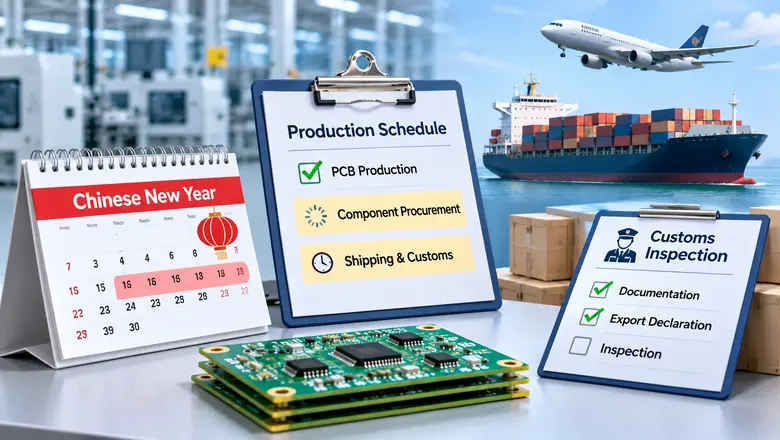
One of the most practical China PCB outsourcing risks is uncertainty around delivery schedules. The manufacturing lead time quoted by a factory may cover production alone. Component procurement and international shipping can add several days or longer.
Chinese public holidays also affect manufacturing schedules. The Chinese New Year period can interrupt factory operations and delay production as suppliers gradually return to normal capacity.
International shipments face additional uncertainties, including customs inspections and incomplete export documentation.
How to reduce this risk
- Confirm when the quoted lead time begins. Some manufacturers start counting after receiving payment, while others begin once production files and materials are approved.
- Request separate estimates for fabrication and assembly if both services are included. Shipping time should also be considered when planning the final delivery date.
- For large orders, build a reasonable schedule buffer around major Chinese holidays. Ask the supplier to report production progress and notify the customer immediately if the shipment date changes.
7. Hidden Costs and Import Tariff Exposure
Lower PCB manufacturing prices are always attractive, but the initial quotation may exclude costs that become visible later.
Testing fees and tooling charges can increase the total order value. International freight and customs clearance also affect the final cost.
Customers need to pay more attention to applicable duties if they are importing Chinese-made PCBs into the United States. Section 301 tariffs and other import requirements can vary according to the product’s classification and rules in effect when the goods enter the country.
How to reduce this risk
- Compare suppliers based on the total landed cost of the order, including manufacturing and shipping expenses. Check whether the quoted price covers the required inspections.
- Customers importing into the United States should confirm the correct Harmonized Tariff Schedule (HTS) classification and applicable duties with a customs broker.
- The purchase agreement should also specify shipping terms and responsibility for customs-related expenses.
8. Slow Corrective Actions and Poor Production Traceability
The last one in our list of crucial risks of PCB outsourcing is manufacturing defects that can occur even when a supplier follows established quality procedures. The real concern is how fast the problem is identified and whether the manufacturer prevents it from happening again.
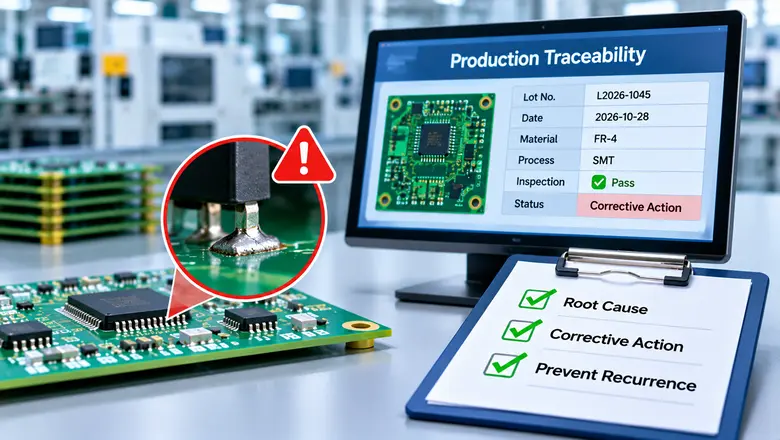
For example, if several PCB assemblies develop faulty connections after delivery, the manufacturer needs production records to trace the problem. Without these records, it becomes difficult to identify the cause or determine whether other batches are affected. Furthermore, a delayed response can disrupt future production and increase replacement costs.
How to reduce this risk
- Agree on a corrective action process before placing large orders. The manufacturer should be able to contain affected products and investigate the root cause. It should also document the corrective measures taken.
- An 8D corrective action report can provide a structured investigation for significant quality failures. Customers should request evidence that the corrective measures have been tested for effectiveness.
- Production traceability is also important. Serial numbers and QR code PCB laser marking can connect individual boards to manufacturing records.
- Customers should also define which inspection reports must be retained.
Conclusion
Outsourcing PCB manufacturing to China can offer cost advantages and access to established production capabilities. However, the results depend a lot on supplier selection and how manufacturing requirements are managed to avoid common PCB outsourcing risks.
Clear design documentation and appropriate inspection procedures help reduce quality PCB outsourcing risks. Buyers should also establish realistic delivery schedules and require written approval for manufacturing changes. When defects occur, traceable production records and effective corrective actions help prevent recurring problems.
LHD TECH has been providing PCB fabrication and assembly services in China for over the past 20 years. We support projects from initial prototyping through mass production. We understand the concerns businesses face when outsourcing PCB manufacturing. That’s why we offer NDA protection and engineering design reviews before production, along with component sourcing support to help reduce supply chain risks.
Our manufacturing capabilities include precision SMT and through-hole assembly. We also use AOI and X-ray inspection to detect assembly defects, while electrical testing helps verify board quality before shipment.
Contact LHD TECH with your Gerber files and BOM to discuss your project. Our engineering team can review your manufacturing requirements and recommend suitable inspection procedures before providing a customized quote.