
With the emerging trend of smaller, faster, and advanced electronic devices, the need for quality circuit board technology is ever on the rise. From consumer electronics, healthcare equipment, and automotive systems and industrial equipment, manufacturers require circuit boards capable of providing good performance, but they must be able to fit in small areas. This is why the Rigid Flex PCB technology has become so widespread in contemporary electronics.
A Rigid Flex PCB is the combination of rigid and flexible PCBs in a single board, which enables designers to design products that are tiny and resistant at the same time. Nonetheless, the performance of these circuit boards relies greatly on materials in the manufacturing process. The appropriate selection of materials can enhance performance, prolong product life and decrease the probability of failure.
Due to this, material selection is one of the most important aspects of both Rigid Flex PCB and HDI PCB design. Knowledge of the influence of various materials on reliability and performance could aid manufacturers in the creation of products that could address the requirements of the current electronic systems.
Why Material Selection Is Critical for Rigid Flex PCB Design
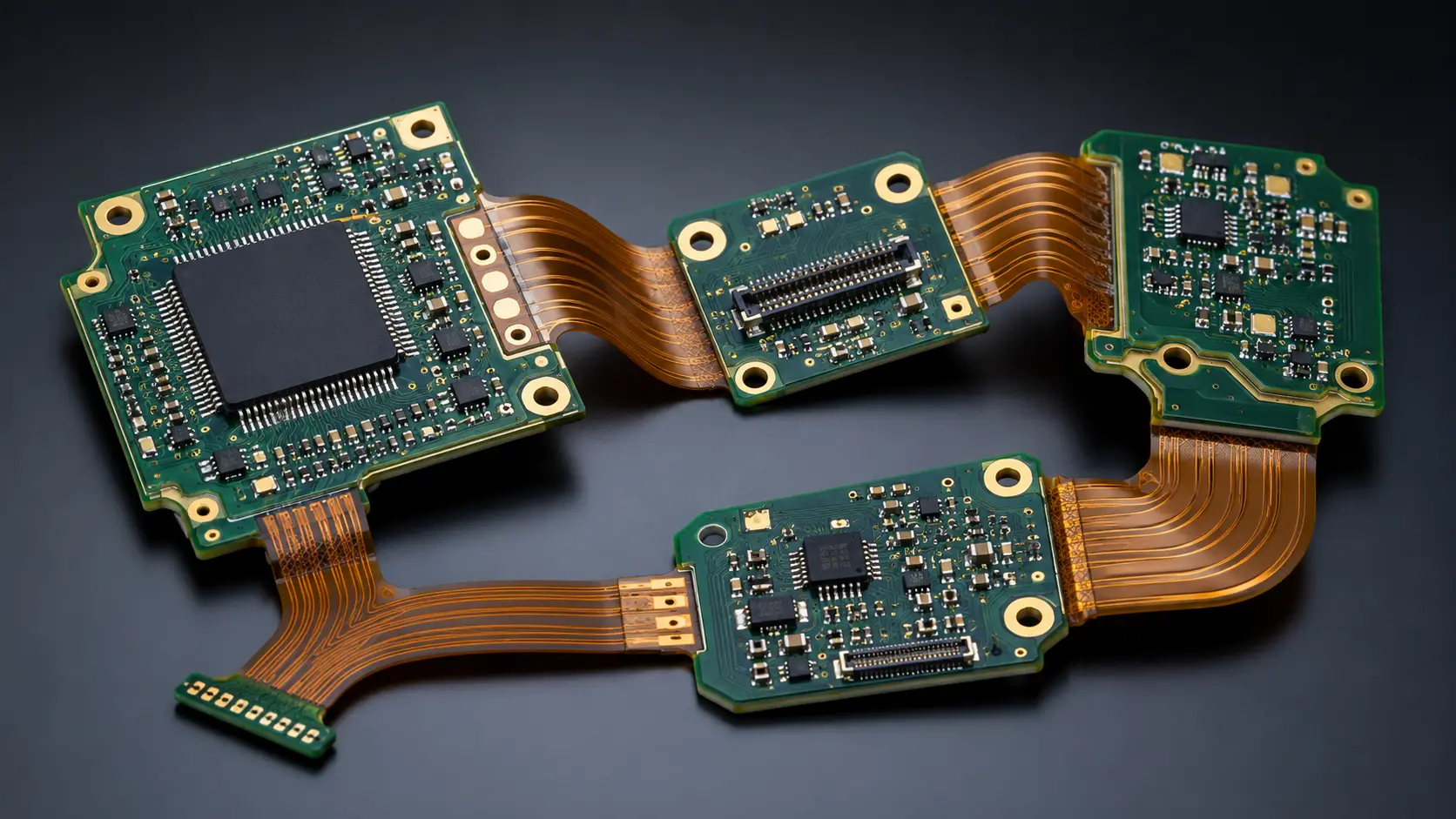
Selection of materials is significant when it comes to the longevity and performance of a Rigid Flex PCB. Each material in the board adds to the electrical, mechanical, and thermal properties. The selection of the appropriate mix of materials will be able to guarantee that the circuit board will be able to work under various conditions.
The PCB materials influence the signal propagation and direction, capacity of the board to dissipate heat, and board durability. When low-quality materials are incorporated, the board can face low performance or shortened life cycle or even failure. Quality materials are used to ensure consistent operation and enhance general reliability.
This is particularly the case in industries where electronic systems are required to serve over prolonged periods. Rigid Flex PCB begins with the appropriate material base, whether it is in medical equipment, automotive electronics, or communication equipment.
Essential PCB Materials Used in Rigid Flex PCB Manufacturing
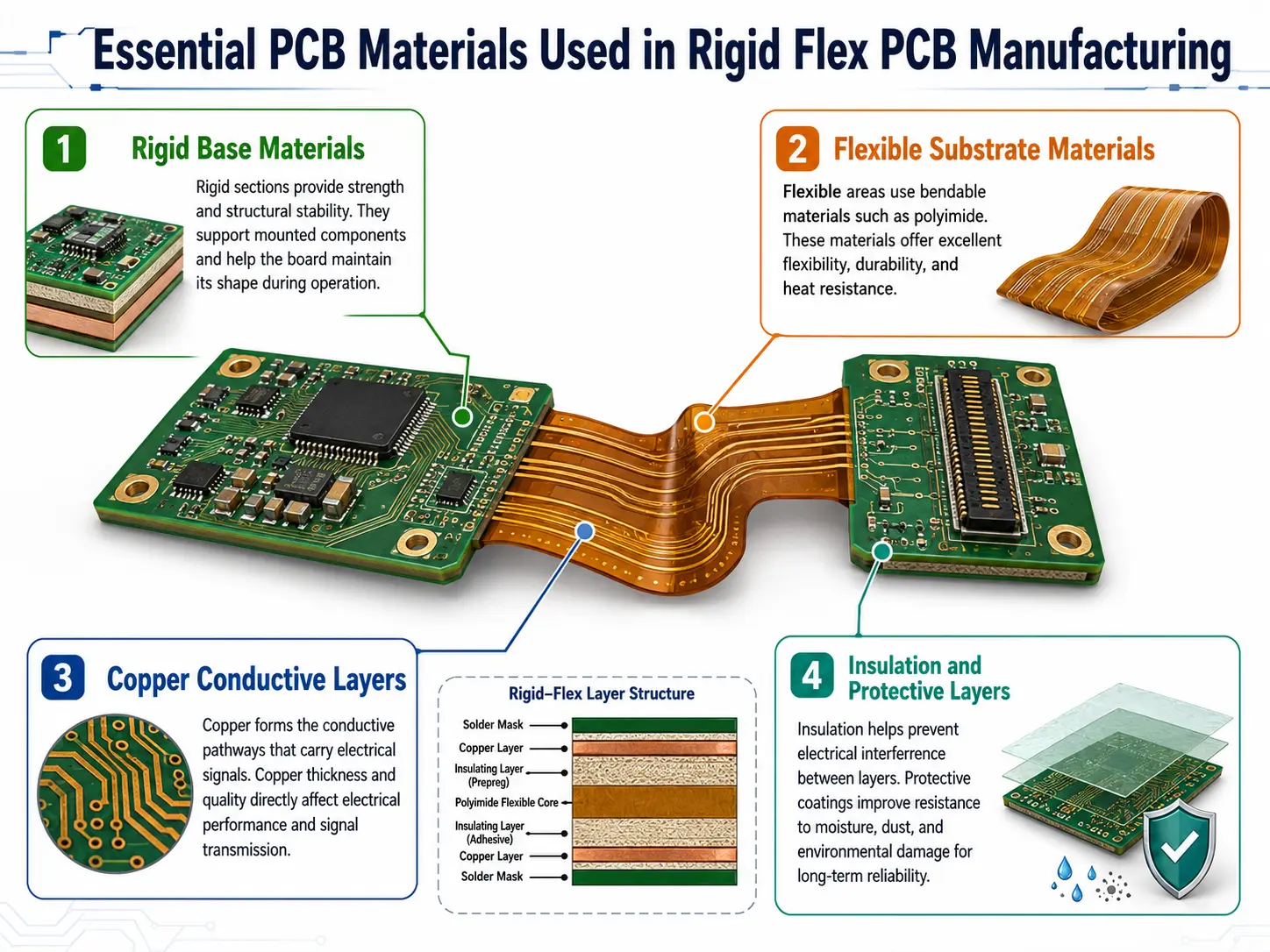
Rigid Base Materials
Rigid parts of the board are traditionally constructed with materials that give it strength and structure. These materials assist in attaching electronic elements in place and keeping the shape of the board intact in the course of operation.
Flexible Substrate Materials
Flexible spaces demand materials capable of bending many times without breaking or attenuating their functionality. Polyimide is another substrate material that is frequently utilised in making a flexible substrate due to its high flexibility, strength, and resistance to heat.
Copper Conductive Layers
The conductive pathways are made with copper, which carries electrical signals throughout the circuit board. Electrical performance and signal transmission can be directly influenced by the quality and the thickness of the copper layer.
Insulation and Protective Layers
Insulation materials contribute to avoiding unwanted electrical interference among various circuit layers. Protective coating is provided as well to ensure that the board does not incur moisture, dust and environmental damage, which enhances long-term reliability.
How PCB Materials Affect Rigid Flex PCB Performance
Signal Performance and Electrical Performance
Rigid Flex PCB materials directly affect the route of electrical signals along the circuit. PCB Materials of high quality assist in preserving good signal integrity, minimising interference, and facilitating easy transmission of data. This is particularly necessary in high-end electronic devices where quality communication among components is required.
Thermal Control and Thermal Protection
Electronic devices produce heat when in use, and how it can dissipate this heat is heavily dependent on the materials that the PCB is made out of. Good thermal resistance materials assist in the dissipation of heat better, preventing any chances of overheating and enhancing system stability in general. Properties such as alumina density can also support heat management and improve overall thermal performance.
Plasticity and Hardiness
A key advantage of Rigid Flex PCB technology is its ability to bend without damaging the circuit. The flexible substrate materials should be robust enough to survive repeated motion and be able to perform. Strong materials can be used to avoid cracks, wear, and other mechanical failures over time.
Ecology and sustainability
PCB materials also serve the purpose of shielding the board against environmental conditions like moisture, dust, temperature variations and vibrations. Quality materials enhance resistance of the board to such conditions and contribute to stable work and increased service life.
The Connection Between Material Quality and PCB Reliability
One of the most crucial aims in PCB production is reliability. Quality materials can assist in minimising the chances of circuit breakage and increasing the life of the electronics.
High-quality materials are better able to withstand vibration, temperature variations, humidity, and mechanical force. It is particularly useful in aerospace, automotive and industrial automation where electronics are frequently subjected to harsh environments.
The manufacturing consistency is also influenced by the quality of material. Good materials will be used in the production of boards with predictable performance and fewer defects, resulting in high-quality products with lower maintenance costs.
Several sophisticated electronics products, like communication and signal distribution systems, such as an HDMI RF modulator, are built on reliable circuit boards. High-quality materials used can contribute to ensuring stable operation and long-term performance in these applications.
Conclusion
The materials used in the design and manufacturing process of a Rigid Flex PCB are of significant importance in determining its performance and reliability. From rigid substrates and flexible layers to copper conductors and protective coatings, every material contributes to the board’s overall functionality and durability.
Improving signal integrity, heat management, flexibility, and minimising failure risks are some of the benefits of carefully chosen PCB materials. These advances are fundamental to contemporary electronic products, which need a strict delivery of performance in small and demanding settings.
With the development of technology, the significance of material innovation will become more important and more significant. With manufacturers investing in quality materials, they are able to produce more reliable, efficient, long-lasting electronic designs, and Rigid Flex PCB will continue to play a central role in electronic design in the future.