

With the increased power and smaller size of electronic devices, the materials employed in their construction are more significant in their overall performance. Modern electronics tend to be used in harsh environments, necessitating materials able to withstand heat, offer electrical insulation, and be used reliably over time. This is especially important in advanced circuit boards where performance and durability are critical.
Alumina or aluminium oxide is one of the materials that has received an important share in the electronics world. Due to its high thermal, electrical and mechanical characteristics, alumina finds extensive use in high-performance electronics. Alumina density is one of its numerous properties that impact the performance of the material under various environmental conditions.
The correlation between alumina density and PCB performance may be understood to assist manufacturers in choosing appropriate material to be used in stressful applications. From thermal management to structural strength, alumina continues to play a valuable role in modern electronic design.
What Is Alumina and Why Is It Used in Electronics?
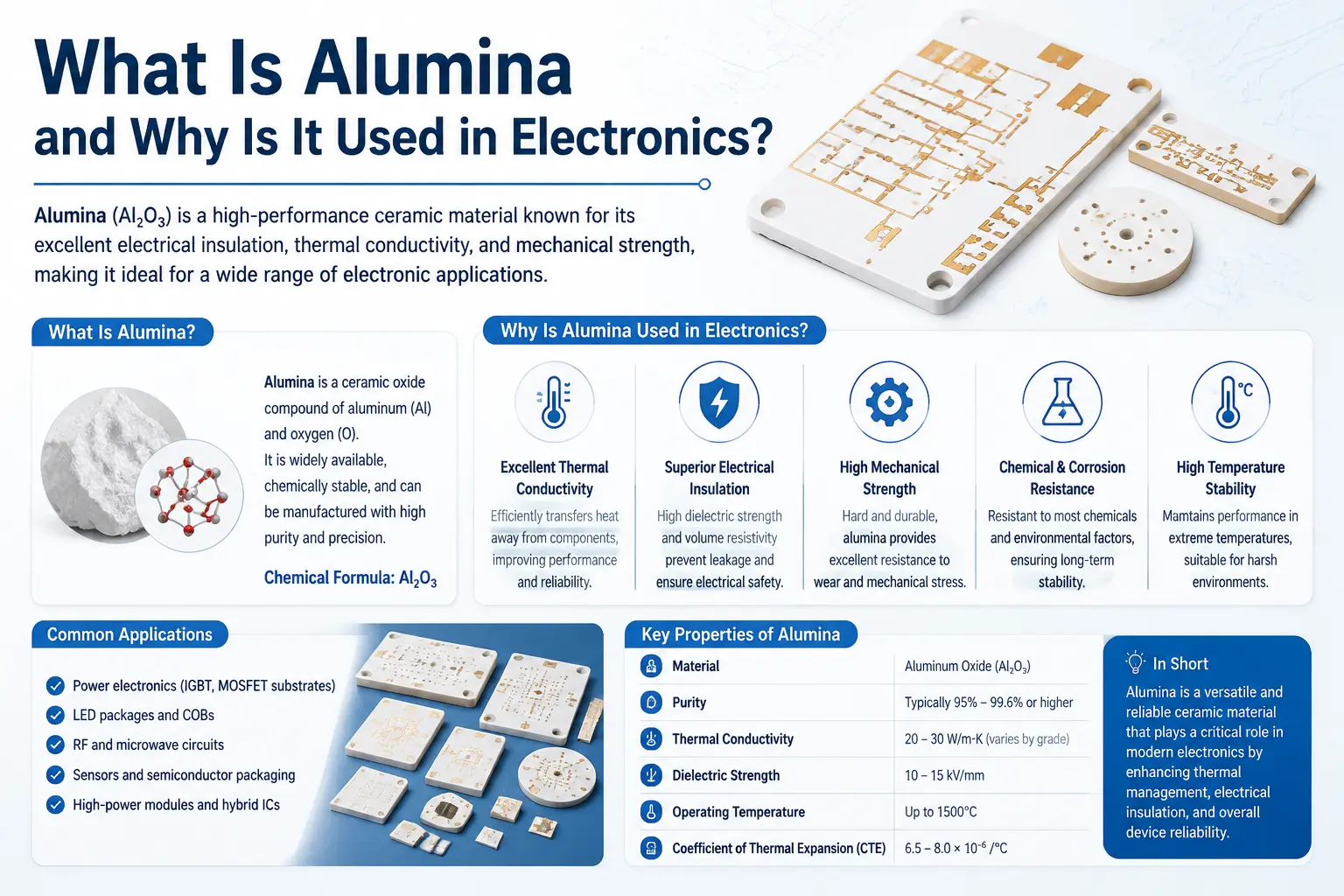
Alumina is a ceramic substance that is mainly composed of aluminium oxide. Its application in electronic industry is great due to its capability to offer good electrical insulation and also due to high levels of resistance to heat and wear. These features render it applicable in applications where reliability and durability may be crucial.
Thermal stability of alumina is one of the primary reasons why it is popular in electronics. Electronics produce heat when they are in operation, and alumina can withstand the high temperatures and do not lose its structural integrity. This assists in safeguarding sensitive parts and in maintaining reliable performance over time.
Besides the thermal properties, alumina has the advantages of high mechanical strength and corrosion resistance. These benefits contribute to it becoming a popular option in circuit board substrates, electronic packaging, and other systems that demand reliable functions in difficult conditions.
How Alumina Density Impacts High-Performance PCB Materials
Effect on Thermal Control
The density of the Aluminum is crucial for heat dissipation. The density of the alumina materials is also usually higher and enables a more compact structure that can lead to improved thermal performance. This assists electronic systems in dealing with heat better and minimises chances of overheating.
Stressing on Mechanical Strength
The structural stability and the durability of alumina are also influenced by its density. Alumina materials are often dense and thus offer more mechanical strength and can be used in those applications where circuit boards can be subjected to physical forces, vibration, or pressure.
Support for Electrical Insulation
Alumina is reputed to be a good insulator. Adequate density is used to preserve the desirable material property to avoid unwanted electrical conductivity, which ensures reliability and protection of delicate electronic parts.
Add to Long-term Reliability
High-performance electronics demand high-quality materials that can withstand their properties in the long-term. Thick substrates of alumina are known to have better resistance to environmental influences like heat, dampness and wear to increase the durability of electronic devices.
The Role of Alumina in Advanced PCB Manufacturing
Ceramic PCB Substrates
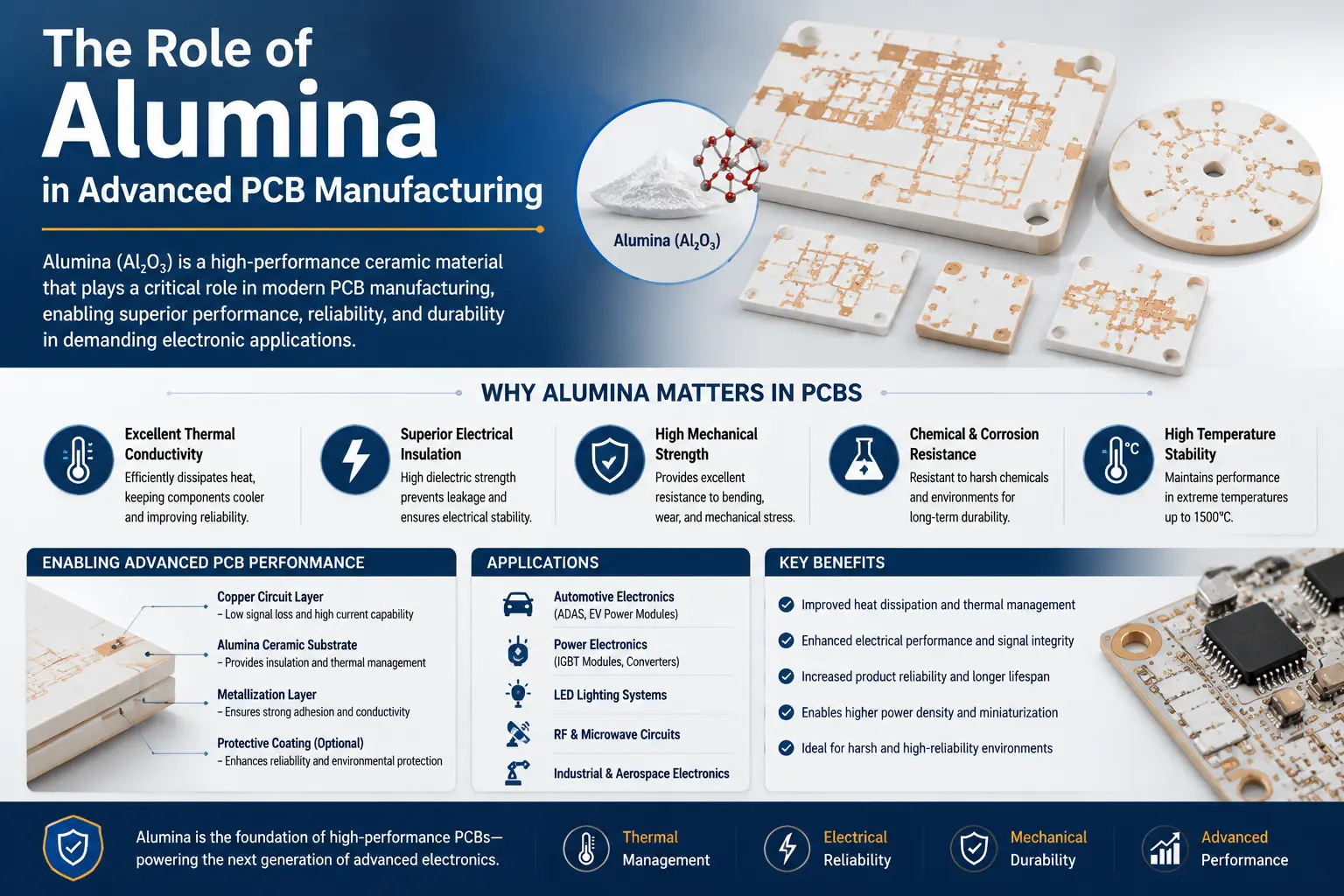
Alumina is a common substrate material in ceramic PCBs. Its thermal conductivity, insulation and strength combine to make it a solid building block in electronic circuits that work under harsh environments. These properties also make alumina suitable for advanced designs such as HDI PCB and Rigid Flex PCB applications.
High-Power Electronic Applications
Most of the high power equipment emits a lot of heat in the course of operation. Alumina is efficient in controlling this heat, and hence it is a favourite material in power electronics, LED systems and industrial apparatus.
Vehicular and Industrial Electronics
Industrial machines and car systems frequently need parts capable of withstanding severe operating conditions. In these applications, alumina-based materials can enhance reliability and performance by offering durability and thermal resistance.
RF Systems and Communication
Circuit board materials should be stable and reliable in communication equipment and signal distribution devices. Good products like an HDMI RF modulator have reliable substrate materials that can facilitate the availability of consistent operation and proper performance of the signal.
Comparing Alumina with Other PCB Materials
Alumina vs FR-4 Traditional Materials
FR-4 is one of the most commonly used PCB materials because of its affordability and versatility. Nevertheless, alumina is usually more heat-resistant and performs better at high temperatures, and thus can be used with more demanding electronic systems.
Alumina vs Other Ceramic Substrates
Alumina offers a good performance-to-cost balance when its usage is compared to some higher-end ceramic materials. Alumina can also be a good choice because it is available, reliable, and affordable; however, some ceramics can be more favourable in terms of thermal conductivity.
Performance Strengths and Weaknesses
Alumina is characterised by a set of advantages, namely, the high insulation level, high mechanical properties, and thermal performance. It can, however, be costly compared to traditional PCB solutions, and special manufacturing procedures may be needed.
Choosing the Right PCB Materials
The choice of PCB Materials will be determined by the requirements of the application. The decision depends on factors like operating temperature, electrical performance, mechanical durability and budget. Alumina is commonly used in situations where thermal management and reliability are important factors.
Conclusion
Modern electronics has adopted alumina as a vital substance due to its outstanding thermal stability, electrical insulation, and mechanical strength. Its density is an important factor when it comes to defining its competence in high-performance PCB applications.
Alumina can be used to address the increasing needs of more advanced electronic systems by enabling improved heat management, increased durability and improved long-term reliability. These benefits make it an excellent material in industries such as industrial automation and automotive electronics, communication, and power systems.
With the ever-growing impact of technology, the importance of the material that is reliable and high performance is bound to increase. Alumina has shown the ability to perform and be versatile and thus is likely to be a major ingredient in producing the next generation of electronic products.