
Introduction: HS Code Mastery in the Electronics Industry
When it comes to international trade in electronics, the question of “What is the HS code for PCBA board?” is not just academic—it’s a critical driver of your bottom line, compliance, and supply chain reliability. As one of the most essential elements in all electronic products, printed circuit board assemblies (PCBAs) are at the heart of the global industry, but without the right HS code, even the best-designed PCB or PCBA board risks getting stuck in customs, overpaying tariffs, or being penalized for regulatory non-compliance.
From PCB manufacturing and assembly in China, Germany, or the USA, in order to fast-moving import and export logistics, HS codes—it is known officially as the Harmonized System—its the world’s common language for classifying electronic goods, such as circuit boards, PCB boards, electronic components. To understands the appropriate pcba hs code, need to know when to use hs code 8534.00.00 for a bare board, or how to pick the code for your pcba when shipping a loaded board, it gives our business a valuable competitive edge.
What Are HS Codes? Explaining the Harmonized System
The Global Backbone of Product Classification
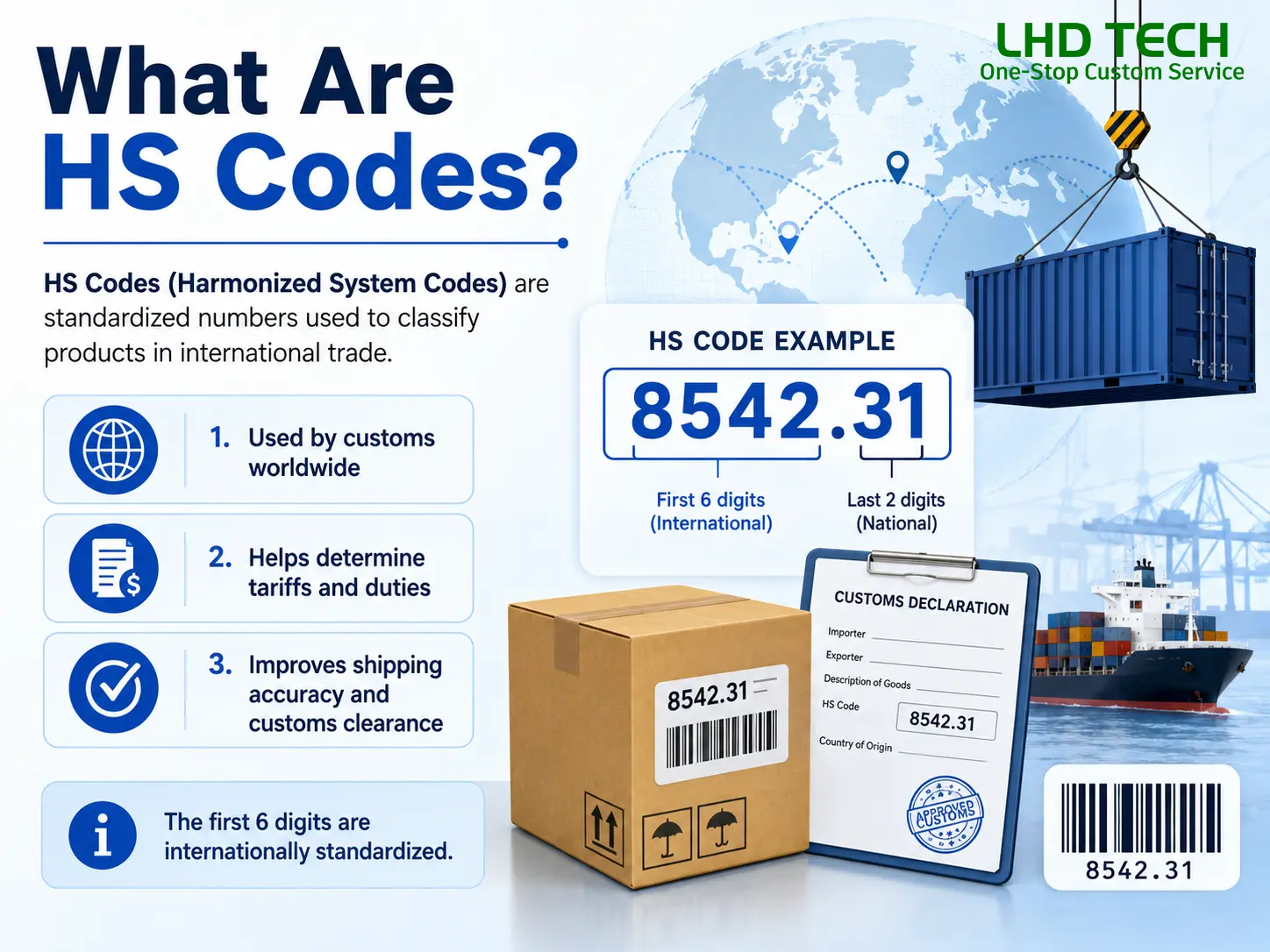
HS codes—shorten for Harmonized System codes—it represent a systematic, globally standardized approach for identifying every tradable product, from apparel to electronic parts. Maintained by the World Customs Organization (WCO), the hs code system covers more than 5,000 commodity groups and is mandatory for import and export documentation, as well as determining customs duties, and enforcing trade regulations.
How the Harmonized System Works
The structure of a typical HS code is:
- 6-digit global root (e.g., 00 for bare circuit boards)
- Country-specific extensions(often 8-10 digits for national specifics)
Codes, Chapters, and Subheadings
- Section 16: Electrical machinery, equipment, and parts (covers most electronic HS codes for PCBA)
- HS Code Chapter 85: Electrical Machinery; includes “pcb,” “pcba,” and related electronic components
- Subheadings can differentiate pcba from accessory boards, relays, or hybrid integrated circuits
The Importance of HS Codes in the PCB Industry
HS codes are indispensable for:
- Determining import duties and tariff rates on everything from a quick turn pcb sample to a large PCBA batch
- Customs clearance without delays or risk of non-compliance
- Providing verifiable data for global trade research and sales forecasting
- Supporting the application of hs codes in Free Trade Agreements (FTAs), anti-dumping investigations, and dual-use export control
The Importance of HS Codes for PCBA in International Trade
The Code Ensures Global Supply Chain Efficiency
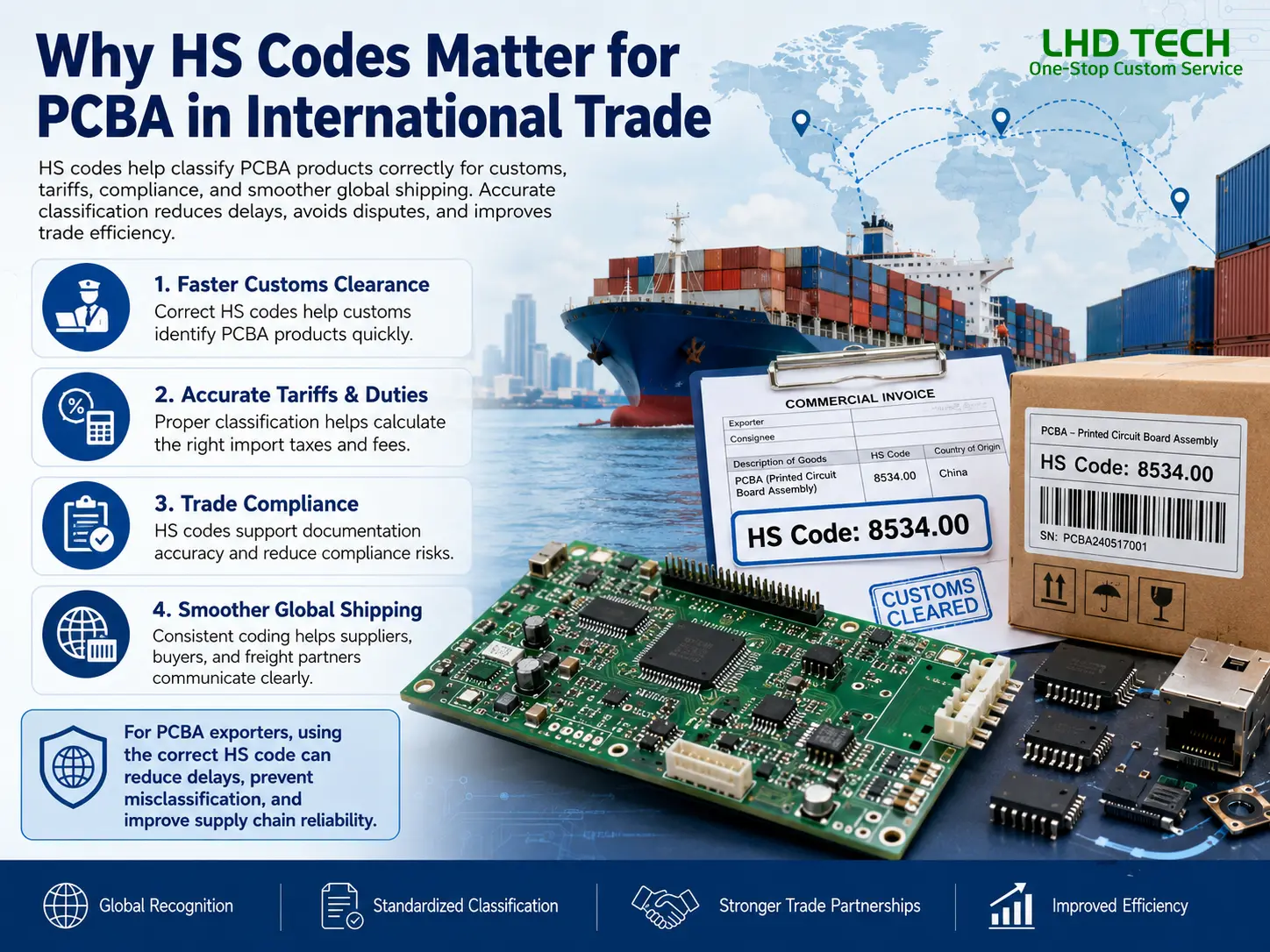
HS codes for printed circuit and assemblies offer enormous benefits to electronics companies by:
- Enabling fast digital clearance through e-customs portals, expediting every step from label to delivery dock
- Reducing the risk of customs delays/penalties—using the code for pcba or hs code for bare boards minimizes random checks
- Unlocking lower tariffs under FTAs when the code used is validated with the country of origin and technical specification
- Allowing accurate benchmarking—companies leverage global trade data by HS code to monitor industry growth
Codes for PCBA in International Trade
The codes for pcba in international contexts, like hts code for pcba board (USA) or EU versions, dictate not just tax rates but eligibility for preferential treatment under FTAs or embargoes.
| Key Benefit | Outcome |
| Right hs code | Lower rates, faster customs |
| Incorrect hs code | Delays, fines, and reputation risk |
| Documenting correct hs code | Smooth clearance, easier post-shipment audit |
Real World Application Example
A major automotive manufacturer importing printed circuit assemblies to the U.S. found their cost of goods reduced by 11% by updating their code for pcba boards from a “miscellaneous electronics” code to a pcb hs code aligned with product end use—after consulting with a customs broker and referencing the newest hs code databases.
Understanding HS Code Structure for PCB and PCBA
HS Code Structure: Bare Board vs Loaded Assembly
Mastery of hs code structure determines not only initial tariff calculation but can facilitate fast dispute resolution if customs challenges your classification.
- HS code for bare board: 8534.00.00
- HS code for loaded/pcba: 85177090 (common default), but subject to more specific codes for computer, telecom, or control use
Example: HS Code 8534.00.00 in Practice
| Code | Description | Used for |
| 8534.00.00 | Printed circuits, no components: bare pcb | PCB fabrication export |
| 85340090 | Other printed circuits | Some EU/Asia imports |
| 85340011 | Rigid, single-sided, bare pcbs (country-specific) | India |
- For companies in quick-turn pcb or pcb manufacturing and assembly, distinguishing between bare board and pcb assembly at this stage is critical.
HS Code Chapter Specifics
- HS code chapter 85 covers electrical machinery and broadly includes both pcb and printed circuit board assemblies.
- The hs code structure allows for evolution: as more complex components are packed onto boards, new specific codes are added regularly.
PCB vs. PCBA: Proper HS Code Classification
What is a PCB? What is a PCBA?
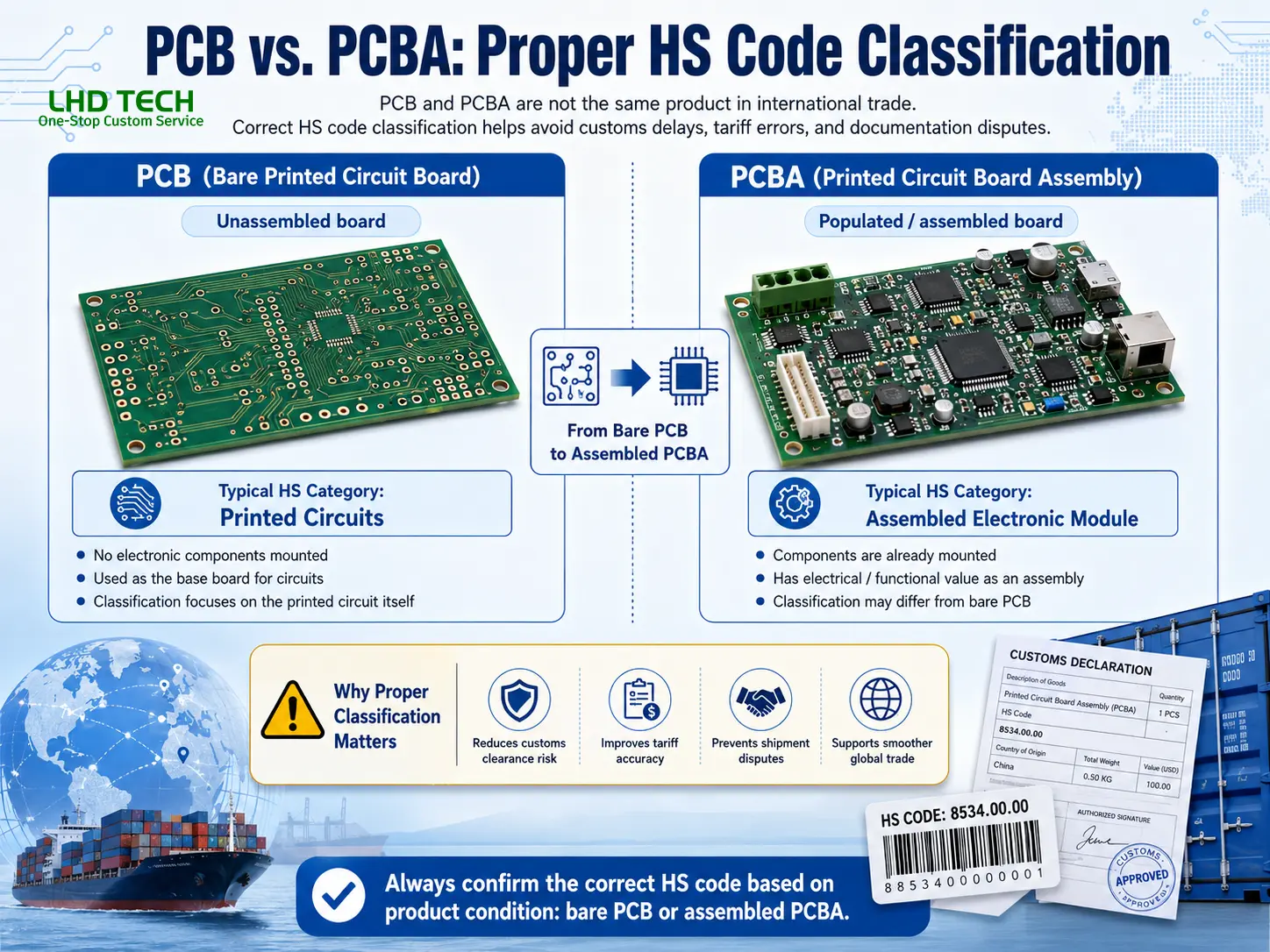
A PCB (Printed Circuit Board) is the foundation of modern electronics—a thin board used to mount, route, and connect electronic components through conductive tracks. A bare board contains no loaded or mounted components, making it ideal for further pcb manufacturing and assembly. In contrast, a PCBA (Printed Circuit Board Assembly) is a PCB that has had components such as integrated circuits, resistors, and connectors soldered onto it—ready for integration into a final product.
HS Codes for PCB and PCBA
Understanding the difference is vital for choosing the proper hs code:
- HS code 8534.00.00 is internationally accepted for a bare pcb. You’ll see hs codes for pcb such as 8534.00.00 globally and 85340090 in the EU for bare, unimproved PCBs.
- For PCBAs, loaded boards, or printed circuit board assemblies, the primary family is 85177090 (general), while more specific codes(84733020, 85371091, etc.) exist for different uses.
Subtle HS Code Differences for PCB and PCBA
PCB boards with just holes and copper traces require far less documentation, while a pcb assembly must be meticulously documented, specifying every assembly stage, part, and function. If you’re shipping both a bare pcb and pcba board in the same order, each must be declared with the correct hs code for pcba and pcb—never lumped under a single code.
The Impact of the Wrong HS Code
Failure to use the appropriate pcba hs code—for instance, shipping a loaded assembly as a bare board—can result in import refusals, additional tariff assessments, or even the need to re-export goods at significant cost.
Common HS Codes for PCBA in International Trade
Understanding common hs codes for pcba will not only accelerate your import and export process but also enhance your reputation as a reliable trader.
| Board Type | HS Code | Description/Notes |
| Bare PCB | 8534.00.00 | Universal for bare board, no components |
| Loaded/Assembled PCBA | 85177090 | Telecom/computer board assemblies with loaded components |
| Computer Peripheral PCBA | 84733020 | Boards for computer accessory assembly (motherboards, etc.) |
| Industrial PCBA | 85371091 | Boards for control/relay/industrial device assemblies |
| Hybrid/IC Assembly | 85423100 | Complex integrated circuit-based PCBA |
Note: The code is crucial—it not only defines your cost basis but determines compliance with trade policies and eligibility for tariff reductions.
Examples of PCBA Products and Correct HS Codes
- A pcb assembly destined for automotive airbag control will often require 85371091.
- A printed circuit board assembly used in telecom equipment must use 85177090 for most countries.
Exploring Key Electronic HS Codes for PCBA
To accurately classify pcba using hs codes, you need a working knowledge of codes like:
- HS Code 8534.00.00: The global reference for bare pcbs.
- HS Code 85177090: Covers the vast majority of loaded pcb assembly for telecom or general use.
- HS Code 84733020: For computer accessories or motherboards.
- HS Code 85371091: PCB assemblies for industrial, control, and relay applications.
- HS Code 85423100: If your board acts as a hybrid IC or micro assembly.
The Application of HS Codes in PCB/PCBA Commerce
- HS Code helps customs and traders instantly recognize product type, duty, and documentation requirements—streamlining clearance and compliance.
- Your choice of code for pcba boards or bare boards changes not only cost but the amount of time your shipment spends in port.
Finding and Using the Correct HS Code for Your PCBA
Why the Correct HS Code Classification Matters
With pcb imports and high-value export shipments, even small errors can be costly. Using the correct hs code for all pcb and pcba will:
- Ensure you don’t pay excess tariffs on loaded printed circuit board assemblies.
- Unlock eligibility for trade concessions.
- Prevent disputes and audits that could halt your global supply chain.
Practical Steps to Get the Correct HS Code
- Determine if your board is a bare board or a complete pcba assembly.
- Gather all specifications related to pcba and end use.
- Consult hs code databases and authoritative government portals for your destination market.
- Assess if any specific codes(8473, 8542, etc.) fit your board’s function.
- When in doubt, consult a trade compliance expert or request an advance ruling.
Best Practices and Real-Life Scenarios for Import and Export
Best Practices
- Double-check every HS code for PCBA board orders, even for repeat shipments.
- Distinguish between bare pcb and pcb assembly on all shipping documents.
- Always update codes after any change in assembly method, material, or end use.
- Train your team in the nuances of HS code classification for pcb and pcba.
Real-Life Scenarios
Scenario 1: An electronics OEM in Germany imports printed circuit board assemblies for wearables. They initially use a generic code, resulting in delayed releases and penalties. Switching to the specific code for pcba boards (85177090) streamlines import and customs.
Scenario 2: A U.S. company ships mixed lots: pcb boards (bare), accessory assemblies, and fully loaded PCBAs. By accurately splitting codes on their commercial invoice, they avoid the confusion and delays that sank competitors’ shipments in the same season.
Risks of Incorrect HS Code Classification
The Risks of the Wrong HS Code
A wrong hs code affects everything:
- Your payment of import duties or eligibility for export refunds.
- The speed and smoothness of customs inspections.
- Your company’s risk flag with border agencies.
Consequences of Incorrect HS
| Risk | Description | Solution |
| Fines and Penalties | Underpayment triggers back duty and civil fines | Use the correct hs code |
| Shipment Seizures | Persistent errors can cause goods to be impounded | Always double-check at booking |
| Reputation Damage | “High-risk” status leads to extra scrutiny | Stay compliant with up-to-date codes |
Regulatory Trends: Automated Enforcement
Many customs agencies now use machine learning to flag anomalies in HS code usage. It’s never been more vital to get the correct hs code and use clear, detailed product descriptions for every pcb, pcba, or circuit board product.
Powerful Tools & Resources: HS Code Databases
For any company exporting or importing pcb assembly, hs code databases are invaluable:
| Resource | Scope | URL |
| WCO Harmonized System Online | Global | https://www.wcotradetools.org/en/harmonized-system |
| USITC HTS (HS code for pcba: US) | United States | https://hts.usitc.gov/ |
| EU TARIC | European Union | https://ec.europa.eu/taxation_customs/dds2/taric |
| China Customs | China | http://english.customs.gov.cn/ |
| India ICEGATE | India | https://www.icegate.gov.in/ |
| ASEAN Tariff Finder | ASEAN Countries | https://tariff-finder.asean.org/ |
| UK GOV Trade Tariff | United Kingdom | https://www.gov.uk/trade-tariff |
| Canadian Customs Tariff Database | Canada | https://www.cbsa-asfc.gc.ca/trade-commerce/tariff-tarif/ |
| Australian Border Force | Australia | https://www.abf.gov.au/importing-exporting-and-manufacturing/tariff-classification/ |
| Japan Customs Tariff | Japan | https://www.customs.go.jp/english/tariff |
| Korea Customs Service | South Korea | http://english.customs.go.kr/ |
10 Steps to Classify PCBA Using HS Codes
A structured approach minimizes classification errors and supports full import and export compliance for your pcb assembly or loaded pcba board.
- Determine Product State: Is your product a bare board or a loaded pcba with mounted electronic components?
- Identify PCB Usage: Is the board for telecom, control, computing, or another category? The usage can affect the appropriate HS code.
- Check Bill of Materials: Does the assembly have integrated circuits, microprocessors, or discrete electronic parts?
- Refer to Product Drawings: Support your choice with technical drawings and a detailed assembly spec.
- Consult Official Databases: Use HS code databases for the most up-to-date harmonized system codes.
- Review National Extensions: Country-specific codes may add important distinctions to the universal 6-digit code.
- Review Trade Agreements: Is your shipment eligible for FTA benefits? Always check if your HS code matches origin documentation.
- Ask a Broker or Trade Specialist: For ambiguous assemblies, get professional confirmation before booking the shipment.
- Save Documentation: Keep all records of classification rationale, correspondences, and technical files.
- Periodically Audit Codes: The HS system changes regularly; schedule reviews of all codes for your main PCBA products.
10 Best Practices for Seamless PCB and PCBA Export
- Use clear, function-specific product descriptions: e.g., “8-layer printed circuit board assembly for automotive control.”
- Separate and declare each item under its unique HS code: bare board, loaded PCB, and computer accessory assembly each have different codes.
- Update HS codes after any design, component, or assembly process change.
- Regularly train your logistics and compliance teams on hs code classification best practices.
- Apply for Advance Tariff Rulings for high-value or new technology PCBA shipments.
- Stay up to date on changes to the harmonized system relevant to the PCB and PCBA industry.
- Always use the latest edition of official hs code databases.
- Prepare supporting technical documents (specifications related to pcba, BOM, drawings) in advance.
- Streamline internal processes for PCB imports and exports by integrating HS code checks at each supply chain step.
- Work proactively with customs brokers in all key destination countries.
Specifications, Documentation, and Compliance
Correct documentation for your shipments assures smooth clearance and trade compliance—authorities are increasingly strict about paperwork for pcb, pcba, and all electronic components.
Required Documentation for PCB/PCBA Exports and Imports
- Commercial Invoice: Must state the assembly type (bare board vs. loaded PCBA), HS code, origin, and detailed product description.
- Packing List: Clearly separates items by HS code for pcba products, circuit boards, and accessories.
- Technical Specs/BOM: Provides evidence for classification upon request.
- FTA Certificate (if eligible): Ensures lower duty for imports/exports protected by trade agreements.
FAQs on HS Codes for PCBA
Q1: How do I handle different PCB types in one shipment?
A: Always itemize each pcb and pcba by its specific HS code. For example, bare board under 8534.00.00, it loaded the assembly under 85177090.
Q2: Is the HS code for bare PCBs the same as for assembled boards?
A: No. The hs code for bare is 8534.00.00, then it loaded/assembled boards (PCBA) use codes to starting with 8517, 8473, etc.
Q3: What is the most common code for PCBA in international trade?
A: 85177090 is often the common hs code for pcba in telecom, computer, also general electronic assemblies.
Q4: What happens if I use the wrong hs code?
A: You risk customs delays, back-duty assessments, and reputational damage. Get the correct hs code by consulting official sources.
Q5: How do changes in product specs affect my code?
A: Any modification in materials, assembly, or end usage may require a new HS code. Re-classify before import or export.
Conclusion: Get the Right HS Code for PCBA Board
In the dynamic PCBA industry, nailing the correct hs code for pcba is as critical as optimizing your BOM or manufacturing process. A well-chosen HS code unlocks supply chain efficiency, cost accuracy, and legal peace of mind for every stakeholder in the pcb manufacturing and assembly chain.
- HS code classification determines if you pay fair tariffs or face customs holdups.
- The code used—from 8534.00.00 for bare boards to 85177090 for loaded pcb assemblies—is not “just paperwork”; it’s a passport for global trade.
- The best-run supply chains invest in training, review, and precise documentation for every printed circuit board and printed circuit board assembly.
Whether you’re a startup looking to scale international shipments, or a multinational optimizing global sourcing, mastery of the HS code system secures a smooth ride through the world of pcb import, export, and manufacture.