

Introduction: The Importance of PCB Design Rules

In the development of printed circuit boards that integrate high reliability, excellent manufacturability and superior performance, the establishment and implementation of PCB design rules form the core foundation of all design work. Even if the circuits and schematics are exquisitely engineered, the absence of a well-formulated and strictly enforced design rule system will often result in the final design product failing to deliver the intended circuit functions, while its manufacturing processes will also encounter substantial challenges.
PCB design rules serve as the constraints and operational guidelines that span the entire circuit board development process. These rules specify the layer stackup configuration of multilayer boards, the minimum width of signal traces, the placement layout of electronic components, the arrangement strategy for power and ground planes, as well as thermal management solutions. They ultimately ensure that the circuit board achieves the intended electrical performance and meets the requirements for mass production.
Design rule enforcement is the invisible force that help you avoid costly errors, electrical failures or production delays later on. Whether you’re an experienced engineer or new to printed circuits, applying the right design rule sets throughout your pcb layout design is essential for circuit board reliability and functionality.
Overview of the PCB Layout Process
Every successful printed circuit board starts as an idea but becomes reality through a carefully structured layout process. Here’s a high-level summary of this process:
The Key PCB Layout Steps
- Schematic and Bill of Materials (BOM):Initial circuit and component selection.
- Design Rule Definition:Establish minimum trace widths, clearances and layer stackup based on electrical performance, expected currents, voltage levels and manufacturer’s specs.
- Layout and Component Placement:Translating schematic connections to physical positions on the board to streamline signal path, enable clear signal flow and avoid electromagnetic interference.
- Power Integrity Planning:Define where power and ground planes will go, assess locations for decoupling capacitors close as possible to the power pins and design stable reference planes.
- Routing:PCB layout design focuses on following signal integrity considerations—shortest, direct connections for high-frequency and high-speed traces, reflection avoidance and controlled impedance for standards such as USB and Ethernet.
- Design Rule Check (DRC) and Electrical Rule Check (ERC):Using design automation tools to validate your design rules and electrical requirements have been met.
- Manufacturability Review (DFM) and Automated Assembly (DFA):Ensure all rules conform to manufacturing and assembly capabilities, such as minimum trace size or component spacing for pick-and-place.
- Fabrication and Assembly:Final fabrication with PCBA, following all approved constraints.
Why Design Rules Matter: Reliability, Manufacturability, and Cost

The lack of reliability or manufacturing feasibility in printed circuit boards renders exceptional design performance and innovative achievements meaningless. Establishing and adhering to PCB design rules is precisely intended to ensure the achievement of the following key objectives:
Key Reasons to Use Design Rules
- Electrical Performance:Maintaining signal integrity through minimum trace widths, trace spacing, matched differential pairs, and correctly sized decoupling capacitors. This is especially crucial for high-frequency or high-speed designs, where EMI and reflection can cause signal quality degradation.
- Maintaining Signal Integrity:Adhering to rules on impedance, return paths, clearances, and ground plane continuity prevents data errors in USB, Ethernet and other fast circuits.
- Thermal Reliability:Defining proper thermal relief for higher currents and optimal placement help control heat, improving lifespan and preventing failures.
- Manufacturability:Your design must meet the capabilities of your chosen fabrication house (minimum drill size, solder mask slivers, minimum trace width, via sizes and copper thickness).
- Costly Error Prevention:The earlier a design rule violation or manufacturability issue is found, the cheaper it is to fix. Early rule enforcement can help you avoid expensive re-spins or rejected boards.
- Streamline Automated Assembly:DFA rules for fiducial marks, component-to-component spacing, and silkscreen clarity are essential for modern, fast production lines.
Categories and Foundations of PCB Design Rules
No single rule works for every situation, but these categories summarize the essential pcb design considerations:
Electrical Design Rules
- Signal Integrity:Set trace widths, controlled impedance and spacing for each signal class to maintain clear signal integrity and minimize crosstalk and reflection.
- Current-Carrying Capacity:Minimum trace and via diameters must handle the designed maximum current without excessive heating, especially for power supply or high-power boards.
- Voltage Clearance:Define minimum spacings based on operating voltage—high voltages and high frequencies require greater clearance, especially in high-frequency circuits and between power sources.
Physical Design Rules
- Component Placement:Defines how close parts may be placed, ensuring automated assembly and future test accessibility.
- Layer Stackup:Multilayer boards require rules for each layer (signal, power, ground, mechanical)—proper stackup enhances signal path routing, maintaining signal integrity at high frequencies.
- Board Outline & Mechanical Features:Specify ruled regions for edge cuts, mounting holes, and mechanical keep-outs.
Manufacturability Rules (DFM)
- Minimum Trace and Space:Relates directly to your fabricator’s ability to etch traces without risking shorts or opens.
- Pad/Via Requirements:Minimum annular ring, drill diameters, via in pad allowances.
- Solder Mask and Silkscreen:Defines required clearances for assembly and PCB marking reliability.
Assembly Rules (DFA)
- Fiducial Marks:Ensures that automated assembly cameras can align boards.
- Component Orientation:Group and align similar parts for pick-and-place efficiency.
- Keep-Outs and Thermal Relief:Space for test, rework and heat dissipation.
Schematic Rules
- Consistent Naming, ERC:Ensure logical, readable design rule sets, with clear net classes for power, ground, high-frequency and high-voltage nets.
Schematic and Circuit-Level Best Practices
Your schematic is more than a map—it’s the beginning of reliable, manufacturable PCB design. Here are the foundational schematic best practices that connect directly to design rules:
- Clear Net Naming and Labeling:Unique, consistent net names (e.g., USB_D+, VCC_3V3) help you avoid confusion during pcb layout and signal path tracing.
- Proper ERC Utilization:Electrical Rule Check helps catch disconnected pins, short circuits and unintentional loopbacks before these become costly fixes at the layout stage.
- Grouping by Function:Group circuits with similar function (e.g., power supply, high-frequency RF, analog, digital) to enable dedicated rule sets and help control EMI.
- Design for Test:Add accessible test points for power sources and critical nodes, with clear labels and proper spacing for PCBA probes.
- Use of Decoupling Capacitors:Always provide capacitors as close as possible to the power pins of ICs, and tie them to stable reference ground for best power integrity.
Schematic-Level Best Practices and Their Benefits
| Best Practice | Why It Matters |
| Unique net labeling | Streamlines layout and DRC processes |
| Proper net class use | Defines tailored design rules for critical nets |
| Decoupling capacitors | Maintains power integrity for IC operation |
| Function grouping | Helps streamline rule application |
| ERC enforcement | Help you avoid costly logic and connectivity errors |
| Strategic test points | Simplifies validation and long-term maintenance |
PCB Layout Design: Component Placement, Signal Path, and Layer Stackup
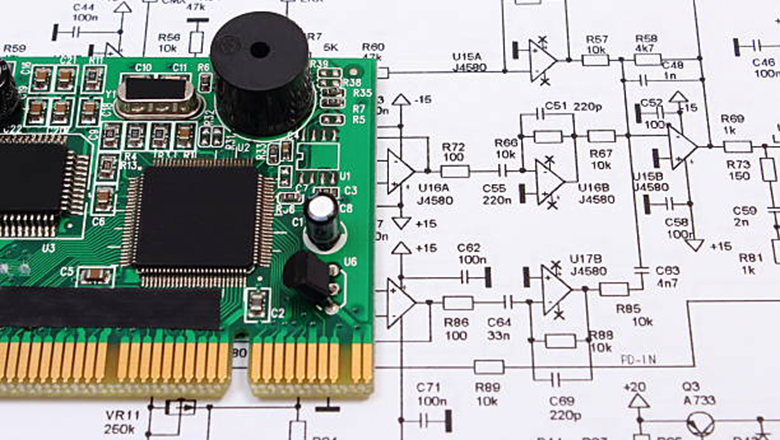
The pcb layout design phase translates your schematic into a manufacturable and functional circuit board. Here, effective component placement, optimal signal path and strategic layer stackup choices all converge under rigorous design rule enforcement.
Component Placement Best Practices
- Foundational Placement:Place critical components (e.g., main ICs, connectors, power sources) first for logical signal flow and to minimize trace lengths.
- High-Frequency and Power Traces:Short, direct routes from connectors to ICs help control signal integrity and minimize EMI.
- Power and Ground Planes:Dedicate solid, contiguous layers for ground and power planes. These provide a stable reference for signals and help you avoid noise, voltage drop and performance loss.
- Closer is Better:Decoupling capacitors should always be as close as possible to the power pins—this helps you avoid power supply fluctuations and ensures the board’s electrical performance under high frequencies or higher currents.
- Grid Alignment:Place parts on a consistent grid, ensuring uniformity for both routing and automated assembly processes.
Optimizing Layer Stackup
- Signal Layer Assignment:Allocate inner and outer layers according to signal frequency, power, and ground needs; bury high-speed traces inside between reference planes for EMI reduction.
- Dielectric Choice:Select PCB dielectric material appropriate for the frequencies and performance required (FR-4 for standard, Rogers or PTFE for high-frequency boards).
- Controlled Impedance:Calculate trace widths and dielectric thickness to precisely match the required impedance for USB, Ethernet, HDMI and similar high-speed signals.
Signal Path and Routing Best Practices
- Direct and Clear Signal Paths:Keep important signal traces short and free from unnecessary vias or meandering.
- Avoid 90-degree Trace Angles:Use two 45-degree bends to reduce signal reflection and manufacturing risks.
- Differential Pair Routing:For USB, Ethernet, and other high-speed buses, maintain equal lengths and proper spacing—this is essential for maintaining signal integrity at high frequencies.
- Minimum Trace Width Compliance:Always verify that trace widths meet or exceed what your manufacturer (and design rule) specifies for expected current and fabrication yield.
High-Speed and High-Frequency PCB Design Rules
As the operating frequency of circuits rises from the megahertz range to the gigahertz level, traditional circuit layout methods gradually reveal their limitations. High-Frequency (HF) and High-Speed (HS) design rules thus emerge as an essential foundation for ensuring that circuits deliver their intended electrical performance and meet practical manufacturing requirements.
High-Speed Best Practices
- Impedance Control:Calculate and enforce precise trace widths, spacing, and layer stackup for every matched net—help you avoid signal integrity loss at high frequencies.
- Reflection Management:Terminate signals or route with matched impedance to eliminate reflection in fast edges (USB, HDMI, Ethernet).
- Crosstalk Reduction:Maintain spacing and use ground guard traces between high-speed traces or parallel buses to minimize noise coupling.
- Return Path Integrity:Route high-speed nets with a continuous reference plane underneath, ensuring a stable and low-inductance return for current.
- Serpentine Traces:Apply controlled length-matching for differential pairs to synchronize high-frequency signals, especially in memory, USB or high-speed ADC/DAC circuits.
High-Frequency Real-World Example
An RF IoT design failed regulatory EMC testing because high-frequency amplifier traces ran over split ground planes. By re-routing signal paths over a single solid ground, the designer maintained signal integrity and reduced radiation, passing certification with no further hardware changes.
Decoupling and Power Sources
The operating frequency of modern circuits has escalated from the megahertz range to the gigahertz level, where traditional circuit layout methods reveal clear inadequacies. High-frequency and high-speed design rules have thus become an indispensable technical foundation, ensuring both the intended electrical performance of circuits and the feasibility requirements of practical manufacturing.
Thermal Design Considerations
Thermal management directly affects the reliability of circuit boards and determines their ability to maintain high-performance operation in various operating environments.
Best Practices for PCB Thermal Design
- Thermal Reliefs:Use thermal relief (spoke) pads when connecting to large copper pours, balancing thermal dissipation and solderability.
- Wide Traces for Power:For higher currents, increase minimum trace width. Wider traces lower resistance and temperature rise.
- Thermal Vias:Place arrays of vias under hot ICs or power devices to transfer heat from the component’s pad through to inner or opposite-side copper pours.
- Component Spacing:Leave room for airflow and heat spreaders/heatsinks as needed. Automated assembly guidelines will define keep-out areas for large thermal junctions.
DFM, DFA and Manufacturability: Help You Avoid Costly Mistakes
No matter the circuit’s function, absent or incorrect design rule implementation can cause costly delays or complete manufacturing failures. Design for Manufacturability (DFM) and Design for Assembly (DFA) are essential pcb design strategies for achieving yield and reliability.
Manufacturability Best Practices
- Follow Manufacturer’s Guidelines:Always tailor your design rule file to each fabricator’s minimum trace, space, via and pad specs.
- Panelization and Edge Clearance:For cost-effective fabrication, layout for optimal panel utilization and avoid placing traces near board edges.
- Silkscreen Quality:Ensure text is readable and won’t interfere with soldermask or pads.
- Fiducial Marks:Clearly marked fiducials allow automated assembly machines to align and place components accurately—a small but critical part of streamlining PCBA.
Automating Design Rule Checks with Modern EDA Tools
PCB design automation is your first and best defense against errors in large, complex designs.
Best Practices in Design Automation
- Regular DRC/DRC Runs:Set your design automation tool to check after every major change in layout or routing—not just at the end of the design process.
- Automated Net Classes:Assign power, high-frequency, USB and other nets to logical classes for custom rule enforcement.
- Batch Rule Imports:Import or copy proven rule sets from old projects or reference designs to jumpstart new layouts.
- ERC Integration:Use electrical rule check to review schematic connectivity in parallel with layout DRC.
PCBA and Automated Assembly: Streamlining Production
PCBA (Printed Circuit Board Assembly) means your design must not only work as a circuit, but also travel efficiently through an automated assembly line.
PCBA and Assembly Layout Tips
- Optimized Placement:Place SMD components on the same side where possible. Align pin 1 orientations and avoid tall versus short placements that slow down pick-and-place runs.
- Keep-Out Zones:Identify areas reserved for tooling or test probes to help avoid accidental component damage.
- Test Point Access:Ensure all power, ground, and high-frequency nets are accessible for inline test and programming.
Frequently Asked Questions About PCB Design Rules
Q: What is the difference between a design rule and a standard?
A: A design rule is a functional constraint for your current project (such as minimum trace width, layer stackup strategy or power supply decoupling). A standard, like IPC-2221, establishes industry-wide best practices and starting values for design rules.
Q: How do I know if a circuit board design is truly manufacturable?
A: By running full DRC and DFM checks with your manufacturer’s actual capabilities file, reviewing with your contract manufacturer, and cross-checking with references from successfully manufactured previous boards.
Q: Why do I need decoupling capacitors so close to the power pins?
A: Placing them as close as possible helps you avoid voltage sag and others power integrity issues by providing a low-impedance source for fast current spikes at high frequencies, maintaining stable reference supply to critical ICs. This ensures the board’s electrical performance and helps you avoid costly malfunctions, particularly in high-frequency and high-speed circuits.
Q: How do power and ground planes contribute to design performance?
A: Power and ground planes offer a low-inductance, stable reference for signals and power sources, essential for maintaining signal integrity and reducing electromagnetic interference and electromagnetic compatibility challenges. They simplify return paths for high-speed signals, help control voltage drop, improve thermal distribution and streamline the layout process—making your PCB more manufacturable and reliable.
Q: When should I update my PCB design rules?
A: You should review and update your design rule sets with every new board technology (e.g., switching from FR4 to high-frequency dielectric), change in manufacturer, new regulatory requirement, or after encountering a costly fabrication or assembly issue. Continuing education and regular consultation with your PCBA partners are core best practices.
Conclusion: Building Reliable, Manufacturable PCBs
Creating reliable, manufacturable and cost-effective printed circuits requires more than clever circuit design: it requires disciplined, up-to-date, and consistently applied PCB design rules. These rules are the “invisible scaffolding” that supports every aspect of your design—from schematic to layout, from prototyping to full-scale PCBA.
Recap of Key Takeaways:
- Design rules help you avoid costly errors and make it possible for your circuit board to function in the real world.
- Consistent rule enforcement is foundational to electrical performance, functionality, design performance and manufacturability.
- Always tailor your rules to board technology, manufacturer, automatic assembly needs and application frequency.
- Power integrity, proper component placement, decoupling capacitors close as possible to power pins, and effective use of power and ground planes are all essential PCB design principles.
- Layer stackup and controlled impedance calculations aren’t optional for high-frequency or high-speed work—they’re required for robust, scalable PCBA success.
The PCB design landscape is constantly evolving. Standards improve, dielectric materials change, and design automation gets smarter. But no tool can replace strong engineering best practices and thoughtful, experience-driven rule creation.
If you want to build PCBs that last, perform, and can be made at scale, master your design rules. This will help you avoid nearly every common pitfall, streamline your workflow, and set the foundation for ongoing innovation and manufacturing success.