
Introduction to Electronics and Electronic Circuits
Electronic is the engine that power nearly every aspect of modern technology. From the smallest smart sensor to the most sophisticate computer, electronic device and circuit are responsible for shaping our digital world. But what do terms like electronic circuit, circuit board, and electronic device actually mean? And why are these concept so crucial when thinking about everything from home gadget to complex industrial system?
At the heart of electronics is the idea of controlling the flow of electron—tiny charge particles that create electric current. Through the careful design and arrangement of electronic components such as transistor, diode, and integrated circuit, engineers build system that process, amplify, and transmit electronic signal. Whether you’re adjusting the volume on your headphone, relying on computer to manage a business, or using modern electronic appliances at home, electronic devices and circuits are what make these things possible.
Understanding the field of electronics equip you not only to use modern technology, but also to troubleshoot, innovate, and design the next generation of electronic gadget and efficient electronic device.
History of Electronics: From the First Circuit to Modern Electronic Devices

The story of electronics start with the simple circuit and the quest to harness electrical energy to perform useful task.
- Early Beginnings: Before electronic as we know it exist, inventor experimented with simple circuits made from batteries, wire, and bulb to create light or transmit telegraph signal (the earliest form of electronic communication).
- The Vacuum Tube Era: The first breakthrough in control the flow of current came with the vacuum tube, which could amplify weak electronic signal and switch them, laying the foundation for radio, early computer, and long-distance phone system.
- The Transistor Revolution (1947): The invention of the bipolar junction transistor by John Bardeen, Walter Brattain, and William Shockley at Bell Lab mark a new direction. Transistor replaced bulky, fragile vacuum tube, allowing electronics to become smaller, faster, and more reliable.
- Jack Kilby and Integrated Circuits (1958): In 1958, Jack Kilby at Texas Instrument demonstrate the first integrated circuit—pack multiple electronic component like diode, transistor, and resistor onto a single semiconductor chip. This single innovation paved the way for modern computer, smartphone, and countless electronic appliance.
- Modern Times: Today’s electronic circuit are built on advanced printed circuit boards (PCBs) using million — even billion — of microscopic transistors per chip. Smart watch, medical device, and high-speed router all depend on complex circuits and high-precision analog and digital circuit design.
What Is an Electronic Device and How Do Electronics Control the Flow?

An electronic device is any piece of hardware design to control, process, or store electronic signal by manipulate the flow of electron. These can be as simple as a single diode or as complex as a microprocessor. Every electronic device is design around the principle of controlling the flow of electric current.
Key ways electronics control the flow:
- Switch current or voltage on and off (e.g., a transistor in a logic circuit)
- Allow current to flow in only one direction (a diode in a power supply circuit)
- Amplify weak signals (an operational amplifier in audio equipment)
- Regulate voltage (a voltage regulator in electronic gadgets)
Electronic devices rarely operate in isolation—they’re typically connected with other electronic component on a circuit board, forming complex circuits capable of arithmetic, communication, control, and more.
Understanding Electronic Components: The Building Blocks of Circuits
At the foundation of any electronic circuit are its electronic component—the individual building blocks that determine how electric current behaves in a circuit design.
| Electronic Component | Function in Circuit | Example |
| Resistor | Limits the flow of electric current, divide voltage | Audio volume control, LED dimming |
| Capacitor | Stores energy in an electric field, filters signal | Power supply smoothing, timing circuit |
| Inductor | Stores energy in a magnetic field, filter high-frequency signal | Power filters, RF circuit |
| Diode | Allows current to flow in one direction only | Rectifiers, voltage clamping |
| Transistor | Switch or amplifies electronic signal | Logic gates, amplifiers, processors |
| IC (Integrated Circuit) | Performs complex circuit functions inside a small chip | CPUs, memory, op-amps, ADCs |
| Sensor | Convert physical phenomena to electronic signal | Temperature, light, and pressure sensors |
| Relay/Switch | Electromechanically or electronically open and closes circuit | Industrial automation, motor controllers |
Introduction to Electric Current, Electron Flow, and Energy Storage
The movement of electron through a conductor—usually a copper trace on a printed circuit board—creates electric current, the life force of all circuit. In any electronic circuit, the flow of electron can be precisely controlled, amplified, or redirected using various electronic device.
Key Principle Explained:
- Electric Current: The movement of electrons from negative to positive through a conductor, measure in amperes (A).
- Electron Flow: In reality, electron move from negative to positive, but conventional circuit diagram show current flowing from positive to negative.
- Ohm’s Law: [ V = I \times R ] (Voltage = Current × Resistance)—Govern how resistor and current interact.
- Energy Storage: Capacitor store energy in electric field; inductor in magnetic field. Both are crucial for filtering (removing noise in electronic circuits), timing, and energy management in electronic devices and circuit.
Analog and Digital: Types of Electronic Circuits Explained
Understand the distinction between analog and digital circuits is crucial for anyone working with modern electronic. These two domains often come together on the same circuit board, especially in device that interact with the real world and digital computer.
Analog Electronic Circuits
Analog electronic circuits process continuous signal, where the current or voltage can take any value within a range. Analog circuit are essential for interfacing with the outside world, since most natural phenomena (sound, light, temperature) are analog. These circuits are design to amplify, filter, mix, or otherwise process electronic signals smooth.
Examples of analog circuits:
- Audio amplifiers in home stereo or smartphone
- Temperature sensor circuits in thermostat
- Tuning circuits in FM radios (LC circuits—inductor-capacitor)
Analog Device Tips:
- Analog designs often require careful attention to noise in electronic circuits. Adding capacitor close to power pins on ICs or using shielded cables helps improve performance.
- Choose precision resistor and low-leakage capacitor in sensitive analog circuits, such as medical monitor.
Digital Electronic Circuits
Digital circuits operate with discrete binary signals—logic high (often 5V or 3.3V) and logic low (0V), representing bit “1” and “0”.
- Logic gates form the building block: AND, OR, NOT, NAND, NOR, XOR.
- Flip-flops store single bit; registers, counter, and microprocessor are built from these.
- Go-to for data processing: Everything from calculator to the internet run on digital logic.
Examples of digital circuits:
- Microprocessors and microcontrollers inside computers and smart device.
- Memory chips for data storage.
- Timing and sequencing circuits in digital watch.
Mixed-Signal and Complex Circuits
Modern electronic device blend analog and digital:
- A smart thermostat use analog sensor (for room temperature) and digital microcontroller (for logic and control).
- In communication, analog-to-digital converter (ADCs)turn analog voice into digital for transmission, then digital-to-analog converter (DACs) restore it for speaker.
Table: Analog vs. Digital Electronic Circuits
| Feature | Analog Circuit | Digital Circuit |
| Signal Type | Continuo (infinite value) | Discrete (two states: 1 or 0) |
| Application Example | Audio amplifier | Digital clock, computer |
| Component Example | Operational amplifier, transistor | Logic gate, flip-flop, microcontroller |
| Vulnerability | Susceptible to noise, needs filter | Susceptible to glitch, timing issue |
| Use in Modern Device | Sensor input, signal condition | Data process, control |
| Common IC Type | Analog IC (e.g. LM741 op-amp) | Digital IC (e.g. 74LS00 NAND gate) |
The Printed Circuit Board (PCB): Where Devices and Circuits Meet
No discussion about electronic device and circuit is complete without highlighting the printed circuit board (PCB)—the platform that bring all individual component together into efficient electronic system.
What Is a Printed Circuit Board?
A PCB is a board made of non-conductive substrate (such as FR-4 or high-Tg materials) with thin layer of copper that create conductive path (traces) between electronic component.
- Single-layer: Used for simple circuits (LED drivers, toys)
- Multi-layer: Essential for computers, smartphone, and complex industrial control—some have 8, 12, or more layer
Why PCBs Changed Electronics:
- Enable compact circuits design for modern electronic gadgets, computer, and appliances
- Increase reliability by reducing wiring error
- Improve signal integrity and control electromagnetic interference (EMI)
Key PCB Terms and Tips
- Circuit board surface finishes: HASL, ENIG, OSP—protection for copper, improves solderability and circuit life span
- Solder mask: Colored layer (often green) prevents solder bridges; crucial for SMT assembly in complex circuits
- DFM analysis: “Designing for Manufacturability”—a critical step in modern circuit design to prevent costly production error
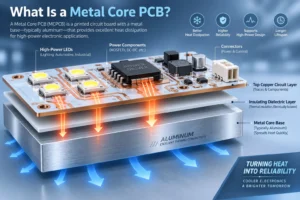
- Thermal pads: Metal or ceramic mounted below integrated circuit for heat management (very important in power circuits and efficient electronic systems)
Essential Electronic Equipment for Testing and Measurement
Even the most brilliant circuit design require testing and debugging for real-world reliability. Here’s a rundown of the must-have equipment and their use with electronic devices and circuit:
- Multimeter:
- Verified current or voltagein an electrical circuit; check electronic component value.
- Oscilloscope:
- Display electronic signal (such as waveforms from analog circuits or timing pulses from digital circuits). Crucial for finding distortion or unwanted noise.
- Signal Generator:
- Produces test signal to probe filter, amplifier, or analog-to-digital conversion circuit.
- LCR Meter:
- Accurately measure inductance (L), capacitance (C), resistance (R)—verify individual electronic components before or after mounting on a PCB.
- Logic Analyzer:
- Analyse multiple digital signal; perfect for debug complex digital and mixed-signal circuit.
- Bench Power Supply:
- Adjustable voltage and current; critical for prototyping, checking flow of current under real condition.
Functions, Applications, and Examples of Modern Electronic Devices
Modern electronic device and circuit are pivotal in every industry—they control the flow of electric current to accomplish countless function.
Key Functions
- Amplification: Boost small analog signal (microphone to speaker)
- Rectification: Convert AC to DC (found in power supply circuit)
- Switching: Turn load or sub-circuit on and off (logic circuits in computers)
- Filtering: Smooth voltage ripple or extract frequency band (audio, communication system)
- Computation: Data handling in computer, microcontroller
- Sensing: Translate temperature, light, pressure, or motion into usable electronic signal
Where We See Electronic Circuits
- Electronic appliance: Wash machine (relay, logic circuit, motor driver), oven (temperature sensor, relay board)
- Consumer electronic: Audio system, game console, television
- Computer and server: Multiple electronic component—RAM, CPU, GPU, support ICs—connected via multi-layer circuit board
- Telecommunication: Router, modem, cell tower control unit (analog and digital circuit)
- Medical equipment: Heart rate monitor (signal conditioning, ADC), X-ray system (complex analog power and sensing circuit)
- Industrial automation: PLCs, robotic, sensor , power supply
Circuit Design: From Simple Circuits to Complex Electronic Circuits
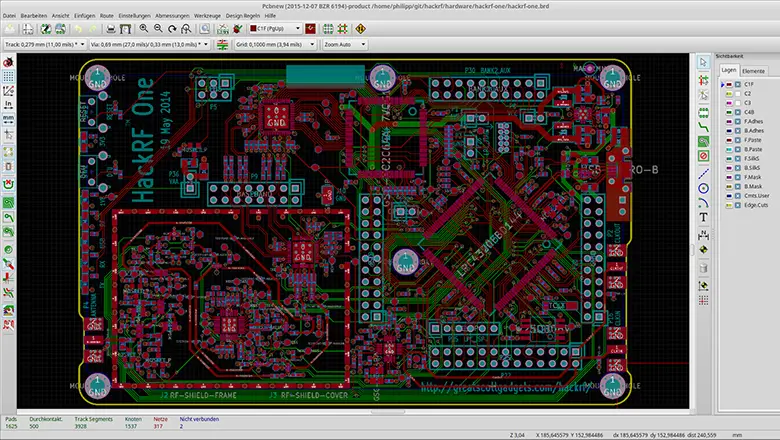
Designing a circuit is an exercise in creativity and problem-solving, combining theory, software tool, and practical insight.
Basic Steps in Circuit Design
- Define the Purpose: Why need design the PCB (e.g. Amplify audio, measure temperature, compute logic)
- Select Electronic Components: Consider current-hand, signal type (analog or digital), speed, noise tolerance
- Create theSchematic: Diagram that show every electrical connection, use standard circuit symbol
- Simulate Performance: Use software (LTspice, Multisim) to analyze voltage, current, frequency response, and sensitivity to noise
- Prototype (Breadboarding): Build up the design and testing for tweak
- PCB Layout and Manufacture: Capture the design on a printed circuit board; specify surface finish, solder mask, SMT/DIP assembly as need
- Testing and Debug: Check actual waveform and voltage; use all test equipment as describe
- Optimization: Reduced power consumption, improved efficiency and thermal hand, increased reliability
Common Design Considerations
- Noise reduction: Decoupling capacitor, ground plane, short signal path
- Thermal management: Heatsink for transistor or voltage regulator; thermal pads under power ICs
- Component source: Use common electronic part—simplifie repair and ensure availability
- Modular design: Use plug-in modules or pre-test block for build complex circuit
Challenges and Innovations in Modern Electronics
As modern technology races forward, designer of electronic circuits and device face numerous challenge—while innovation in the field of electronics continuously reshape what’s possible.
Key Challenges in Electronic Devices and Circuits
- Miniaturization: With each generation, modern electronic device become more compact and portable. Designer must integrate multiple electronic circuit into very small circuit board. High-density mount (such as HDI PCBs) and advance SMT assembly allow for more efficient electronic layout, but also increase the risk of noise in electronic circuit and make heat management difficult.
- Power Efficiency: Reduce power consumption is crucial for battery-power device and energy-efficient infrastructure. Designer use low-power semiconductor, sleep mode in microcontroller, and advance analog and digital circuit technique to extend battery life in everything from IoT sensor to smartphone.
- Heat Dissipation: As more electronic component are pack onto a printed circuit board, managing heat become paramount. Failing to dissipate heat effectively can degrade performance or even destroy electronic device and circuit. Thermal pad, strategic PCB layout, and advanced material like high-Tg FR-4 help mitigate these issue.
- Electromagnetic Interference (EMI) and Crosstalk: Multiple electronic circuit placed close together on a circuit board can introduce unwanted electronic signals (noise) or crosstalk, especial at high speed. Designer use ground plane, shield, and careful analog and digital signal routing to minimize interference.
- Reliability and Longevity: Consumer and industrial electronic equipment must operate reliably for year. Choose robust material, proper surface finishes (ENIG or OSP), and test to failure during the circuit design phase ensure the device endure real-world condition.
Modern Innovations and Trends
- Advanced Materials: Use of flexible PCBs, high-frequency laminate, and even biodegradable substrate material for eco-friendly electronic.
- System-on-Chip (SoC): Combine an entire computer—including processor, memory, and analog/digital interface—onto a single integrated circuit, power smartphone and wearable.
- Quantum and Neuromorphic Computing: Early-stage circuit that use quantum bit or brain-inspire logic for next-generation computer.
- High-Speed Wireless: 5G and emerging 6G technology use specialize analog and digital circuit, with advance filter, error correction, and signal processing on complex circuit board.
- Internet of Things (IoT): Billion of tiny, ultra-low-energy embed system, often running on a coin-cell battery for month or year use energy harvest.
Frequently Asked Questions About Electronic Circuits and Devices
Q: What is an electronic circuit?
A: An electronic circuit is a connect arrangement of electronic component—such as transistor, diode, resistor, and capacitor—that control the flow of electrical energy. Circuit process continuo signal in analog section and binary (on/off) signal in digital section.
Q: How are electronic devices and circuits used in computers?
A: Computer are made from billion of integrate circuit, each containing multiple electronic component like transistor. These circuit perform arithmetic, data storage, logic operation, and interface task to control the flow of electron and information.
Q: What do transistors and diodes do in electronic circuits?
A: Transistor are used for amplification and as switch in both analog and digital circuit—forming the backbone of logic gate and memory. Diode allow current to flow in only one direction, act as rectifier (in power supply circuits), signal limiter, and even light source (LEDs).
Q: Why is PCB (printed circuit board) technology important?
A: A PCB provide a stable platform for mount and interconnect individual electronic component, transform a pile of part into a reliable electronic device, and is essential for mass production of modern electronic gadget.
Q: Who was Jack Kilby, and why is he important in electronics?
A: Jack Kilby invent the integrate circuit in 1958, allow multiple building block of modern electronic (transistor, resistor, capacitor) to be fabricate on one chip—revolutionizing complex circuits and enabling today’s computer and smart device revolution.
Q: What are some common sources of failure in electronic devices and circuits?
A: Common causes include: thermal stress, moisture ingress damaging the circuit board, poorly chosen surface finishes, overstressing electronic components (beyond their current or voltage rating), and poor solder joints creating intermittent connections.
Q: How can beginners get into circuit design?
A: Start with simple circuits on a breadboard, like LED flashers or audio buzzers. Learn to read schematic diagrams and experiment with simulation tools for circuit design, then move on to small PCB fabrication projects.
Conclusion: Why Understanding Electronic Devices and Circuits Powers the Modern World
From the humble circuit to the most advanced electronic devices and circuits found inside quantum computers or medical equipment, our world is fundamentally shaped by the principles of electronics. Every smartphone, computer, car dashboard, and medical scanner is packed with carefully designed and tested electronic components, circuit boards, and logic units—each precisely “controlling the flow” of electrons to store energy, process signals, and power the devices and circuits that define modern technology.
The field of electronics thrives on both deep theoretical understanding and hands-on experimentation. Whether you dream of designing the next generation of electronic gadgets, fixing electronic appliances, or simply understanding how your favorite technologies work, the language and logic of electronic circuits is your gateway.
Quick Tips for Modern Electronics Enthusiasts:
- Always check for noise in electronic circuit, especial as your design become more complex PCB.
- Use efficient electronic component; check datasheet for rated operating ranges and power consumption. LHD Tech can provide kinds efficient components for you.
- When prototype, build up from simple circuit before tackling complex electronic circuits.
- Understand analog and digital interfaces—mastering both maximizes creativity.
- Explore open-source hardware and circuit design platforms to learn and share idea.
As electronics continue to evolve, so do opportunities for learning, innovation, and contribution. The next leap in technology might be powered by a clever circuit, a novel integrated circuit, or new ways to control the flow of electrons through advance material.