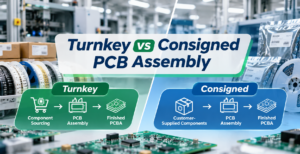

Outsourcing PCB assembly helps companies reduce manufacturing workloads and avoid investing in expensive production equipment. However, it leaves one important question: who will purchase and supply the electronic components?
Some companies prefer to handle component sourcing themselves (consigned), especially when they already have inventory or established supplier relationships. Others leave procurement to the assembly manufacturer (turnkey) to save time and simplify production.
Whoever handles component sourcing needs to ensure every component arrives in the required specification. It also means they handle supplier risk, counterfeit exposure, lead-time pressure, cost control, and more.
Clarifying turnkey vs consigned PCB assembly helps you decide which arrangement suits your project. This article looks at how both models work and where their costs differ, so you know when each makes sense. We will also discuss partial turnkey assembly for companies that prefer to supply certain components themselves.
What Is Turnkey PCB Assembly?
Turnkey PCB assembly is a manufacturing service in which a single provider manages PCB fabrication, component procurement, assembly, and agreed-upon testing requirements. The customer supplies the approved design files and production specifications. The manufacturer then coordinates the work needed to deliver completed boards.
This arrangement reduces the customer’s involvement in component purchasing and inventory management. It can be particularly useful for companies developing a new product without an established electronics procurement team.
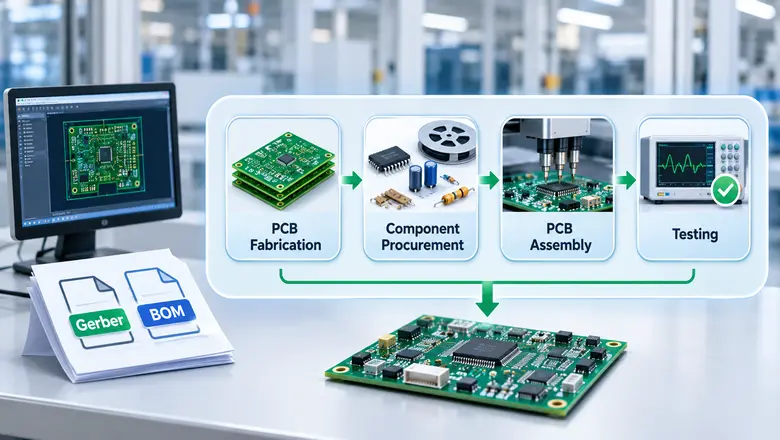
However, the customer still controls the approved design and must authorize component substitutions. The manufacturer’s sourcing responsibility should be well-defined in the agreement.
What Is Consigned PCB Assembly?
Consigned PCB assembly requires the customer to purchase the electronic components and supply them to the assembly manufacturer. The manufacturer receives the parts and performs the agreed assembly operations.
Some customers also provide fabricated PCBs, while others arrange for the assembly company to manufacture the bare boards. This depends on the agreed production scope.
Consignment gives customers direct control over purchasing decisions and component sources. It works well for businesses that already maintain electronic component inventories or have established supplier agreements.
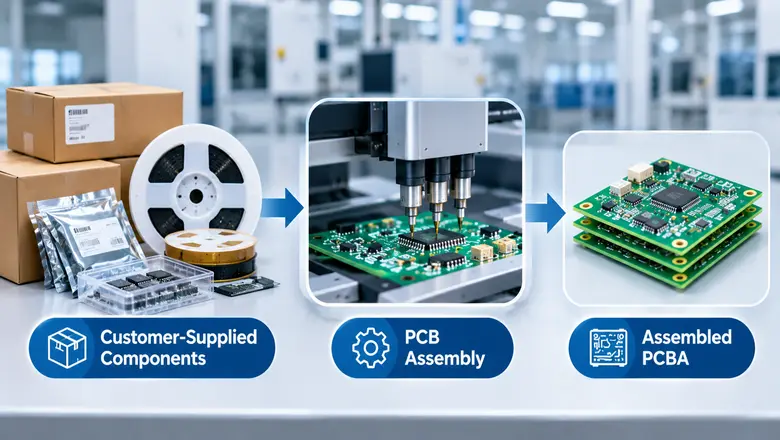
However, customers must ensure that the supplied parts arrive in the correct quantities and suitable packaging. Missing components can stop production even when the assembly equipment is available.
Turnkey vs Consigned PCB Assembly Comparison
The main difference between turnkey vs consigned PCB assembly is who purchases the components and manages their availability.
| Factor | Turnkey PCB Assembly | Consigned PCB Assembly |
| Component purchasing | Manufacturer | Customer |
| PCB fabrication | Usually included | Depends on agreement |
| Component inventory | Managed by manufacturer for its sourcing scope | Customer manages supplied stock |
| Purchasing workload | Lower for customer | Higher for customer |
| Component cost | Included in quotation | Purchased separately |
| Sourcing control | Manufacturer follows approved BOM and suppliers | Customer directly selects sources |
| Shortage management | Manufacturer coordinates sourcing issues | Customer handles supplied-part shortages |
| Total cost | Can reduce overall costs by limiting sourcing expenses and delays | May increase due to shipping costs, procurement work, and excess inventory. |
| Best suited for | Projects needing integrated manufacturing | Projects with existing stock or controlled sourcing |
| LHD TECH Services | Integrated PCB fabrication and assembly with component sourcing managed by LHD TECH. | PCB assembly using customer-supplied components, subject to project requirements and service availability. |
Both models can use the same SMT and through-hole assembly processes. The required inspection and testing procedures should depend on the product’s specifications, without any connection to who supplies the components.
When Should You Choose Turnkey PCB Assembly?
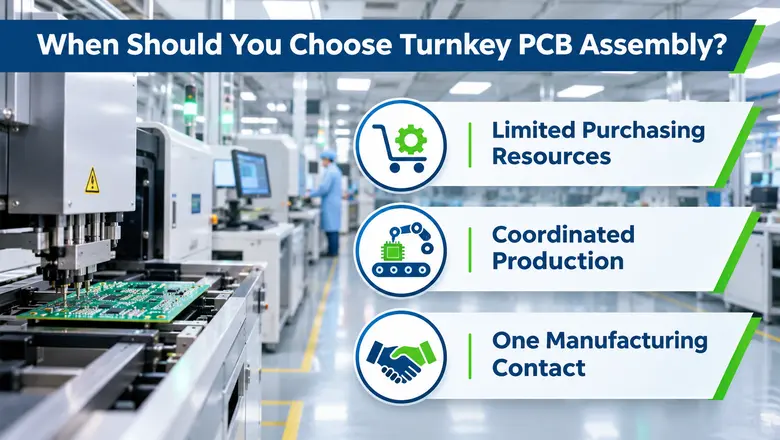
Turnkey assembly is usually suitable when a company wants to reduce procurement work and coordinate production through one manufacturer.
1. When You Have Limited Purchasing Resources
A PCB design may require dozens of different electronic components, each with its own availability and purchasing requirements.
Managing these orders takes time, particularly when distributors have different minimum order quantities (MOQs). Turnkey assembly takes this hassle away from the customer and into the hands of the manufacturer who coordinates purchasing and prepares the materials for production. However, a complete bill of materials (BOM) remains essential. It should identify approved manufacturer part numbers and any acceptable alternatives.
2. When You Need Coordinated Production
Turnkey assembly allows fabrication and component procurement to be planned together. This can reduce delays caused by separate suppliers working on different schedules. The assembly manufacturer can also review component availability before production begins.
For prototype development, coordinated sourcing may simplify repeat builds as the design changes. However, the actual lead time still depends on component availability and manufacturing capacity.
3. When You Want One Manufacturing Contact
Managing multiple vendors can make it harder to resolve quality issues or production delays. A turnkey provider gives customers a single point of contact for the agreed-upon manufacturing scope. This can make communication easier when checking order progress or resolving assembly concerns. The exact responsibilities should still be documented, particularly for testing and component substitutions.
When Should You Choose Consigned PCB Assembly?
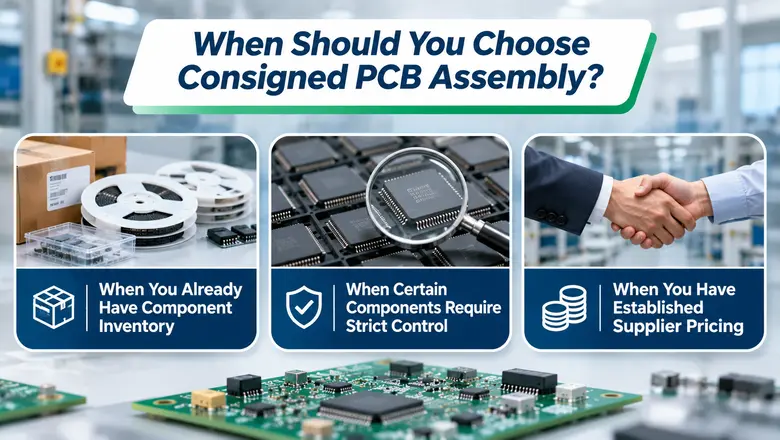
Consigned assembly is preferable when companies already control their component supply chain.
1. When You Already Have Component Inventory
A company may have purchased components for an earlier production run and still hold sufficient stock for another batch. Using these parts can reduce new purchasing requirements and help avoid unnecessary inventory buildup.
2. When Certain Components Require Strict Control
Some electronics projects use specialized microcontrollers or components purchased under exclusive supply agreements.
The customer may need to control the source of these parts or maintain specific manufacturing-lot records. Consigned assembly allows those purchasing arrangements to remain in place. This can also be useful for pre-programmed devices or parts that require particular handling procedures.
3. When You Have Established Supplier Pricing
Businesses purchasing large quantities of electronic components may negotiate favorable prices directly with manufacturers or distributors. Consignment allows them to continue using those arrangements while outsourcing assembly. However, the total savings depend on transportation costs and inventory handling. Purchasing labor and the cost of preparing component kits should also be considered.
What Is Partial Turnkey PCB Assembly?
When talking about consigned vs turnkey PCB assembly, there is another option too that blends both approaches. Partial turnkey assembly combines manufacturer sourcing with customer-supplied components. The customer provides selected parts, while the assembly company purchases the remaining items from the BOM.
For example, a manufacturer developing an industrial controller may already have the required microcontrollers in stock. It can supply those devices while the assembly provider purchases resistors and capacitors, along with the remaining approved components.
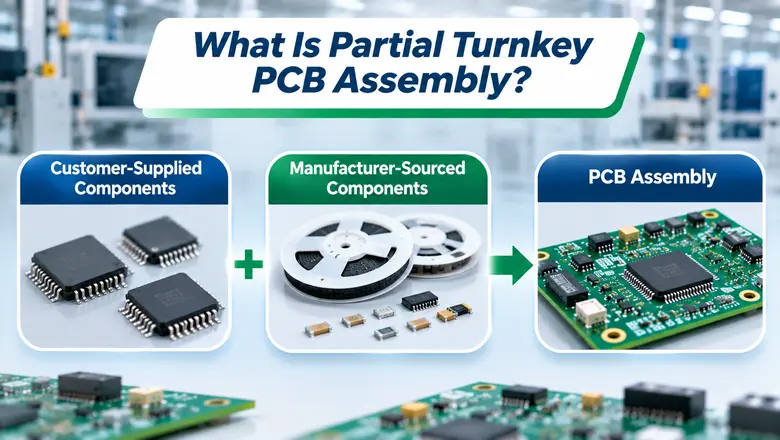
This arrangement gives the customer control over critical parts and reduces the workload associated with purchasing standard components.
Each BOM line should clearly identify who is responsible for sourcing it. Without this information, both parties may assume the other has ordered a required component.
How Do Turnkey and Consigned PCB Assembly Costs Compare?
Turnkey PCB assembly quotations generally include component purchasing as part of the agreed manufacturing scope. Consigned assembly quotations usually exclude the cost of customer-supplied components. This can make a consigned assembly quotation appear cheaper, even when the overall project costs more.
Customers choosing consignment must account for purchasing expenses and shipping components to the assembly facility. Component storage and additional handling may also increase costs.
Turnkey providers may have access to volume purchasing arrangements, although sourcing fees or material margins can affect the quoted price.
When comparing turnkey vs consignment PCBA options, use the same board quantity and testing requirements. The most useful comparison is the total cost of obtaining finished, tested PCB assemblies, including the purchasing work handled outside the assembly quotation.
Component Sourcing Risks to Consider
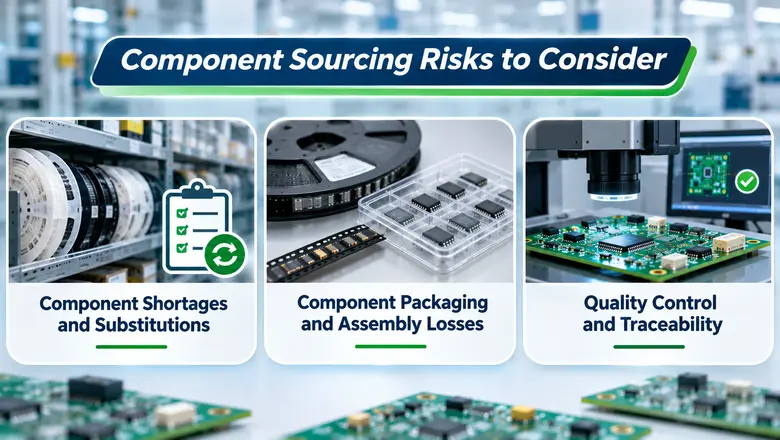
Both turnkey and consigned PCB assembly involve sourcing risks. The main difference is who handles component shortages and purchasing issues.
Component Shortages and Substitutions
In turnkey assembly, the manufacturer manages component availability and proposes alternatives when specified parts are unavailable. Under consignment, the customer must supply replacement parts if inventory runs short.
In either model, component substitutions require approval when they affect the approved BOM or design. Confirming alternatives before production helps prevent compatibility problems and delays.
Component Packaging and Assembly Losses
Consigned components must arrive in suitable packaging, such as reels, trays, or machine-compatible cut tape. Incorrect packaging can increase handling costs and delay automated assembly.
Customers must also provide spare components to account for attrition, which includes parts lost or consumed during machine setup and production. The required allowance depends on the component type/packaging and PCB assembly process, so confirm quantities with the manufacturer before shipping.
Quality Control and Traceability
For turnkey orders, customers should verify that components come from authorized or approved suppliers. In consigned assembly, customers are responsible for providing sourcing records and relevant component traceability information.
The assembler should still perform agreed incoming inspections and manufacturing checks. Automated optical inspection (AOI) can identify visible defects, while PCB X-ray inspection helps examine hidden solder joints. Appropriate PCB testing methods can further verify electrical performance.
How to Choose the Right PCB Assembly Model
The appropriate assembly model depends on the customer’s purchasing capabilities and the components required for production.
| If Your Priority Is… | Recommended Option | Why |
| Reducing procurement work | Full turnkey | Manufacturer manages component purchasing |
| Using existing component stock | Consigned | Customer supplies parts already purchased |
| Controlling specialized components | Partial turnkey | Critical parts remain customer-supplied |
| Managing a large internal supply chain | Consigned | Existing purchasing arrangements can continue |
| Outsourcing most sourcing while retaining key parts | Partial turnkey | Procurement responsibilities are divided |
Conclusion
The choice between turnkey vs consigned PCB assembly comes down to component availability and how much purchasing responsibility a company wants to retain. Turnkey assembly simplifies procurement, while consignment gives customers more direct control over their component supply. Partial turnkey offers flexibility when only certain parts need customer-managed sourcing.
Choosing the right PCB assembly model is easier when your manufacturing partner can accommodate different sourcing needs. LHD TECH offers full turnkey, partial turnkey, and consigned PCB assembly services, so you have the flexibility to outsource component procurement or supply selected parts yourself.
Our team supports projects from prototyping to volume production with PCB fabrication, component sourcing, and precision SMT and through-hole assembly. We review your BOM and manufacturing files to identify potential sourcing or assembly issues before production. Our quality control process includes AOI and X-ray inspection, along with testing to help ensure the finished boards meet your specifications.
Contact us with your Gerber files and project requirements, and let our engineers help you evaluate the most suitable sourcing arrangement and provide a customized quote.