
Introduction
Over the past decade, the drive to make products thinner while boosting performance has been the primary force behind the intense competition within the electronics industry. Flexible printed circuit boards (FPCs, or “flex PCBs”) represent the technological leap that makes this possible, finding widespread application in everything from consumer electronics, medical equipment, automotive systems, sophisticated spacecraft.
With hundreds of flex PCB manufacturers spread of manufacturers globally across mainland China, Taiwan, Japan, and the United States—each boasting cutting-edge technologies—how do you go about selecting a reliable partner?
Let’s explore this from LHD’s perspective. We will first review the top 10 flex pcb manufacturers in the world, evaluating them based on actual production capabilities: identifying who excels at high-density multilayer boards, whose rigid-flex boards meet rigorous aerospace standards, and who can deliver cost-effective, high-volume production for consumer electronics. More importantly, we will break down the essential criteria for flexible pcb supplier selection. By consulting this guide before you launch a new product development or finalize your circuit designs, you can ensure comprehensive manufacturing reliability for your project.
What is a Flex PCB? Flexible Printed Circuit Board Explained
Flex PCB Fundamentals
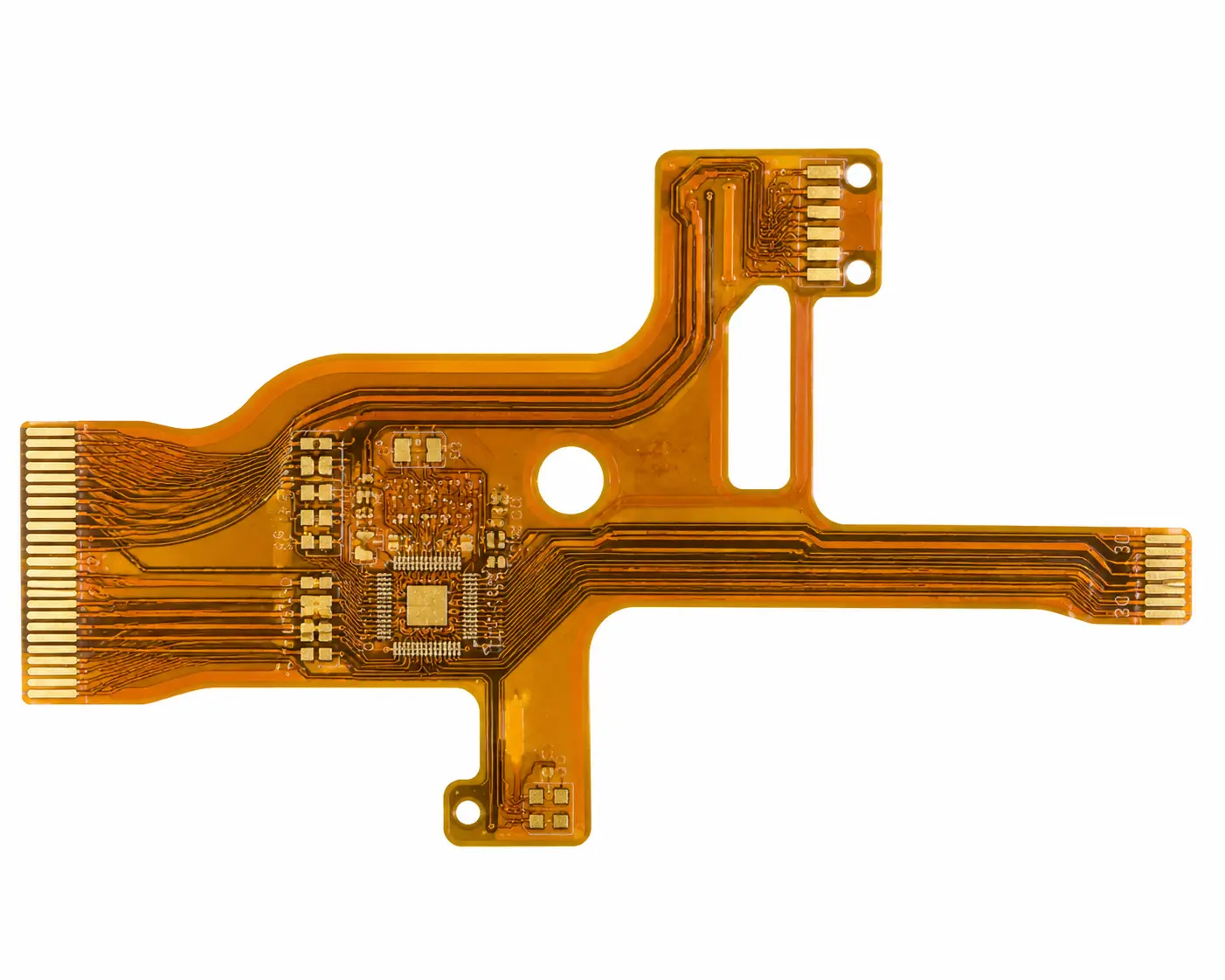
flexible printed circuit board (or Flexible PCB) uses polyimide as a soft base material, which can be bent and twisted to support dynamic movement, making the device thinner and more versatile. From folding screens and bracelets to spacecraft and car radars, they are all inseparable from flex circuits. The core difficulty lies in reliability and lifespan under repeated bending – this is the key to selection.
Flex PCB: The Core Technology
- Material: A thin polyimide film supports copper circuitry, allowing for intersecting circuit paths and repeated folding.
- Functionality: It supplies power and transmits signals to electronic components while fitting into confined spaces or areas subject to dynamic bending.
- Reliability: With advancements in flexible circuit technology and manufacturing processes, these circuits are now widely used in fields such as aerospace and medicine.
Types of Flex PCBs–
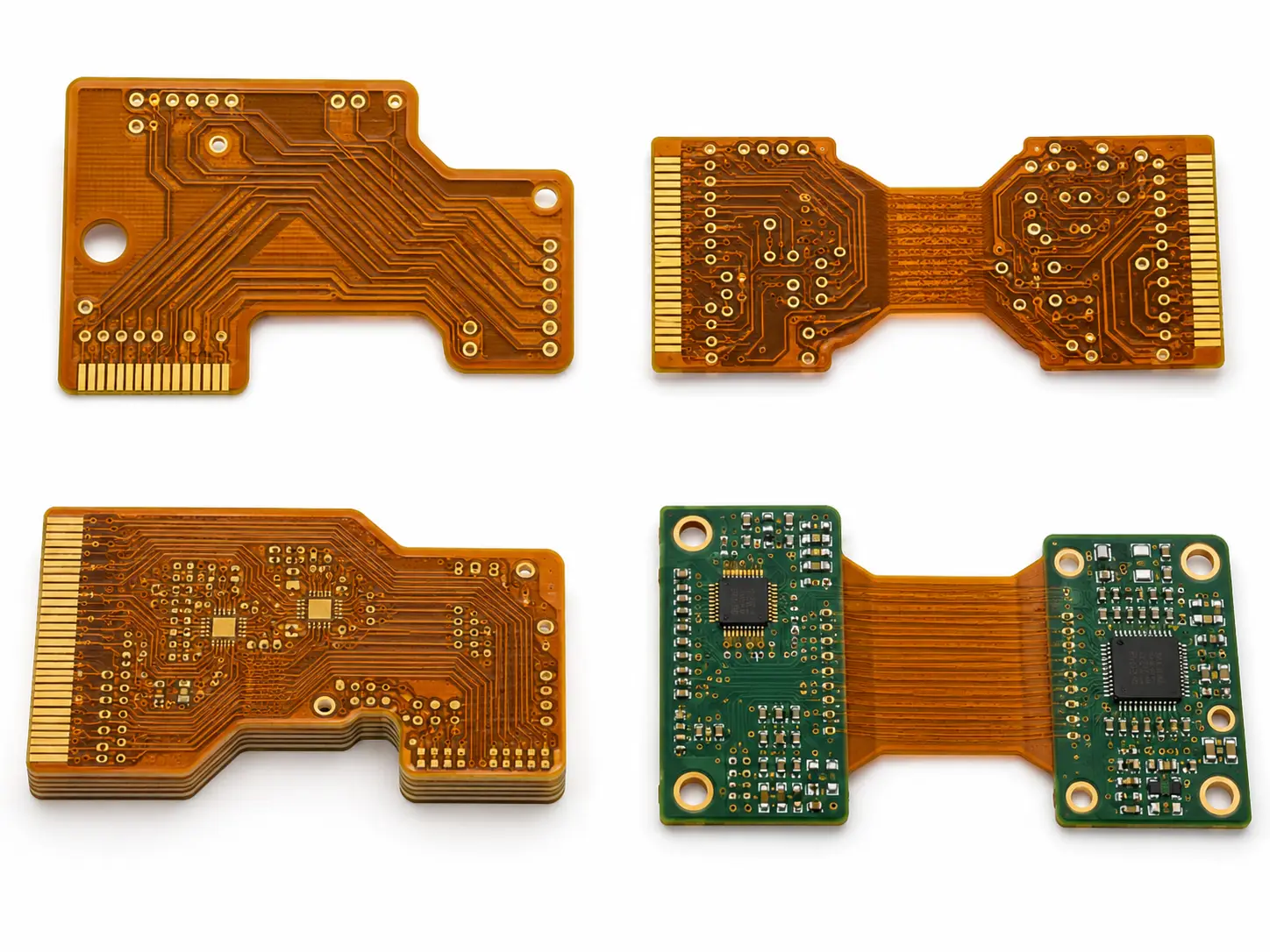
- Single-Sided Flex Circuit Copper circuitry is laid onto a flexible substrate, resulting in a simple yet agile structure.
- Double-Sided Flex PCB Copper traces run on both sides of the substrate, with copper-plated vias connecting the layers. This type is commonly used in automotive sensors and high-end consumer electronics.
- Multilayer Flex PCBs Three or more conductor layers, each separated by flexible insulation. Enables highly complex circuit routing as seen in high-performance medical and telecommunications equipment.
- Rigid-Flex PCBs Rigid board sections and flexible circuit areas are integrated into a single unit, combining the stability of rigid boards with the bendability of flexible circuits. This design is particularly well-suited for applications—such as aerospace, medical implants, and automotive systems—that require functionality within extremely limited space.
Flex Circuit Types Overview
| Type | Layers | Typical Uses | Strengths |
| Single-sided | 1 | LED strips, wearables | Low cost, simple |
| Double-sided | 2 | Sensors, automotive, display | Higher density |
| Multilayer flex | 3+ | Medical equipment, HDI devices | Advanced design, high-density |
| Rigid-flex PCB | 2–20+ | Aerospace, smartphones, EVs | Ultimate reliability, compact |
Advantages of Flex PCB Technology
Modern flexible PCBs provide a range of benefits over traditional rigid PCBs:
- Space & Weight Reduction: Flexible boards can be up to 70% lighter and 60% smaller in volume than traditional rigid boards, making them ideal for compact devices such as smartphones, watches, and drones.
- Superior Reliability: By reducing the number of connectors and solder joints, mechanical weak points are naturally minimized. This is particularly crucial in environments subject to the bumps experienced by automobiles or the vibrations encountered by aircraft.
- Enhanced Design Flexibility: Flexible circuits expand design possibilities, accommodating applications such as hinges in foldable smartphones, 3D routing, and complex, irregularly shaped internal structures.
- Lower Assembly Costs: Assembly requires only a single mounting step, reducing both the number of operations and the likelihood of errors; combined with professional PCB assembly services, this boosts production efficiency and optimizes costs.
- High-Speed Performance: The signal paths are shorter and more direct, and electromagnetic interference is better controlled, ensuring signal purity and integrity.
- Superior Heat Dissipation & Durability: The polyimide substrate offers good thermal conductivity, enabling rapid heat dissipation and effectively protecting components.
Market Trends in Flexible PCB Manufacturing
Flexible PCB manufacturing is evolving rapidly as new demands emerge across various industries:
- Advanced Miniaturization The rise of folding smartphones, “invisible” wearables, and ultra-light sensors is driving the need for micro-scale circuitry, ultra-thin substrates, and fine lines below 20μm—all requiring cutting-edge technologies from your flex PCB manufacturer.
- High-Density Interconnects (HDI) HDI and complex multilayer flex circuits now rival the signal performance of rigid PCBs, opening new possibilities in telecommunications, medical devices, and aerospace navigation.
- Hybrid Integration (Flexible + Rigid-flex + SMT/COB) Many leading PCB manufacturers now bundle PCB fabrication with downstream processes like SMT assembly and COB bonding; whether dealing with flexible PCBs or rigid-flex boards, they deliver semi-finished modules ready for immediate integration into the final product, sparing customers the hassle of sourcing assembly services or coordinating schedules.
- Eco-Friendly Manufacturing & Compliance Environmental compliance has become a fundamental industry standard—halogen-free and lead-free materials, as well as recyclability, are essentially default specifications, while certifications such as RoHS, UL, and ISO serve as mandatory thresholds. For buyers, a supplier’s ability to meet these standards directly determines whether the product can be sold in European and American markets.
- Regional Diversification Manufacturers in mainland China and Taiwan retain a clear advantage in high-volume, low-cost production. However, niche manufacturers in the US, Europe, and Japan—specializing in low-volume, customized orders—possess their own distinct strengths, such as rapid prototyping and robust process traceability. Each group serves a different customer base, meaning they are not competing for the same slice of the market.
Key Considerations When Choosing a Flex PCB Manufacturer
1. Technical Capability & Specialization
- Can the manufacturer handle single-sided, double-sided, and multilayer flex PCB designs?
- Do they support HDI, fine-pitch traces, controlled impedance, and rigid-flex circuit boards?
- Do they leverage advanced technologies and high-quality materials for your application’s challenges?
2. Certifications & Quality Control
- Check for ISO 9001, IATF 16949 (automotive), ISO 13485 (medical), UL, and IPC-A-600/610 certifications.
- Ask about quality control procedures (including automated optical inspection, X-ray, and electrical testing).
- Review quality management systems and policies for traceability—essential for medical, automotive, and aerospace.
3. Production Flexibility
- Is your flexible circuit manufacturer equipped for both prototype and high volume runs?
- Can your chosen flexible pcb manufacturer scale from prototype through full-scale manufacturing services?
- Do they offer fast turnaround for both low and high-volume production?
- Example: Viasion Technology Cospecializes in high-mix, low volume flexible PCB manufacturing while large PCB manufacturers in China like Zhen Ding excel at high-volume consumer and automotive orders.
4. Engineering & Design Support
- Will your supplier assist in PCB design, DFM (Design for Manufacturability) reviews, and stack-up optimization?
- Are their engineers responsive and available for direct consultation during product development?
- The best flex PCB manufacturer will flag issues, suggest improvements, and help optimize precision layouts, stack-ups, and bend radii—reducing risk and future cost.
5. Transparent Quoting and Cost Breakdown
- Always request an itemized quote, including tooling, surface finishes, coverlay/stiffener choices, shipping, and assembly services.
- Factor in not just price per board, but also yield, scrap rates, and “hidden” costs like project delays.
6. Strong References and Proven Industry Experience
- Application case studies and customer testimonials are key indicators when selecting a supplier.
- Local support and certification—ensuring both speed and compliance.
Top 10 Flex PCB Manufacturers: 2026 Worldwide List
Discover the top 10 flex pcb manufacturers in the world—these companies are defined by solid quality control, advanced technology, and a track record of consistent performance built over years.
1. Nippon Mektron: The Global Leader in Flex
They have long been a leader in flex and precision FPC technology, consistently supplying top-tier brands across sectors such as automotive, consumer electronics, and medical devices—industries that demand high reliability. Their core strengths lie in ultra-thin flexible FPCs, fine-pitch circuitry, and multi-layer stacked structures.
2. LHD Technology: Scalable and High-Density Innovation
LHD Technology is one of Shenzhen’s leading flexible PCB manufacturers, renowned for its significant investment in R&D and advanced HDI and rigid-flex PCBs. With a robust quality management system, LHD Technology provides high-quality, high-volume product support to leading companies in the global consumer electronics industry.
3. PCBark: Advancing Multilayer and IC Integration
PCBark stands out for its ability to combine ICs directly on flex circuits, enabling even more compact designs for IoT, smart wearables, and medical equipment. Their flexible circuit solutions include high-density, double-sided, and tailored stack-ups for demanding applications.
4. Career Technology Co.: Multilayer Innovation for Automotive
With operations and presence in the USA, Europe, and Asia, Career Technology is widely chosen for precision, double-sided, and multilayer flex circuits for automotive systems and telecommunications. Their global manufacturing services ensure product reliability and supply security.
5. Sumitomo Electric: Japanese Reliability in Specialty Applications
Sumitomo Electric brings multi-decade leadership in flexible and ultra-soft circuits, shielded FPC, and specialty medical devices. Their flexible PCBs pass stringent testing for automotive, antenna, medical, and robotics markets.
6. Fujikura Ltd: High-Speed Circuits for Industrial Markets
A premier Japanese PCB manufacturer, Fujikura offers assembled FPC, high-frequency modules, and custom solutions for consumer electronics, industrial automation, and emerging medical equipment.
7. Interflex Co., Ltd: Precision for Mobile & Medical
As Korea’s top flex circuit manufacturer, Interflex leads with fine-pitch, EMI-shielded, and TSP-enabled circuits for next-gen mobile phones, tablets, and wearable health monitors.
8. DSBJ / MFLEX: Asia–USA Hybrid for Assembly Services
MFLEX, now under DSBJ, is among the best flex PCB manufacturer choices in North America for those seeking flexible circuit solutions plus integrated SMT and module assembly services.
9. All Flex Solutions: Prototyping to Aerospace Rigid-Flex PCBs
Based in the U.S., the company focuses on rapid delivery, small-to-medium batch production, and prototyping, specifically catering to demanding sectors such as aerospace, medical, and defense.
10. TTM Technologies: Global PCB Giant with Rigid-Flex Mastery
TTM Technologies is a Fortune 1000-level PCB manufacturer with a global network of facilities. They specialize in large-format, rugged rigid-flex PCBs primarily used in aerospace, defense, and communications equipment. They maintain a robust quality control system and hold a comprehensive range of certifications.
Why Are So Many Top Flex PCB Manufacturers Based in China & Asia?
Asia, and particularly China, dominates the global PCB and flexible circuit manufacturing landscape for these reasons:
1. Supply Chain Synergy
PCB manufacturers in China and Taiwan excel at rapid material allocation, seamless production coordination, and low logistics costs, effectively supporting the currently popular “flexible supply chain” model.
2. Engineering Talent and Advanced Technologies
Asia boasts a vast pool of highly trained engineers and skilled workers specializing in pcb fabrication, Automated Optical Inspection (AOI), and precision machining. Manufacturers also engage in continuous R&D, achieving constant breakthroughs in areas such as High-Density Interconnect (HDI) technology, micro-blind vias, and advanced flexible circuit board processes.
3. Massive Scale & Cost Advantage
With the ability to produce billions of flex circuits annually, high volume and low cost are possible. Manufacturers in China offer competitive pricing, but many also support Western quality standards, mass customization, and robust quality management.
4. Regional Compliance and Certifications
To serve global clients, Asian PCB manufacturers have widely obtained ISO, IATF, UL, and RoHS certifications, as well as specialized certifications for the medical and aerospace sectors. In terms of quality management systems and documentation integrity, they are fully capable of competing head-to-head with top-tier suppliers from Europe and the United States.
How to Evaluate and Shortlist the Best Flex PCB Supplier
Key Steps
- Request factory audits: Send your own personnel or commission a third party to visit the supplier’s factory to inspect workshop cleanliness, production workflows, and system documentation.
- Ask for reliability data: market return rates, failure analysis, and reliability test data from the sampling stage.
- Verify intellectual property (IP) protection: For circuit design, ensure that suppliers have strict legal controls in place, sign a Non-Disclosure Agreement (NDA), and include specific clauses regarding the protection of technical data in the contract.
- Benchmark quotes and prototypes: Have two suppliers produce prototype samples based on the same set of design files, then compare the PCB design details, manufacturing capabilities, and price quotes.
- Demand traceability and serialization: For products used in automotive, aerospace, and medical equipment applications in particular, it must be possible to trace the production data for every single flexible circuit board.
Case in Point: When developing a new solution, you should engage two manufacturers. Entrust the initial prototyping and Design for Manufacturability (DFM) optimization to a local factory; their rapid communication and strong engineering support make them ideal for an iterative process involving frequent adjustments. Once the design is finalized and you are ready for mass rollout, decisively shift production to a manufacturer better suited for large-scale output.
Flex PCB Manufacturing Process Overview: What to Expect
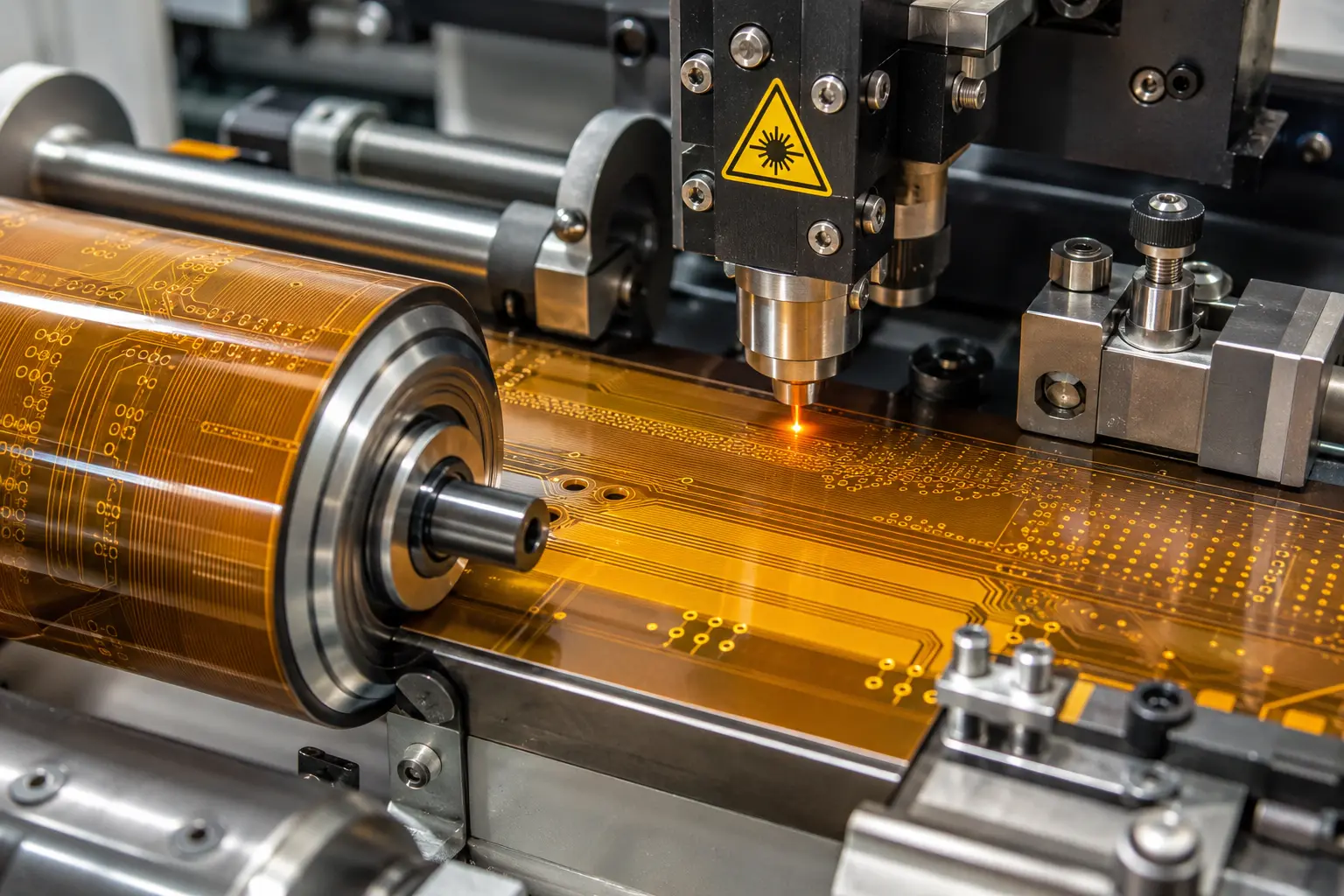
A standard process with a reputable flex pcb manufacturer includes:
Design Review and Stack-up Analysis
- Mutually review Gerber files, bending radius, impedance, and thermal specs.
- DFM feedback is essential for flex and rigid-flex PCBs.
Quote & Material Planning
- Pricing accounts for copper thickness, polyimide layers, coverlay, and stiffener requirements.
- Top flex pcb manufacturers will provide detailed quotes and suggest cost-saving alternatives based on intended use (such as switching from double-sided to multilayer flex circuits for complex builds).
- Ensure materials meet compliance for medical devices, automotive, or aerospace applications.
Tooling, Photoplotting, and Imaging
- Using advanced precision photoplotters and laser direct imaging, circuit images are transferred with accuracy down to a few microns.
- High-end pcb manufacturing processes support fine-pitch, high-density, and custom-shaped circuits—ideal for flexible PCBs in consumer electronics and telecommunications.
- Designs with rigid-flex zones require specialized tooling and careful alignment to prevent defects during lamination.
Etching, Plating, and Drilling
- Chemical etching creates the copper traces; via and blind/buried via holes are drilled (laser or mechanical), then plated for conductivity.
- For HDI flex circuits, microvia drilling ensures optimal connectivity and signal integrity without adding unwanted thickness or stiffness.
Lamination & Bonding
- Multilayer and rigid-flex PCBs are laminated under heat and pressure with flexible adhesives.
- Coverlays and stiffeners are added for mechanical protection and to provide localized rigidity where components will be mounted.
Surface Finishing & Solder Mask
- Common finishes include ENIG, OSP, or immersion silver/gold, promoting solderability and long-term reliability.
- Flex areas may require specialized coverlay materials for dynamic bending.
PCB Assembly Services
- Many global PCB manufacturers now offer complete assembly services, including surface mount technology (SMT), chip-on-board (COB), and functional test to deliver complete, ready-to-install modules.
- Assembly challenges include handling hyper flexible FPCs and ensuring perfect planarity and component alignment.
Quality Control and Testing
- Automated Optical Inspection (AOI), X-ray analysis, flying probe or bed-of-nails electrical testing, and, for mission-critical applications, reliability stress testing (such as bend-cycle or high-temp/humidity exposure).
- Traceability is maintained through serialization or QR coding, providing end-to-end quality management and auditability.
Final Inspection & Logistics
- Products are packed, moisture-protected, and shipped using trusted logistics partners.
- Flexible circuit solutions for high-reliability industries may involve specialized packaging and handling protocols.
Flex Plus and Specialized Flexible PCB Solutions
Not all projects fit a commodity standard. Flex Plus and other specialized flexible circuit manufacturers excel at custom stack-ups, unique materials, and prototype-to-production support for medical devices, flexible sensors, and wearable technologies.
Why Choose a Niche Manufacturer?
- Tailored solutions for challenging applications where standard circuits fall short.
- Close engineering partnerships to optimize new products for manufacturability and yield.
- Support for low and high mix, low-volume production, often required for medical devices, aerospace prototypes, or high-value automotive components.
Best Flex PCB Manufacturer for Custom Needs:
- Able to embed sensors, antennas, and unusual interconnect structures within a single flexible printed circuit board.
- Offers advanced testing and quick DFM adjustments to support tight development cycles.
Case Studies: Real-World Successes with Flex PCB Manufacturers
Example 1: Automotive Multilayer Flex in EV Battery Management
A world-class automotive OEM partnered with a flexible PCB manufacturer from our top 10 list for a new EV battery management system. The rigid-flex pcb manufacturer supplied bespoke multilayer flex PCBs that endured high heat and vibration through extensive testing—achieving both QS automotive certification and customer reliability milestones.
Example 2: Wearable Medical Devices Require Dynamic Flexibility
A startup medical device company leveraged a US-based prototype and flexible pcb manufacturing partner. Their wearable patch required a hyper flexible FPC that could sustain thousands of flex cycles— from clinical trial to volume launch. This outperformed traditional assembly methods and resulted in a device with superior patient comfort.
Example 3: High-Density FPC for Next-Gen Consumer Electronics
A global smartphone brand engaged with Zhen Ding Tech due to its combination of high-volume, cutting-edge technologies, and HDI expertise. The project used double-sided and multilayer flex circuits with fine-line spacing and embedded antennas, cementing Zhen Ding as a go-to supplier for high-speed, high-density product launches.
Frequently Asked Questions About Flex PCB Manufacturers
Q: Which manufacturer is the best flex pcb manufacturer for rigid-flex PCB assembly?
A: Top PCB manufacturers like TTM Technologies, Nippon Mektron, and All Flex Solutions are regarded as leaders in rigid-flex circuit boards, with trusted quality management and expertise in both high-volume and low-volume manufacturing services.
Q: How important is quality control for flexible circuits?
A: It’s critical—especially for flexible circuits used in medical devices, aerospace, or automotive. Validate that your flex PCB supplier employs rigorous AOI, X-ray, and stress testing as standard QC steps.
Q: What’s the difference between single-sided, double-sided, and multilayer flex circuits?
A: Single-sided uses one conductor layer (cheapest, least complex); double-sided adds via-plated holes and more complexity; multilayer supports the highest density, HDI routing, and most sophisticated applications.
Q: Can I get prototype and mass production from the same manufacturer?
A: Yes. Many flexible PCB manufacturers offer both prototype and high volume options—ask about pilot builds, tool cost amortization, and whether they support seamless ramp-up.
Q: Are there globally recognized PCB manufacturers in China for high-quality flexible circuits?
A: Absolutely—companies like Zhen Ding, DSBJ, Kinwong, and Suntak are recognized among manufacturers globally for quality, reliability, and compliance with international standards.
Expert Tips for a Successful Flex PCB Partnership
- Engage early: Bring your flex PCB manufacturer into the product development process to catch DFM issues and optimize stack-ups before design freeze.
- Specify environment: Always specify operational temp, vibration, and any harsh condition requirements.
- Prioritize reliability: Insist on test reports, failure analysis, and reliability data, particularly for automotive or medical applications.
- Leverage assembly services: Combining flexible PCB fabrication and assembly reduces logistics risk and ensures seamless accountability.
- Benchmark with prototypes: Compare process feedback, quality, and turnaround across at least two suppliers before locking in for high volume.
Conclusion: Choosing the Best Flex PCB Supplier for Your Project
Choosing the right flex pcb manufacturer isn’t just paperwork: it’s a strategic move that defines your product’s success, reliability, and market speed.
- If you are launching high-density wearable devices, seek out manufacturers who offer precision, high-quality, and flexibility in both fabrication and assembly services.
- For automotive systems, aerospace control modules, or medical equipment, only consider flexible circuit manufacturers with deep quality control experience and industry-leading certifications.
- For consumer electronics and telecommunications, look for a flex and rigid-flex PCB manufacturer with a global presence who can scale efficiently from prototypes to millions of units.