
Energy storage systems place unusual demands on electronics. These systems usually involve high-voltage and high-current long-duration operations.
A PCB inside such an ESS may be responsible for cell monitoring, temperature sensing, balancing, protection, communications, current measurement, or control. It is handling serious current and real safety consequences if something goes wrong. That makes the choice of PCB assembly supplier for energy storage systems a product-reliability decision.
A supplier suitable for consumer electronics may lack the processes, testing, traceability, or high-voltage experience needed for an energy storage application.
The right evaluation starts with the requirements of the finished system and works backward to the assembly line. This helps identify suppliers that can support the design through prototyping, certification, production, and future revisions.
What Are Your Energy Storage System Requirements?
Before you even search for PCB assembly suppliers for energy storage systems, you need to have a clear image of what the PCB actually has to do.
A battery management board can have a diverse range of responsibilities, including cell voltage and temperature measurement, balancing, overcurrent protection, communications with other system controls, and more. High-capacity ESS designs may also use several battery-monitoring boards in a stacked architecture, which adds more requirements for communication and isolation.
The operating environment is also crucial. Document the:
- Expected voltage and current
- Temperature range
- Humidity
- Vibration
- Enclosure conditions
- Duty cycle
- Service life before requesting quotations
A PCB assembly supplier for energy storage systems can only make sensible recommendations on materials, assembly processes, testing, and production controls when these conditions are known.
Besides that, certification requirements vary in different regions, such as UL 1973, IEC 62619, UL 9540, etc. The BMS board itself often needs documented functional safety behavior. The supplier should be comfortable working from the standards that actually apply to your product in your particular region.
Experience with High-Current, High-Power Boards
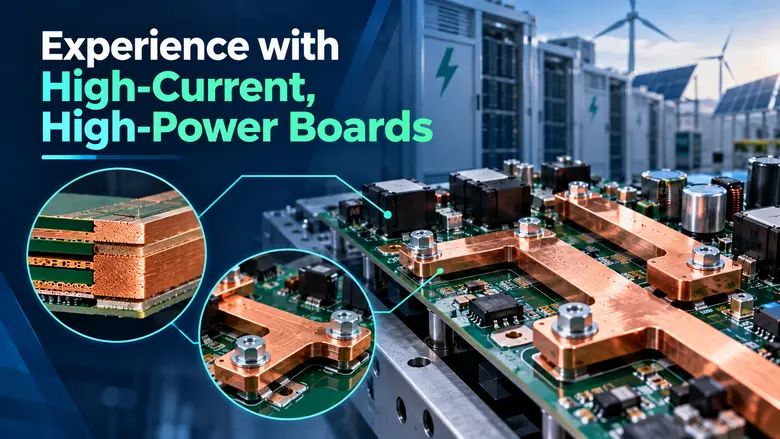
ESS assemblies usually require heavy copper construction. The copper weight can exceed the standard 1 oz used in typical PCBs, sometimes reaching 6 oz or more on layers carrying high current. Thicker copper affects how a board etches, plates, and is soldered.
Ask directly about their experience with heavy copper fabrication and what copper weights they have handled in production.
Many ESS designs also integrate copper busbars into the PCB to carry current that even heavy copper traces can’t handle efficiently. This requires a supplier who can manage busbar placement and thermal interactions during assembly without creating an additional source of resistance and heat. If your design includes busbars, ask to see examples of similar work they have completed before.
Check Their Thermal Management Capabilities
The common enemy of every ESS board is heat because high-current paths generate resistive heating. The right PCB assembly supplier for energy storage systems needs to understand how to manage thermal performance through copper spreading and thermal vias, along with proper heat-sink interfaces at the layout and assembly levels.
Material choice plays into this too. Many energy storage boards use high-Tg laminates to withstand the intense thermal cycling associated with repeated charge and discharge cycles. A supplier who can guide material selection based on your current load and thermal profile is a good sign they understand the application.
Confirm Certification Knowledge and Documentation Practices
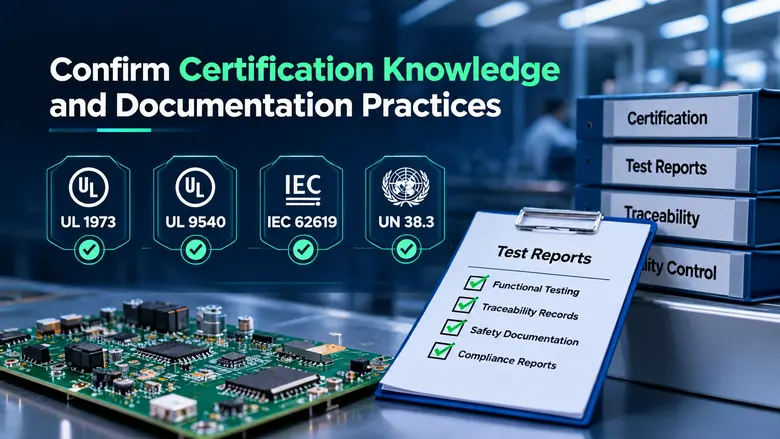
Approval of an energy storage system involves a stack of standards. For example, you may need UL 1973 for the battery pack and BMS, UL 9540 for the complete system, IEC 62619 if you are selling internationally, and UN 38.3 for transport.
Your PCB assembly supplier isn’t responsible for securing these certifications for you. However, their processes have a direct effect on whether your product can pass testing at all.
A PCB factory experienced in this space should understand what the right functional safety documentation is for a BMS board (fault detection behavior, response times, fail-safe conditions, etc.). It should be able to produce test reports and traceability records that support your certification submissions.
If they have never worked on a certified BESS product before, ask how they would approach the added documentation and process control this kind of project requires.
Ask About Component Sourcing and Traceability
Energy storage components carry long lead times and tight sourcing requirements. This is more common for parts tied to safety functions like current sensors, isolation components, protection ICs, etc. A supplier with weak sourcing practices may substitute components without properly vetting them against your original design intent, which creates real risk in a safety-critical application.
Besides that, full traceability is also crucial. If a batch of boards ever needs to be recalled/investigated after a field issue, you need a supplier who can trace exactly which components/lots and processes went into a specific production run. This is standard practice for a mature PCB assembly supplier for energy storage systems, but you should still confirm it.
Evaluate Testing and Quality Control Processes
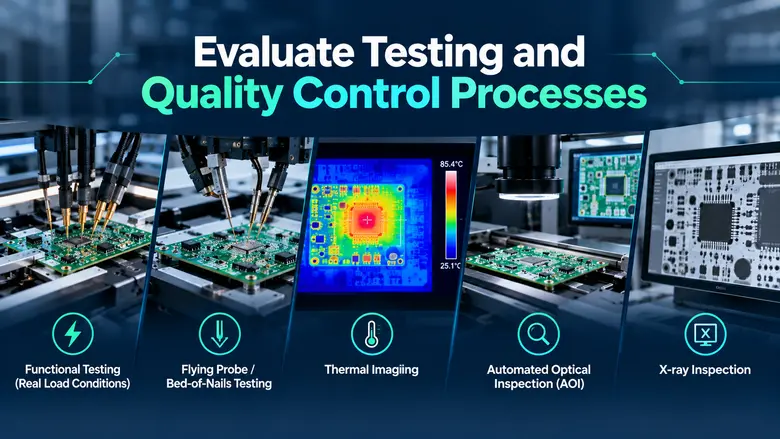
ESS boards need more than just a basic continuity check. Look for suppliers offering:
- Functional testing under real load conditions
- Flying probe or bed-of-nails electrical testing
- Thermal imaging to catch hotspots before a board ever ships.
- Automated optical inspection and, where relevant, X-ray inspection as part of their process, not premium add-ons.
You should also ask how they handle failure analysis. A supplier who can explain how they investigate defective boards and identify the root cause shows a stronger commitment to quality and long-term reliability.
Consider Scalability and Production Flexibility
Energy storage projects often start small in the form of a prototype run or a pilot batch for field testing. Afterward, they go into full production. A supplier who can only operate efficiently at high volume, or one who can’t scale past small runs, creates friction as your project matures. Ask about their capacity at each stage and whether they can support you from prototype through mass production without switching partners midway.
This matters more in ESS than in most other electronics categories, since re-qualifying a new supplier for a certified product often means repeating some or all of your compliance testing. Picking a PCB assembly partner who can grow with the project from the start saves real time and cost later.
Bottom Line
The choice of PCB assembly supplier for energy storage systems is less about price and turnaround time. The right partner understands heavy copper construction, thermal management, certification requirements, and the kind of documentation that keeps a safety-critical product defensible long after it ships.
LHD Tech handles PCB fabrication and assembly under one roof, so the bare board and the assembly process get planned together. This is crucial for BMS and inverter designs where copper weight and solder profile affect each other. The company holds ISO, UL, RoHS, and IATF certifications and has no minimum order quantity, so the same team can take you from a small pilot batch to full production. Send over your broad requirements and talk it through with our engineers.